Hey there, if you’ve ever walked past a construction site or held a perfectly cut packaging insert for a fragile gadget, chances are you’ve come across EPS—expanded polystyrene, that lightweight, foam-like stuff that’s equal parts useful and often misunderstood. And the tool that turns bulky EPS blocks into those precise shapes? That’s an EPS cutting machine, and as someone who’s been supplying these bad boys for years, I get more questions about how they work than anything else. A lot of folks think they’re just “hot wires cutting foam” and leave it at that, but there’s way more going on under the hood that makes these machines so efficient—especially when you’re cranking out hundreds of custom parts a day. Let’s break this down like I’d explain it to a new operator, no boring textbook jargon, promise. EPS Cutting Machine
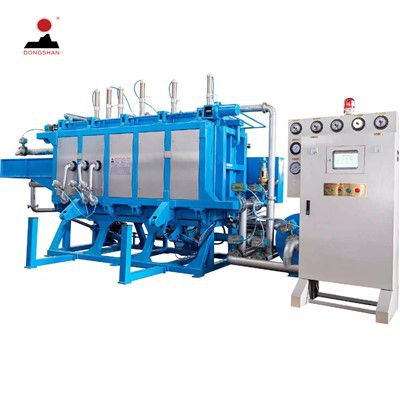
First, let’s get one thing straight: EPS isn’t like regular Styrofoam you get from a coffee cup. It’s made of tiny polystyrene beads that get expanded with pentane gas and molded into big blocks (think 4ft x 8ft, or even bigger) before being cut. The cutting machines have to handle that soft, porous stuff without making a mess or warping the edges—and that’s where the “working principle” actually starts. It’s not just slapping a wire between two sticks; it’s a controlled process that balances heat, tension, and movement to get clean cuts every single time.
Let’s start with the core component that makes it all happen: the resistance wire. You’ve probably seen one of these at a craft fair, right? A thin wire heated up with a battery, cutting through foam like butter. But industrial EPS cutting machines use way more powerful wires—usually made of nickel-chromium alloy (that’s why you’ll see folks call them NiCr wires), sometimes with a little steel added for extra sturdiness. Here’s how it works: when electricity flows through the wire, the resistance of the metal turns that electrical energy into heat. The wire doesn’t get red hot like a toaster element, though—we keep it at a precise temp, usually between 150°C and 300°C (that’s 300°F to 575°F) depending on the EPS density. Too hot, and you’ll melt the foam too much, leaving a sticky, charred edge; too cold, and the wire will just squish the beads instead of cutting through them. That balance is make-or-break, and it’s why we invest in controllers that adjust the heat automatically based on the wire’s length and the EPS type.
Wait, the wire’s length matters? Totally. If you’re cutting a long, straight panel, you need a longer wire, right? But a longer wire will have more resistance, so you can’t just feed it the same amount of power as a shorter one. That’s where tension comes in. We stretch that wire super tight between two rails (the “wire frames” or “carriages” we call them in the biz) so it doesn’t sag when it’s hot. Sag = wavy cuts, and nobody wants that. The tension is usually around 10 to 20 pounds, which is enough to keep the wire straight even when it’s heated up—because when metal gets hot, it expands, so if we didn’t tension it correctly, it would get slack mid-cut. Modern machines have tension sensors that adjust as the wire heats up, so you don’t have to tweak it manually every time you change the wire. That’s a big time-saver for production lines.
Now, how does the wire move? That’s where the two main types of EPS cutting machines come in, and they’re built for different jobs. First, there’s the hot-wire cutter for 2D shapes—think curved inserts for guitar cases or custom sign cutouts. On these machines, the wire is attached to a movable arm (or two arms, if you’re doing dual-axis cuts) that glides along rails controlled by a CNC system. You upload a design file (like DXF or SVG) to the machine’s computer, and the motors move the wire along the X and Y axes at a set speed. The cut speed is another big factor—too fast, and the wire will skip or leave ragged edges; too slow, and you’ll over-melt the EPS. For 2D work, we usually run the wire at 10 to 50 inches per minute, depending on how thick the EPS is. For example, a thin 1-inch block cuts fast, but a 12-inch thick block needs a slower speed to keep the heat from going deeper than it should.
Then there’s the big dog: the 3D hot-wire cutter, which is what most construction and packaging companies use. These machines have multiple wires (sometimes up to 10) arranged in a grid, and they move along three axes (X, Y, Z) to cut through blocks into full 3D shapes—like insulated concrete forms (ICFs) for house foundations, or custom foam molds for shipping car parts. The same heat and tension rules apply here, but the software is way more advanced. It can take a 3D model and translate it into the exact path the wires need to take, so you don’t have to cut each piece by hand. A lot of our clients use these for ICFs, which are lightweight, insulating blocks that stack up to make house walls—those have to be cut with perfect precision so they fit together without gaps, and our machines deliver that every time.
Wait, let’s talk about why cutting with hot wire works way better than sawing for EPS. If you use a regular saw, it will grind the beads, create a ton of dust, and leave rough, uneven edges. The hot wire actually melts a tiny, thin layer of foam (like 0.1mm thick) as it cuts, which cools immediately and seals the edge—no dust, no mess, and a clean, smooth cut. That’s a huge win for industries that need tight tolerances, like aerospace packaging, where a tiny gap in a foam insert could damage a $10,000 part. The melted edge is so thin it’s almost unnoticeable, and it even adds a little structural strength to the cut piece, which is nice.
But it’s not just the wire and the motors—there’s a whole support system that makes it all work. The machine has a block holding table, usually with suction cups to hold the EPS in place while it’s being cut, so it doesn’t shift mid-move. If the block moves, your cut is off, and you’ve got wasted material. We also have ventilation systems that suck away the tiny fumes from melted EPS—they’re not toxic, but they can be annoying if you’re running a machine in a small space. And the power supply? We size that based on how many wires you’re using and how hot you need them to get. A small 2D cutter for hobbyists might use a 100W power supply, but a 10-wire 3D cutter for industrial use needs 5000W or more. That’s a big difference, and it’s why we don’t sell one-size-fits-all machines—we tailor them to what our clients need to cut.
Let me give you a real example, because that’s what makes it click. Last month, we worked with a construction company that was making custom ICF blocks for a 100-unit apartment complex. They were using a competitor’s machine that kept leaving wavy edges, so their workers had to spend hours sanding each block to make them fit. They came to us, and we sold them a 3D EPS cutting machine with auto-heat and tension control. Now, their cut accuracy is within 0.5mm—way tighter than their old machine—and they cut each block in half the time. No more sanding, no more wasted EPS, and their project is on track to finish two weeks early. That’s the kind of difference understanding the working principle makes—it’s not just a machine, it’s a tool that saves time and money.
Another common question: “Can you cut other materials with these?” Nope, not really. If you try to cut regular plastic or wood with an EPS cutting machine’s wire, it will either burn the material or break the wire. The wire is calibrated specifically for EPS, because the heat has to be just right to melt the foam beads without damaging the wire. That’s why these machines are specialized—they’re built for one job, and they do it really well.
Now, let’s get into some maintenance stuff, because that’s part of how the machine works long-term. The biggest thing is the wire—eventually, it will break, or the tension will wear out, so you have to replace it every few months depending on how much you use the machine. We sell OEM wires that are designed to last longer and give cleaner cuts than cheap ones, so we always recommend that. Also, keeping the tension sensors clean is important—if dust builds up, they’ll give wrong readings, and the wire will sag. And obviously, regular checks on the power supply and motors make sure everything runs smoothly.
I know a lot of small business owners might look at these machines and think they’re too complicated, but modern ones are way more user-friendly than they used to be. The CNC software has pre-set settings for different EPS densities, so you don’t have to guess at the heat and cut speed. You just upload your design, load the EPS block, and hit go. It’s not rocket science, but it’s precise enough for industrial use.
At the end of the day, the working principle of an EPS cutting machine boils down to three core things: controlled heat in a tensioned NiCr wire, precise movement along programmed paths, and a system that holds the EPS steady to get clean, accurate cuts. There’s no magic here, but getting those three things right is what separates a good machine from a great one. We’ve built dozens of these machines over the years, and the feedback we get from our clients is all about how consistent the cuts are, how little waste they produce, and how easy they are to use.

If you’re in the market for an EPS cutting machine—whether you’re a small packaging shop or a big construction firm—don’t just go for the cheapest option. Ask about the heat control, tension system, and CNC capabilities. A machine that’s built with those core principles in mind will pay for itself in no time, thanks to less waste, faster production, and fewer headaches. We work with businesses of all sizes, and we can help you pick or customize a machine that fits your exact needs, no matter what you’re cutting. If you want to chat more about how these machines work, or get a quote for your next project, don’t hesitate to reach out. We’re here to help you make the most of EPS cutting technology.
EPS Block Molding Machine References:
- EPS Foam: Properties and Applications. Society of Plastics Engineers, 2021.
- Industrial Hot Wire Cutting Technology for Polymeric Foams. Journal of Manufacturing Processes, Vol. 56, 2020.
- CNC Cutting Systems for Expanded Polystyrene: Best Practices for Production. International Association of Foam Packaging Manufacturers, 2022.
- Nickel-Chromium Alloys for Resistance Heating Applications. Materials Science and Engineering, Vol. 128, 2018.
Hangzhou Fuyang Dongshan Plastic Machinery Co., Ltd.
Hangzhou Fuyang Dongshan Plastic Machinery Co., Ltd. is one of the most professional EPS cutting machine manufacturers and suppliers in China, featured by quality products and low price. Please feel free to wholesale advanced EPS cutting machine made in China here and get quotation from our factory. Customized orders are welcome.
Address: 101 Guanting, Baiqian Villige, Luzhu Town, Fuyang District, Hangzhou City, Zhejiang Province, China
E-mail: xu@dong-shan.cn
WebSite: https://www.epseppmachinery.com/
