If you’ve ever looked into setting up a paint line for your manufacturing business—whether you’re making auto parts, consumer appliances, or even wooden furniture—you’ve probably heard the term “turnkey” thrown around. As a turnkey paint line supplier, I get asked this question all the time: “How much does this actually cost? Break it down for me.” The truth is, turnkey paint lines aren’t one-size-fits-all, and the cost isn’t just a single number you pull out of thin air. It’s a mix of parts, labor, hidden fees, and even long-term factors that most first-time buyers miss. Let me walk you through the breakdown like I would chat with a peer, no stuffy jargon or vague lines. Turnkey Paint Line
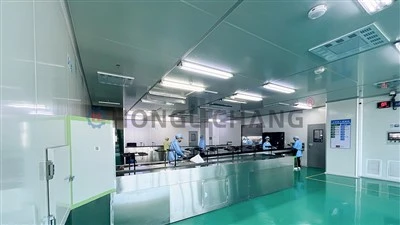
First off, let’s make sure we’re on the same page about what a turnkey paint line is. When I say turnkey, I don’t mean just a bunch of paint guns dumped in a crate. It’s the whole package: we design the line around your specific products, ship all the equipment, install it, test it, train your team, and leave you with something that works right out the gate. No extra contractors to hire, no guessing if parts will fit together, no scrambling to figure out how to set up the oven. That’s why the cost is more than just the sum of individual machines.
Starting with the big-ticket stuff: the core equipment. This is usually 60-70% of the total project cost, depending on your setup. Let’s break that down into categories. First, the pretreatment system. If you’re painting metal parts, you can’t just spray paint on raw steel—it’ll chip off in a month. Pretreatment is the cleaning and coating step: degreasing tanks, rinsing stations, maybe a conversion coating (like phosphate or zirconium) to help paint adhere. For smaller operations, a simple manual spray pretreatment might run $15k-$25k. For high-volume auto parts lines, an automated immersion system can hit $100k+. Then there’s the application equipment: paint booths, guns, and dosing systems. Paint booths aren’t just a metal tent—they’re made to contain overspray, filter air, and maintain consistent temperature and humidity. A small manual booth for furniture might be $10k-$15k, while a large automated electrostatic booth for 1,000 parts a day is $50k-$80k. Electrostatic guns are a big upgrade too—they use electric charge to make paint stick better, cutting waste by 20-30%, so they’re worth the extra $2k-$5k per gun.
Next, the curing system. After you spray, you have to dry or bake the paint. For water-based paints (which are way more eco-friendly now), a convection oven is standard. Small batch ovens for furniture are $8k-$15k, while continuous batch ovens for high-volume lines can be $40k-$70k. If you’re using powder coat, sometimes you can use a shorter cure time, but the oven still makes up a huge chunk here. Don’t forget the conveyor system—this is what moves your parts through the whole line. Manual lines might have a simple overhead rail system for $5k-$10k, but automated lines with variable speed controls for continuous operation are $15k-$30k. Oh, and don’t skimp on the controls! PLC (programmable logic controller) systems run the whole show—they adjust oven temp, conveyor speed, paint flow, even track usage. A basic PLC is $3k-$6k, while a custom system that integrates with your existing manufacturing software is $10k-$15k.
Now, the next big chunk: installation and labor. This is where a lot of people underestimate the cost. As the supplier, we don’t just drop the equipment off and leave. We send a team of technicians to assemble, wire, and test every part. For a small, 10-foot manual line, installation might take 3-5 days and cost $5k-$8k. For a 50-foot automated line, that’s 10-15 days of work, plus travel and living for the techs, so installation can be $15k-$25k. And let’s be real—if your facility isn’t ready? Like, your floor isn’t rated for heavy equipment, or you don’t have enough power for the oven, or ventilation is lacking, you’ll need to fix that before we can install. That’s called site preparation, and it’s often separate from the turnkey cost. I’ve seen a small client spend $10k just to reinforce their concrete floor before the line even showed up. Skip that, and you’ll have a line that tilts, shakes, or breaks in a month.
Then there’s customization and integration. Every business has unique needs. If you’re painting irregularly shaped parts, we might need to add robot arms for spraying. A single paint robot is $20k-$30k, and adding a second is almost that much because of the integration work. If you already have a conveyor system or a material handling setup, we have to make the new line connect to that—no small feat. Custom software to track paint usage, cycle times, and quality checks? That’s another $3k-$7k. Even small things, like adding a fire suppression system for the paint booth (super important for safety) can add $2k-$4k. I once had a client who wanted a line that could switch between two different paint types for their product line—we had to add extra valves and dosing controls, which added $8k to the project.
Now, the often-forgotten soft costs. These are the things that don’t show up on a equipment bill, but they make or break the project. First, training. We don’t just hand you a manual and dip. We train your operators to run the line, fix small issues, maintain the equipment, and troubleshoot problems. For a small line, that’s 1-2 days of training, included in the project cost. For a large automated line, it’s 3-5 days, plus maybe remote support for the first month. If you skip training, your team will waste paint, have downtime, and break equipment within a few weeks. Then there regulatory compliance. Paint lines have to meet local air quality rules (like OSHA in the US, or REACH in the EU) for emissions. We handle designing the line to meet those rules, but sometimes you need to get permits from your local government, which can cost $1k-$5k depending on your area. I’ve had clients in California spend $7k just on permits because their rules are so strict. Also, warranty and post-install support. A turnkey line usually comes with a 1-year parts and labor warranty, but extended warranties (2-3 years) add 10-15% of the equipment cost. And if something breaks after the warranty? Our support team is on call, and emergency service calls cost $500-$1,000 per visit, plus parts.
Wait, let’s talk about size and volume, because that’s the biggest variable. A small, manual line for a furniture shop that does 50 parts a day will total $50k-$75k. A medium line for appliance parts, doing 200 parts a day, is $150k-$250k. A large automated line for auto manufacturing, doing 1,000+ parts a day, can run $500k-$1.2M. And it’s not just the upfront cost—there’s operational cost too. Paint, energy, maintenance. For every part you paint, powder coat is cheaper than liquid paint, but the equipment cost is higher. Energy for the oven is a big one—electric ovens are more expensive to run than gas, but they’re cleaner. I always tell clients to look at the total cost of ownership, not just the upfront price. A cheaper line might break down more, costing you downtime, while a more expensive line that runs efficiently will save you money in 2-3 years.
Let me give you a real example, because numbers are easier to grasp. Last year, a client making metal garden tools came to us. They had a 10,000 sq ft shop, 2 workers, and wanted to switch from manual spray painting to a more consistent line. We designed a small turnkey line: 10-foot manual pretreatment, 12-foot manual paint booth, 15-foot batch oven, overhead conveyor, basic controls. Total cost: $68k. Breakdown: equipment ($45k), installation ($10k), site prep (new concrete, $7k), training ($1k), permits ($3k), warranty ($2k). That was exactly what they needed—no extra frills, just a line that works for their volume. Six months later, another client making car doors came to us. They needed an automated line for 500 doors a day. Breakdown: automated immersion pretreatment, 2 electrostatic paint robots, continuous oven, PLC system, conveyor that syncs with their existing part washer. Total cost: $720k. Equipment ($500k), installation ($90k), robot integration ($50k), custom controls ($30k), fire suppression ($15k), extended warranty ($35k). That line cut their paint waste by 25% and doubled their production, so the cost was worth it for them.
Now, what are the hidden costs people almost always miss? First, downtime. If your old line breaks, you lose production. When we install a new line, there’s usually a 1-2 week overlap to train your team while the old line is still running, but if you have to shut down completely, that can cost you more than the line itself. Second, paint type. Powder coat is popular, but it requires a cure oven that’s hotter and uses more energy. If you switch from liquid to powder, your energy bill will go up, but your material cost will go down. Third, disposal of waste water from pretreatment. That’s a regulatory thing—you can’t just dump it down the drain, so you need a waste treatment system, which can add $5k-$10k to the project.
As your turnkey paint line supplier, I never give a blind quote. I always ask: what parts do you make? How many do you produce a day? What’s your current downtime? What’s your budget? Then I build the line around those needs, not around a generic price tag. A lot of suppliers will lowball you at first, then hit you with extra fees for installation, parts, or permits later. That’s not how we do it. We’re transparent about every cost, from the first call to the final test run.
If you’re in the market for a turnkey paint line, don’t just look at the sticker price. Ask about the total cost of ownership, the installation timeline, training, and support. A line that’s $20k cheaper upfront might cost you $10k a year in downtime and higher material costs. We’ve helped hundreds of businesses set up lines that fit their budget and their needs, no fluff, no hidden fees.

If you want to chat through your specific project—whether it’s a small manual line or a big automated setup—reach out to our team to schedule a no-obligation consultation. We’ll walk through your needs, break down the costs clearly, and answer all your questions.
Interior Parts References: 1. Occupational Safety and Health Administration (OSHA). “Spray Finishing Safety Guidelines.” 2. American Coatings Association. “Turnkey Surface Treatment Solutions for Manufacturing.” 3. Powder Coating Institute. “Total Cost of Ownership Analysis for Paint Lines.”
Shenzhen Honglichang Machinery Manufacturing Co., Ltd.
We are one of the most professional turnkey paint line manufacturers and suppliers in China, also support customized service. Please feel free to buy advanced turnkey paint line for sale here from our factory. Welcome to contact us for quotation.
Address: No. A802, Building 2, Tianan Digital Plaza, Longgang, Shenzhen, China
E-mail: victor@honglichang.com
WebSite: https://www.honglichang-paint.com/
