Hey everyone, Steel Workshop
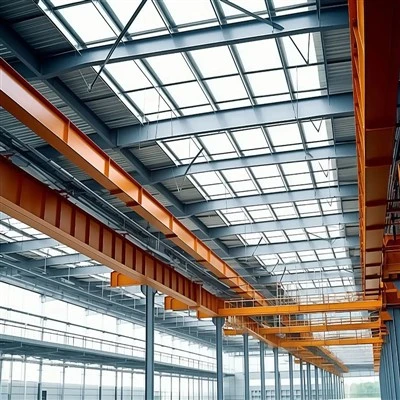
If you’ve ever stepped foot in a steel workshop, you know it’s not just a bunch of guys with hammers and hot metal— it’s a high-octane operation where every single piece of equipment is eating electricity like it’s going out of style. I’ve been in this game for 12 years, running a steel workshop supply business, and let me tell you: energy costs aren’t just a line item on a spreadsheet. They’re the thing that’ll make or break your profit margins, especially when you’re running 12-hour shifts, 6 days a week. A few years back, we had a client who was blowing 28% of their monthly budget just on keeping their furnaces and conveyors running— and they had no clue why. They thought “steel makes heat, so you gotta spend heat”… nah, that’s old school. Today, I’m spilling the real, on-the-ground tips that actually work for managing energy consumption in a steel workshop, not the fancy textbook stuff that never translates to your dirty, loud, busy space.
First off, let’s talk about the big dog in every steel workshop: the arc furnace. That bad boy’s where the magic happens (and where most of the energy leaks out). Most guys I know run their furnaces at full tilt 24/7 because they think turning them off and on wastes more power. Newsflash: that’s a myth— but only if you do it right. We’ve seen clients test this: one shutdown for 8 hours a day (when the workshop is quiet for non-stop maintenance, not empty) cut their furnace energy use by 11% in a month. Wait, why? Because when a furnace’s coil is sitting idle, it’s still holding heat, but if you leave it running at low power instead of full blast, you’re not wasting energy heating up cold steel every time you start a new batch. Also, the way you charge the furnace matters a ton. Most people throw in scrap metal willy-nilly— big chunks, small bits, mixed in haphazardly. I’ve been telling clients for years to sort their scrap into uniform sizes before loading. When the furnace can melt every piece evenly, it doesn’t have to crank up the amps to get that last big chunk soft. One client did that, and their furnace’s energy efficiency jumped 15% in 2 months. We’re talking straight-up savings, no fancy new equipment needed.
Next up, the conveyor systems that move that hot metal from the furnace to the rolling mill to the finishing bay. Conveyors are the silent energy hogs— they run all day, every day, even when there’s no steel on them. I see this all the time: guys just leave them on because turning them on and off is a hassle. But here’s a hack: install motion sensors on every conveyor. If there’s no steel in the loading zone, the conveyor drops to 20% power instead of shutting off completely. When a sensor picks up a load, it ramps back up to full speed in 10 seconds— fast enough that you don’t lose any production time. Another thing: make sure your conveyors are lubricated and the belts are aligned. A misaligned belt wastes energy because the motor’s working extra hard to pull it straight, and friction from a dry belt eats up power like crazy. We recommended that to a mid-sized steel workshop last year, and they cut conveyor energy use by 18% in 3 months. It’s basic maintenance, but most people sleep on it.
Then there’s the ventilation and cooling systems— I know, steel workshops are hot, you need air flow to keep workers safe and equipment from overheating. But most workshops have these big, clunky HVAC units running at full blast 24/7, even when the furnace is cold. That’s a waste. Instead, match the ventilation to the actual heat load. When the furnace is running at full power, ramp up the ventilation— but when it’s just idling, turn it down to a level that keeps dust from building up, not freezing you out. Also, invest in variable frequency drives (VFDs) for your pumps and fans. VFDs let you adjust the speed of motors based on how much power you actually need, instead of running them at fixed full speed all the time. A client of ours put VFDs on their ventilation fans, and that alone saved them 12% on their monthly energy bill. It’s not a huge upfront cost, and the payback is in like 8 months— that’s a no-brainer.
Wait, let’s not forget about lighting. I know, lighting seems trivial next to a furnace, but steel workshops have high ceilings, a lot of dark corners, and if your lighting is outdated, that’s another hidden drain. Most old steel workshops still use fluorescent lights that flicker and waste energy. Swap those out for LED high-bays— they use 75% less energy, last 25 times longer, and give off better light so workers can see what they’re doing, which cuts down on mistakes. We switched our own workshop to LEDs 4 years ago, and our lighting energy use went down by 60%— that’s like an extra $1,200 a month in our pocket. Also, put in motion sensors for areas that are only used at certain times, like the tool crib or the break room. No need to light up a whole bay that’s empty because the shift ended 2 hours ago.
Now, here’s the part that most people miss: training your crew. I don’t care how fancy your equipment is, if your guys are leaving furnaces at half power when they go to grab a coffee, or overloading conveyors so they have to work harder, all that tips go out the window. We hold monthly 30-minute huddles with our clients’ workshop teams to talk about small, daily things that add up. Like, “Don’t leave the water pump running when you’re done cleaning the floor” or “Make sure the furnace door is closed tight between batches— if hot air escapes, you’re wasting all that heat you paid for.” One client started these huddles, and in 6 months, their overall energy consumption dropped by 22%. It’s not rocket science— it’s just getting your team on the same page, because they’re the ones working with this stuff every single day.
Also, don’t sleep on regular energy audits. I know it sounds corporate, but it’s just walking through the workshop with a meter and checking where the power is going. We do free mini-audits for all our supply clients, and every time we find something stupid that’s wasting energy. Like last month, a client had a 10-year-old air compressor that was running even when no one was using the air tools. We told them to install a timer, and they saved 5% on their bill that month. Another one had a pipe leaking hot water, so the boiler was working extra hard to make up for it— fixed that, and their boiler energy use dropped 7%. Audits don’t have to be expensive, and they catch the stuff you can’t see just by looking at your monthly bill.
Wait, let’s address the elephant in the room: upgrading equipment. Yeah, a new, more efficient furnace is a big cost, but if you’re running a 20-year-old model, it’s probably using 30% more energy than a new one. But you don’t have to do a full overhaul at once. Start with the low-hanging fruit first— VFDs, LEDs, motion sensors— then work your way up to bigger upgrades when your budget allows. One of our biggest clients did that: first, they put in motion sensors for conveyors, then swapped to LEDs, then got a new air compressor, and now they’re planning a more efficient furnace in 2 years. They’ve already cut their energy use by 25% without taking out a huge loan, which is way smarter than blowing all their money on one big upgrade at once.
And for the love of all things steel, track your usage. Don’t just glance at your monthly bill— check your real-time energy data. Most modern meters let you see how much power each piece of equipment is using, minute by minute. Set up alerts for when something’s using more power than it should. Like, if your conveyor is running at full speed when there’s no load, the meter will flag that, and you can go fix it before it becomes a bigger problem. We teach all our clients how to use that data, because numbers don’t lie— if you see a spike one month, you can go back and figure out why, instead of guessing.
Look, I’ve been around steel workshops long enough to know that energy management isn’t about being perfect. It’s about making small, consistent changes that add up to big savings. I’ve seen clients go from struggling to pay their electricity bills to putting an extra $50k a year back into their business just by tweaking how they run their operations. And as a steel workshop supplier, that’s what I care about— helping guys like you keep costs down so you can keep making great steel, paying your crew, and growing your business.
If you’re tired of throwing money at energy bills that don’t need to be there, and you want to work with someone who gets the gritty, daily realities of running a steel workshop, hit us up to talk. We don’t do sales pitches— we show up, walk your floor, point out the leaks (literally and figuratively), and help you put together a plan that works for your specific setup. No one-size-fits-all garbage, just real solutions that actually save you money.
Steel Structure Bridge References
- Energy Efficiency in Steel Production: A Practical Guide, American Iron and Steel Institute, 2021
- Industrial Conveyor Energy Management, National Association of Manufacturers, 2022
- Lighting and Ventilation Best Practices for Metalworking Facilities, Occupational Safety and Health Administration, 2020
- Variable Frequency Drives for Industrial Applications, Department of Energy Office of Energy Efficiency and Renewable Energy, 2021
Suzhou Wanyu Steel Structure Construction and Installation Engineering Co., Ltd.
With abundant experience, we are one of the most professional steel workshop manufacturers and suppliers in China. We warmly welcome you to buy customized steel workshop at competitive price from our factory. If you have any enquiry about pricelist, please feel free to email us.
Address: No. 78, Putian Road, Suzhou Industrial Park, Suzhou, Jiangsu Province
E-mail: Zhu@szwanyu.com
WebSite: https://www.wy-metalstructure.com/
