If you’re working in industrial automation, process control, or even renewable energy setups, you know how critical a TMR (Tunneling Magnetoresistance) junction box is. These small, specialized enclosures protect the delicate wiring that carries TMR sensor signals—signals that can make or break a system’s accuracy, safety, and reliability. After 12 years as a TMR junction box supplier, I’ve seen firsthand how even the smallest oversight in interference prevention can lead to costly downtime, false readings, or total system failure. In this post, I’ll break down the most common sources of electrical interference for TMR junction boxes, share practical, field-tested fixes, and explain how our products are designed to address these issues head-on. TMR Junction Box

First, let’s clarify why TMR junction boxes are so vulnerable to interference. Unlike traditional Hall effect sensors, TMR sensors detect extremely small magnetic field changes—sometimes as tiny as a few picotesla. That means any stray electrical noise, whether from nearby power cables, motor drives, or even wireless devices, can overwhelm the weak TMR signal and throw off measurements. A factory floor, for example, is a noisy place: 480V AC motors, variable frequency drives (VFDs), and welding equipment generate constant electromagnetic interference (EMI) and radio frequency interference (RFI). If your TMR junction box isn’t designed to block or mitigate this noise, your entire system could be out of commission before the end of the shift.
Let’s start with the top source of interference: improper grounding and bonding. I’ve visited dozens of client sites where installers skipped proper grounding for their TMR junction boxes, and the results were never good. Grounding isn’t just a safety step—it’s a key part of noise reduction. When a junction box is not bonded to the building’s ground plane or a dedicated earth rod, stray currents from nearby equipment can leak into the enclosure’s wiring, creating a noisy ground reference that corrupts TMR signals. On the flip side, a poorly designed ground (like a ground with high impedance due to rusted connections or undersized wire) can actually act as an antenna, picking up more noise instead of dissipating it. The fix here is twofold: first, ensure your TMR junction box has a dedicated, low-impedance ground connection, separate from the ground used for high-power equipment. Second, use a 6 AWG or larger copper grounding conductor, and verify the ground resistance is less than 5 ohms—most industrial codes specify this for safety and noise control. At our company, every TMR junction box we supply includes a pre-installed, tinned copper grounding lug with a clear torque spec to make this step easy for installers, no guesswork required.
Next, cable routing is a huge, often overlooked factor. I once had a client who installed their TMR junction box right next to a 10kV power cable, and their sensors were giving false readings every time the plant’s main motor turned on. The problem was electromagnetic induction: the power cable’s alternating current creates a magnetic field that couples with the TMR sensor’s wiring in the junction box. The solution? Keep signal cables (the ones carrying TMR output) at least 12 inches away from power cables running 240V or higher. If you can’t maintain that distance, use shielded twisted pair (STP) cables for your TMR signals—twisting the wires cancels out common-mode noise, and the shield blocks external EMI/RFI. Another trick: route signal cables parallel to power cables only when necessary, and cross them at a 90-degree angle wherever they must intersect. That’s because magnetic fields are strongest parallel to a current-carrying cable, so crossing at a right angle minimizes induction. Our TMR junction boxes are designed with dedicated cable glands for shielded cables, with a 360-degree grounding point for the shield to ensure maximum shielding effectiveness—no “floating” shields that don’t do their job.
Shielding itself is another area where mistakes happen. Many installers think any shield will work, but not all shields are created equal. TMR sensors are sensitive to a wide range of frequencies, from low-frequency EMI (from motors) to high-frequency RFI (from Wi-Fi or cellular devices). A good shield needs to cover all these ranges. Our TMR junction boxes use a 0.5mm thick cold-rolled steel enclosure with a galvanized coating, which provides excellent attenuation for low-frequency EMI, combined with a conductive silicone gasket around the lid that creates a continuous shield between the box and its cover—no gaps where noise can sneak in. I’ve seen cheaper enclosures with paint that doesn’t cover the entire box, leaving gaps at screw holes or edges; those gaps are like windows for noise. Also, don’t forget that the shield of your signal cable must be grounded at both ends—at the TMR sensor and at the PLC or measurement device. Grounding only one end of the shield causes a “ground loop,” which creates more noise than it eliminates. It’s a simple step, but one that’s often missed, especially by newer installers.
Another common culprit is variable frequency drives (VFDs). VFDs are essential for energy efficiency in motors, but they generate high-frequency switching noise that’s a major source of RFI. If your TMR junction box is located anywhere near a VFD, you’ll need to take extra steps. First, keep VFD power cables and TMR signal cables in separate conduit runs. Second, use VFD output filters and line reactors to reduce the noise emitted by the VFD itself. Third, make sure your TMR junction box is rated for industrial environments with high EMI—look for enclosures with IP67 rating and EMI attenuation of at least 60dB for frequencies up to 1GHz. All the TMR junction boxes we manufacture meet these specs, tested in our in-house EMI chamber to ensure they perform reliably even next to VFDs running 24/7. I recently had a client in the automotive manufacturing sector who was having issues with TMR-based position sensors near their welding robots—after switching to our shielded, EMI-rated TMR junction boxes and adjusting their cable routing, their error rate dropped by 92%. That’s the kind of result we aim for.
Don’t forget about internal wiring inside the TMR junction box itself. Even if you do everything right on the outside, messy internal wiring can create noise. When wires are loose, or bundled too tightly, they can cross each other, creating capacitive coupling between signal and power wires inside the box. That’s why I always recommend using wire clips to separate signal wires from power wires inside the enclosure, and limiting the number of splices inside the junction box. Every splice is a potential weak point, and using heat-shrink butt connectors instead of crimp splices ensures a solid, low-resistance connection that doesn’t add noise. Also, keep internal wire runs as short as possible—longer internal wires act as antennas, picking up noise within the enclosure. Our TMR junction boxes are designed with internal terminal blocks that separate signal and power terminals, making it easy to wire neatly without cross-contamination. We also include a wiring diagram inside every box, so installers don’t mix up TMR signal lines with power lines during setup.
Environmental factors can also contribute to interference, even if you’ve done all the electrical and cable steps. Humidity, dust, and temperature extremes can degrade the performance of the junction box’s shield or internal components. For example, a humid environment can cause corrosion on the enclosure’s metal surfaces, creating gaps in the shield or increasing ground impedance. That’s why choosing an enclosure with proper environmental sealing is key. Our TMR junction boxes are sealed with a conductive EPDM gasket that resists UV rays, moisture, and dust, maintaining a continuous shield even in harsh outdoor or industrial environments. We also offer a stainless steel option for applications in food and beverage or chemical processing, where corrosion resistance is critical. I once worked with a client in a mining operation, where dust and high humidity were causing their junction boxes to fail every few months—after switching to our IP69K-rated stainless steel TMR junction boxes, they went 18 months without a single interference-related issue.
Now, let’s talk about testing. Even after installing all these fixes, it’s important to test the junction box and the entire system for interference. A basic EMI test can be done with a handheld EMI tester, which measures the noise level in the frequency range your TMR sensor uses (usually 10kHz to 100MHz). If the noise level is more than 10dB below the TMR sensor’s signal level, you’re good to go. For more critical applications, use a spectrum analyzer to identify specific noise sources—this can help you adjust cable routing or shielding if a particular piece of equipment is causing the problem. At our company, we offer free EMI testing consultation for customers who purchase our TMR junction boxes, to make sure their setup is working as intended. We also provide post-installation support, so if you run into issues, our team is here to help troubleshoot.
I’ve seen too many teams cut corners on TMR junction box interference prevention, and the cost adds up fast: downtime, lost production, replacement parts, and even safety risks if a sensor fails. The good news is that most interference issues are preventable with the right products and practices. Proper grounding, cable routing, shielding, and environmental sealing are all key, and choosing a TMR junction box designed specifically for EMI resistance makes a huge difference.
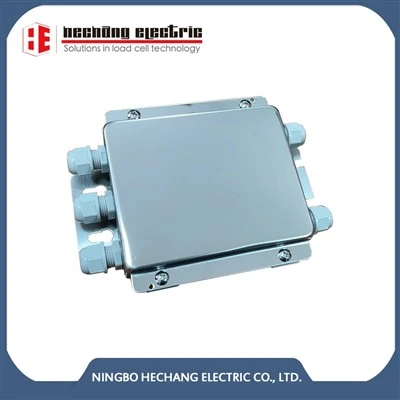
If you’re dealing with TMR signal interference, or you’re looking to upgrade your junction boxes for better performance, we’re here to help. Our team has decades of experience in industrial sensor enclosures, and we can work with you to find the right TMR junction box for your application, whether it’s for factory automation, renewable energy, or harsh outdoor environments. Reach out to our team to discuss your specific needs, and we’ll provide a custom solution tailored to your setup. Don’t let electrical noise derail your operations—let’s make sure your TMR sensors perform accurately, reliably, and interference-free.
Spindle Load Cells References
- IEEE Standards Association. “IEEE 141-2013: Recommended Practice for Electric Power Distribution for Industrial Plants.”
- International Electrotechnical Commission. “IEC 60529: Degrees of Protection Provided by Enclosures (IP Code).”
- TMR Sensor Technology Association. “Best Practices for Integrating TMR Sensors in Industrial Systems.”
- National Electrical Manufacturers Association. “NEMA ICS 6: Industrial Control Equipment—Environmental Considerations.”
Ningbo Hechang Electric Co., Ltd.
As one of the most professional tmr junction box manufacturers and suppliers in China, we also support customized service. We warmly welcome you to buy advanced tmr junction box for sale here from our factory. If you have any enquiry about cooperation, please feel free to email us.
Address: No.66 Yongmao West Road, Ningbo, China
E-mail: info@hcesensor.com
WebSite: https://www.hechangsensor.com/
