Hey there,
I’m Jake, and I’ve been selling custom ceramic parts for the better part of a decade—half that time spent troubleshooting why a brand-new part clients swore would last a year crapped out in three months. More often than not? It wasn’t a manufacturing flaw. It was how someone was handling, cleaning, and storing the ceramic part after it left my warehouse. Ceramic Parts
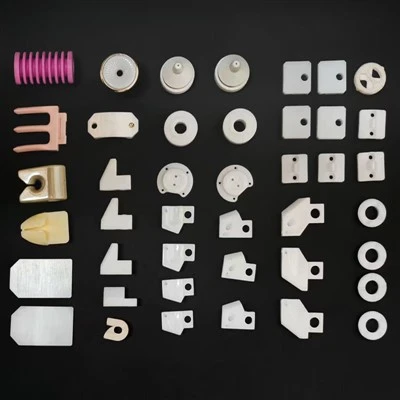
Ceramics get a bad rap for being super fragile, right? Yeah, they’re way more brittle than steel or aluminum, but that’s only part of the story. The stuff we ship out (I don’t mess with cheap, porous junk—we use high-purity alumina, zirconia, sometimes silicon nitride) is engineered to withstand way more than people give it credit for. It just needs a little common sense, not some fancy lab-grade care routine. Let’s break this down like I’d break it down for a client yelling at me because their insulator cracked in 6 weeks.
First up: the unglamorous part—handling. I see this so much, especially with guys who’ve worked with metal their whole lives. Metal’s forgiving. You can toss a steel bracket in a toolbox, knock it against a workbench, no big deal. Ceramics? Not so much, but not because they’ll shatter if you look at ‘em wrong. The mistake people make is thinking they’re indestructible, so they treat ’em like metal. Last month, a client texted me a vid of a 1-inch alumina tube split down the middle. Turns out he’d been prying it free from a fixture with a flathead screwdriver—nicked the edge, which created a micro-crack I couldn’t see when we shipped it, and then he cranked it too tight to mount it. Micro-cracks are ceramic’s worst enemy, way more than full-on drops. A drop from waist height might not do jack, but a tiny scratch along the edge? That’s a stress riser waiting to blow.
Here’s my rule for handling: always grab by the base or the thickest, sturdiest part, not the thin edges or sharp tips. If you’re moving more than one? Don’t stack ’em loose. Use foam inserts or those rubber tray liners we send as freebies (yes, we include those—stop making me add “free protective packaging” to every invoice). Never pry ceramic apart or use it as a lever. And for the love of all that’s holy, don’t set tools on top of ceramic parts. I had a client who laid a 5lb wrench on a ceramic seal and wondered why it leaked oil in a week. Even dense, strong ceramics can’t handle point pressure like a wrench edge.
Next: cleaning. This is where I see even more mess-ups, especially for parts that get used in food, medical, or industrial environments (you know, the good stuff we make). A lot of people think you just blast ’em with a pressure washer or toss ’em in a dishwasher—wrong, wrong, wrong. Porosity is the key here. The high-purity ceramics we use are non-porous, but if you’re using a part that’s got a glazed finish or a complex shape (like a nozzle with tiny holes), you can get residue trapped in crevices. Use a soft-bristle brush—nylon, not metal—for those nooks. No scrubbing with steel wool, that’ll scratch the glaze and create new micro-cracks.
For general cleaning: warm water, mild dish soap (not that harsh antibacterial stuff), and a microfiber cloth. If you need to disinfect? Stick to isopropyl alcohol (70% works fine) for non-food parts, or food-grade vinegar and baking soda for anything that touches edibles or medical supplies. Skip bleach— it can etch ceramic over time, especially if you leave it sitting. And don’t boil ceramic parts unless they’re made for that (we label those, fyi—if we don’t say they’re dishwasher-safe or boilable, don’t do it). Also, dry ’em right away! Standing water can leave mineral deposits that are a pain to buff out later, and if you’re storing them damp? Even non-porous ceramics can get mold or mildew if they’re in a tight, sealed space with no air flow.
Then there’s storage. This is the one people forget until they pull a part out and it’s chipped or covered in gunk. I see two extremes: either they leave parts laying around on a workbench getting covered in dust and kicked by feet, or they stuff ’em in a cardboard box and forget about ’em for 2 years. Neither works. For short-term storage (like parts you’re using this week), keep ’em in those plastic bins with dividers we recommend—no loose stacking. If you don’t have dividers, wrap each part in a paper towel or bubble wrap (not the thin, stretchy kind, the thick stuff) so they don’t scratch each other. And keep ’em off the floor! I had a client who stored boxes of ceramic brackets in his warehouse corner and forgot about a leaky pipe above—water got in, boxes got soggy, half the parts had moisture damage (even ceramics don’t love sitting in standing water).
For long-term storage (parts you’re hoarding for a project that’s 6 months out?), make sure the space is dry, temperature-stable (no attics or garages where it hits 100°F or drops below freezing), and not too dusty. Wrap each part individually, label what’s inside, and stack no more than 2 high—any more and the bottom ones will get crushed. Also, avoid storing them near heavy machinery or tools that vibrate; vibration over time can cause micro-cracks even if nothing’s hitting them directly.
Now, what about specific use cases? I get asked all the time: what about parts that get hot? What about ones used for cutting or grinding? Let’s be real, our silicon nitride cutting blades are made to take heat, but thermal shock will kill ’em faster than anything. Thermal shock is when a part goes from super hot to super cold really fast—like yanking a ceramic insulator out of a 1000°F furnace and dumping it in a bucket of water. Don’t do that. If you need to cool a hot ceramic part, let it air cool slowly for at least 10 minutes, or use compressed air at room temp (no cooling spray, that’s too sudden). Same goes for cold use: if a part’s been sitting in a cold storage area, don’t blast it with warm water right away. Let it come to room temp first.
For parts in industrial settings, like pump seals or bearings? Lubrication matters too. Use a lubricant that’s compatible with ceramics—silicone-based works great, avoid petroleum-based stuff that can break down the glaze over time. And don’t over-lubricate! Excess grease can trap dust and debris, which acts like sandpaper and scratches the part’s surface.
Wait, let’s talk about common myths, because I hear these all the time. Myth #1: Ceramic parts are unbreakable. No. They’re strong in compression, but weak in tension and impact. Drop a ceramic washer on concrete from 3 feet? It’ll chip. Drop a steel washer? It’ll dent. That’s just how they are. Myth #2: You can repair cracked ceramics with super glue. Yeah, you can glue the two pieces together, but that crack is still a weak point—next time it gets stressed, it’ll break right there. We don’t do replacement for user damage, but we do offer repair services for manufacturing defects, so don’t waste your time with super glue unless it’s a temporary fix for a non-critical part. Myth #3: All ceramics need the same care. A glazed ceramic insulator for a spark plug is way different than a porous ceramic filter we sell for water treatment. The care tips I’m giving here are for the high-purity, dense ceramics we specialize in—if you bought a cheap porous part from another supplier, go by their specific instructions, not mine.
Here’s the thing: I’ve been doing this long enough that I know a good ceramic part when I hold it. We source ours from facilities that use 99.5% alumina, zirconia that’s stabilized to prevent cracking, no corners cut on the manufacturing process. But even the best part in the world won’t last if you treat it like a coffee mug you got at a gas station. I’ve seen parts we sold still going strong after 5 years in a food processing plant, and others that failed in 2 months because someone pried them apart with a screwdriver.
If you’re using ceramic parts for a project—whether it’s industrial machinery, medical equipment, food service, aerospace, whatever—we can make custom parts tailored to your exact specs, and I also send a free care sheet with every order. But if you’re having issues with a part that’s not holding up? Hit us up. I’d rather troubleshoot with you now than have you leave a bad review because you thought the part was junk.
Don’t get me wrong, I’m not here to scare you. Ceramics are amazing—they’re corrosion-resistant, heat-resistant, way harder than most metals, and way lighter. They’re perfect for so many applications where metal just doesn’t cut it. But a little care goes a long way. Handle ’em like the precision parts they are, clean ’em gently, store ’em properly, and they’ll outlast almost any metal part you’re pairing them with.

If you’re looking for reliable, high-quality ceramic parts or have questions about care and maintenance, we’re here to help. Reach out to us to talk through your project needs and get all the details on making your ceramic parts last as long as they should.
Ceramic Parts References:
- Environmental and Mechanical Properties of Structural Ceramics, American Ceramic Society, 2021
- Cleaning and Maintenance of Advanced Ceramic Components, International Organization for Standardization (ISO 18555:2016)
- Handling and Storage Guidelines for High-Purity Alumina Parts, Ceramic Parts Manufacturers Association, 2022
Haining Yifeng Ceramic Technology Co., Ltd.
We are one of the most experienced ceramic parts manufacturers and suppliers in China, also support customized service. Welcome to buy high quality ceramic parts made in China here and get pricelist from our factory. For price consultation, contact us.
Address: No. 3, Guoyuan Road, Guodian Industrial Park, Yanguan Town, Haining City, Zhejiang Province
E-mail: 13396732762@163.com
WebSite: https://www.yifengcer.com/
