In the world of mechanical engineering, conical spring washers play a crucial role in various applications. As a supplier of conical spring washers, I’ve had the privilege of engaging with a wide range of industries and understanding the importance of these small yet powerful components. One of the most frequently asked questions I receive from our clients is about the stress distribution in a conical spring washer. Today, I’d like to delve into this topic in detail and share some insights based on my experiences and knowledge. Conical Spring Washer

Understanding Conical Spring Washers
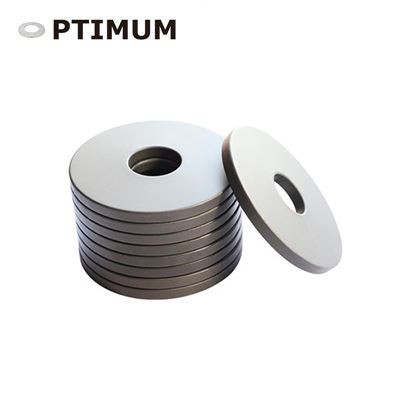
Before we dive into the stress distribution, it’s essential to have a basic understanding of what conical spring washers are. A conical spring washer, also known as a Belleville washer, is a type of spring that is shaped like a cone. It is typically made from materials such as stainless steel, carbon steel, or bronze, and it is designed to provide a high load capacity in a relatively small space.
Conical spring washers are commonly used in applications where there is a need to maintain a constant load, such as in bolted joints, bearings, and electrical contacts. They can also be used to absorb shock and vibration, and to compensate for thermal expansion and contraction.
Factors Affecting Stress Distribution
The stress distribution in a conical spring washer is influenced by several factors, including the material properties, the geometry of the washer, and the applied load. Let’s take a closer look at each of these factors:
Material Properties
The material properties of the conical spring washer play a significant role in determining its stress distribution. Different materials have different mechanical properties, such as Young’s modulus, yield strength, and ultimate tensile strength. These properties affect how the washer responds to the applied load and how the stress is distributed within the washer.
For example, a washer made of a high-strength material will be able to withstand a higher load before it reaches its yield point, and it will distribute the stress more evenly throughout the washer. On the other hand, a washer made of a low-strength material may deform more easily under load, resulting in a non-uniform stress distribution.
Geometry of the Washer
The geometry of the conical spring washer also has a significant impact on its stress distribution. The key geometric parameters that affect stress distribution include the inner diameter, outer diameter, thickness, and cone angle of the washer.
The inner and outer diameters of the washer determine the area over which the load is applied. A larger inner diameter will result in a smaller contact area, which can lead to higher stress concentrations. Conversely, a larger outer diameter will increase the contact area and reduce the stress concentration.
The thickness of the washer affects its stiffness and load capacity. A thicker washer will be stiffer and able to withstand a higher load, but it will also have a higher stress concentration at the edges. A thinner washer, on the other hand, will be more flexible and distribute the stress more evenly, but it will have a lower load capacity.
The cone angle of the washer is another important geometric parameter. A larger cone angle will result in a more flexible washer, which can absorb more deflection before reaching its yield point. However, a larger cone angle will also result in a higher stress concentration at the edges of the washer.
Applied Load
The applied load is the force that is exerted on the conical spring washer. The magnitude and distribution of the applied load have a direct impact on the stress distribution in the washer.
If the applied load is evenly distributed over the entire surface of the washer, the stress distribution will be relatively uniform. However, if the load is concentrated at a specific point or area, the stress will be higher at that location, resulting in a non-uniform stress distribution.
Methods for Analyzing Stress Distribution
There are several methods for analyzing the stress distribution in a conical spring washer, including analytical methods, numerical methods, and experimental methods. Each method has its advantages and disadvantages, and the choice of method depends on the specific requirements of the analysis.
Analytical Methods
Analytical methods involve the use of mathematical equations to calculate the stress distribution in the conical spring washer. These methods are based on the principles of mechanics and materials science, and they can provide accurate results for simple geometries and loading conditions.
One of the most commonly used analytical methods for analyzing the stress distribution in a conical spring washer is the theory of elasticity. This theory allows us to calculate the stress and strain in the washer based on its material properties, geometry, and applied load. However, the theory of elasticity assumes that the material is linear and elastic, which may not be valid for all materials and loading conditions.
Numerical Methods
Numerical methods involve the use of computer algorithms to solve the equations governing the stress distribution in the conical spring washer. These methods are more flexible and can handle complex geometries and loading conditions more accurately than analytical methods.
One of the most commonly used numerical methods for analyzing the stress distribution in a conical spring washer is the finite element method (FEM). The FEM divides the washer into a number of small elements, and it calculates the stress and strain in each element based on its material properties, geometry, and the applied load. The FEM can provide detailed information about the stress distribution in the washer, including the location and magnitude of the maximum stress.
Experimental Methods
Experimental methods involve the use of physical testing to measure the stress distribution in the conical spring washer. These methods are the most accurate and reliable way to determine the stress distribution in the washer, but they are also the most expensive and time-consuming.
One of the most commonly used experimental methods for analyzing the stress distribution in a conical spring washer is the strain gage method. This method involves the use of strain gages, which are small devices that measure the strain in the material. By attaching strain gages to the surface of the washer, we can measure the strain at different locations and calculate the stress based on the material properties of the washer.
Importance of Understanding Stress Distribution
Understanding the stress distribution in a conical spring washer is essential for several reasons. First, it allows us to design washers that can withstand the expected loads without failure. By analyzing the stress distribution, we can identify the locations of the maximum stress and take steps to reduce the stress concentration, such as changing the geometry of the washer or using a different material.
Second, understanding the stress distribution helps us to optimize the performance of the washer. By knowing how the stress is distributed within the washer, we can adjust the design parameters to achieve the desired stiffness, load capacity, and deflection characteristics.
Finally, understanding the stress distribution is important for ensuring the reliability and safety of the application. By designing washers that can withstand the expected loads without failure, we can prevent catastrophic failures that could lead to damage to the equipment or injury to the operators.
Conclusion
In conclusion, the stress distribution in a conical spring washer is a complex phenomenon that is influenced by several factors, including the material properties, the geometry of the washer, and the applied load. By understanding these factors and using appropriate methods for analyzing the stress distribution, we can design washers that can withstand the expected loads without failure and optimize their performance.
TREP French Spring Washers As a supplier of conical spring washers, we are committed to providing our clients with high-quality products that meet their specific requirements. If you have any questions about the stress distribution in conical spring washers or if you are interested in purchasing our products, please feel free to contact us. We would be happy to discuss your needs and provide you with a customized solution.
References
- Roark, R. J., & Young, W. C. (1975). Formulas for stress and strain. McGraw-Hill.
- Timoshenko, S. P., & Goodier, J. N. (1970). Theory of elasticity. McGraw-Hill.
- Cook, R. D., Malkus, D. S., & Plesha, M. E. (2002). Concepts and applications of finite element analysis. Wiley.
Yangzhou Optimum Spring Manufacturing Co., Ltd.
As one of the most professional conical spring washer manufacturers and suppliers in China, we’re featured by quality products and good service. Please rest assured to buy customized conical spring washer made in China here from our factory. For more information, contact us now.
Address: No.9 West of Shuangtang Rd, Yangzhou, P.R. China 225000
E-mail: susie@optimum-spring.com
WebSite: https://www.optimum-spring.com/
