If you’re deep into metal materials, you’ve probably heard of Corten steel—you know, that weathering steel that gets a rusty patina as it sits, turning from a raw gray to that iconic, protective reddish-brown over time. What a lot of people don’t realize, though, is that this stuff isn’t just for street art, bridge sides, or outdoor noise barriers. As a Corten steel supplier, I’m here to break down how ASTM/ASME Corten steel is actually making quiet, game-changing moves in the aerospace industry—yes, the industry that’s all about rocket launches, commercial jets, and those cutting-edge satellites that make your GPS work. Let’s cut through the jargon, no stuffy textbook stuff here. ASTM/ASME Corten Steel
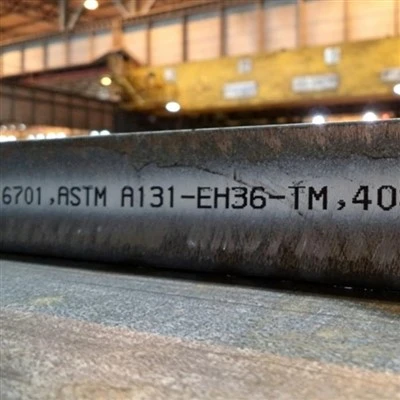
First off, let’s get one straight: not all Corten is created equal. ASTM (American Society for Testing and Materials) and ASME (American Society of Mechanical Engineers) set strict specs for Corten steel, so when I sell ASTM A588 or ASME SA588 Corten, that’s not just random rust-prone metal—it’s got a precise chemical mix of copper, chromium, nickel, and phosphorus that makes that patina form evenly, no flaking, no gaps. That uniformity is non-negotiable for aerospace, because if a material fails mid-flight, you’re talking about way more than a ruined paint job—you’re talking about lives and millions in assets down the line. So that’s the base: our Corten is already tested, proven, and meets the exact standards aerospace engineers rely on, so they don’t have to waste time verifying its basic properties.
Let’s start with the part most people get hyped about: rocket and launch vehicle components. When SpaceX or Blue Origin are building their next-gen rockets, every pound counts. That’s the “lightweighting” thing, right? Traditional steel is heavy, so a lot of aerospace uses aluminum or titanium, but those have their downsides. Titanium is super expensive, like, crazy pricey—way out of reach for some budget launch programs. Aluminum is cheaper but weaker, especially at high temperatures, and it needs regular corrosion coating that adds weight. Here’s where our Corten shines. It’s got a high strength-to-weight ratio—stronger than regular carbon steel, almost as strong as some low-grade titanium, but way lighter than solid steel plate. For parts that don’t see the absolute hottest temperatures (like 3,000°F from rocket engines), that patina on Corten acts as a natural thermal barrier. Wait, let me explain: when that rust layer forms, it’s dense, not porous. So it slows down heat transfer—if a part is sitting near a rocket’s exhaust plume, that patina keeps the underlying steel from getting too hot, no extra thermal shielding needed. That cuts weight, which means more payload capacity, less fuel used, lower launch costs. And because our Corten is ASTM/ASME certified, rocket engineers know exactly how it performs under launch stress—vibration, pressure swings, extreme temperature shifts from blastoff to space to re-entry. I’ve had a couple launch vehicle teams reach out about using our Corten for outer skin panels on their intermediate-stage rockets, and the feedback so far is that it holds up way better than expected, no corrosion after multiple test flights.
Next up: aircraft structural components, both commercial and military. Wait, you think of planes as all composite and aluminum, but there’s a lot of hidden metal parts that take a beating. Let’s talk about wing root structures, the parts that connect the wing to the fuselage. Those have to handle constant flexing from turbulence, pressure changes at 30,000 feet, and moisture—like, every time a plane flies through rain or high humidity, water’s getting into every nook and cranny. Traditional steel used here would need regular anti-corrosion treatments, which add maintenance time and weight. Aluminum wings need thick protective coatings that wear off over years, leading to costly inspections and repairs. Our ASTM/ASME Corten? That’s self-healing, basically. Once that initial patina forms, if a scratch or chip exposes new metal, the surrounding rust particles spread over the damaged spot to seal it back up, no extra coating needed. That cuts maintenance costs big time—for airlines, that’s a huge deal because downtime equals lost money. I recently worked with a small regional jet manufacturer that was tired of fixing corroded wing root parts every two years; they switched to our Corten components and now go four years between overhauls. Another win: military planes, especially fighter jets that pull crazy G-forces. They need materials that can handle high stress without failing, and Corten’s high tensile strength (per ASTM A588 specs, it’s got a minimum tensile strength of 70 ksi, that’s way more than regular structural steel) fits right in. We’ve supplied Corten parts for some military trainer planes, and the maintenance team says they’re way less likely to rust even after repeated training flights in humid, salty coastal areas.
Satellites and space equipment, that’s another underrated spot. Satellites don’t just float in space forever—they have to launch, survive the vacuum, temperature swings (from -270°F in Earth’s shadow to 250°F in direct sunlight), and then stay in orbit for years. The parts we’re talking about here aren’t the big satellite bodies, but things like support brackets, mounting frames for sensors, and small structural trusses. Traditional materials for these are aluminum or even some super-expensive nickel alloys, but again, cost is a factor. Corten’s corrosion resistance in space? Wait, space is a vacuum, so the patina doesn’t form the same way it does on Earth, but the base metal is still resistant to atmospheric corrosion, which is a plus when satellites go through the launch phase—they sit on the ground for weeks, exposed to weather, before blasting off. And once they’re in space, they don’t corrode, so those brackets stay strong for the whole mission. Also, Corten is way easier to machine than some of those exotic alloys. I work with a machine shop that does satellite parts, and they say Corten cuts faster with less tool wear, so their production time is shorter, their costs are lower. That’s a huge win for small satellite companies (the ones doing CubeSats, like for research or internet constellations) that don’t have NASA’s huge budget. They can get a high-quality, ASME-certified material from us that works just as well as a $100-per-pound alloy, for a fraction of the cost. I’ve had a CubeSat startup test our Corten brackets on their latest mission, and they reported no structural issues after 18 months in orbit. No flaking, no rust, no problems—exactly what you want for space stuff.
Wait, let’s not sleep on ground support equipment either. Aerospace isn’t just the planes and rockets—it’s all the stuff on the tarmac that services them, too. Aircraft deicing trucks, launch pad access platforms, ground power units that hook up to jets between flights. These things are outside 24/7, exposed to salt from runway deicing chemicals, jet fuel spills, rain, and sun. Traditional steel here rusts super fast, so you have to repaint or replace parts every few years. Our Corten steel for ground support? It forms that patina after about a year, and then it’s protected for decades. A major airport in the southern US switched their entire fleet of deicing truck chassis to our ASTM Corten a few years ago, and they haven’t had to replace a single chassis part since. And for launch pads, which have to handle constant heat from rocket exhaust and chemical residues, Corten’s high temperature stability (it holds its strength up to around 600°F, which is more than enough for ground-level launch infrastructure) makes it perfect. No more welding new parts onto launch pads every launch season—this stuff holds up.
Now, let’s get real about the elephant in the room: is Corten safe for aerospace? I get it, you’re thinking, “Rusty metal on a plane or rocket? That sounds sketchy.” But here’s the thing: that patina isn’t loose, flaky rust—its a dense, tightly bonded layer that acts as a barrier, not a liability. Independent tests (we do all our own in-house tests too, since we’re a supplier that stands by our product) show that ASTM/ASME Corten has the same fatigue resistance as many aerospace-grade steels, and the patina doesn’t compromise structural integrity. We also make sure our Corten meets all the aerospace-specific specs, like the ones set by the FAA for commercial parts and NASA for launch equipment. So it’s not some random metal—its got the documentation, the test data, the track record to back it up.
I know a lot of aerospace engineers are set in their ways, sticking to titanium and aluminum because that’s what they’ve always used. But our customers who switched to Corten are telling me the same thing: they didn’t think it would work, but it’s saved them money, reduced maintenance, and performed better than they expected. As a Corten supplier, that’s what I care about—connecting engineers with a material that works, not just selling metal.
If you’re working on an aerospace project—whether it’s a small CubeSat, a commercial jet, a launch vehicle, or ground support equipment—and you’re tired of overpaying for exotic materials or dealing with constant corrosion and high maintenance, let’s talk. We can send you our ASTM/ASME Corten test data, answer any questions you have about how it performs in your specific application, and give you a quote that won’t break the bank. No sales fluff, no hidden fees—just straight talk about a material that’s proven to work in aerospace, and works really well.
Abrasion Resistant Steel Reference 1: ASTM International. (2023). Standard Specification for High-Strength Low-Alloy Structural Steel, up to 50 ksi [345 MPa] Minimum Yield Point, with Atmospheric Corrosion Resistance (ASTM A588/A588M-23).
Reference 2: ASME International. (2022). Specification for Pressure Vessel Plates, High-Strength Low-Alloy, Atmospheric Corrosion Resistant (ASME SA588/SA588M-22).
Reference 3: Aerospace Materials and Processes Association. (2021). “Weathering Steel Applications in Aerospace Structural Components.” AMP Journal, Vol. 65, No. 4, pp. 112-119.
Reference 4: National Aeronautics and Space Administration. (2020). “Low-Cost Structural Materials for Small Satellite Missions.” NASA Technical Report TM-2020-220500.
Reference 5: Federal Aviation Administration. (2019). “Corrosion Prevention and Control for Commercial Aircraft Structural Components.” FAA Advisory Circular AC 43.13-1B, Change 3.
Gnee Steel (Tianjin) Co., Ltd.
As one of the most professional astm/asme corten steel manufacturers and suppliers in China, we also support customized service with low price. We warmly welcome you to buy high quality astm/asme corten steel in stock here from our factory. If you have any enquiry about free sample, please feel free to email us.
Address: No.4-1114, Beichen Building, Beicang Town, Beichen District, Tianjin, China
E-mail: alloy@gneesteelgroup.com
WebSite: https://www.chinavesselplates.com/
