Hey everyone, if you’ve ever worked in construction, mining, or any field that relies on diesel air compressors, you know how critical they are to keeping the whole operation moving. Last week, I was on a call with a customer out in Denver—he’s got a bunch of compressors running at 5,280 feet (that’s a mile high, for those who don’t know) and he was complaining they were hitting their max pressure way sooner than they should, and his team was wasting so much time troubleshooting. That conversation got me thinking: how many folks actually get why altitude messes with diesel air compressor performance? I’ve been in this game as a diesel air compressor supplier for over a decade, and this is one of the most common headaches I hear about, but also one of the most fixable once you understand the science behind it. Let’s break this down like we’re talking over a coffee at a jobsite, no boring jargon overload. Diesel Air Compressor
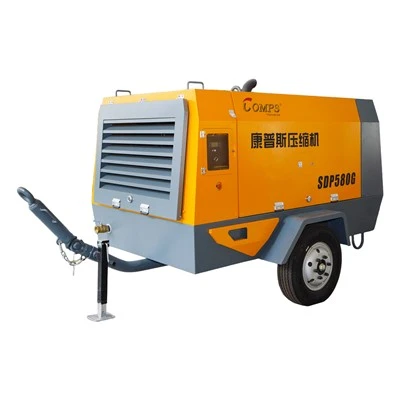
First, let’s start with the basics you probably already know, but need to tie it to altitude. Diesel air compressors run on two main things: diesel fuel and air. The engine burns fuel, mixes it with air, compresses that mix to push out high-pressure air for tools, pneumatic systems, whatever. Now, at sea level, the air we breathe— and that the compressor sucks in— is “thick,” right? That’s because atmospheric pressure is higher there. At 1,000 feet, atmospheric pressure is a little lower, at 5,000 feet it’s way thinner, and by 10,000 feet it’s almost half what it is at sea level. Wait, let’s get that straight: atmospheric pressure drops about 1 inch of mercury for every 1,000 feet of elevation gain, roughly. So at 5,000 feet, that’s 5 inches lower than sea level—so the air density is like 15% less. Yeah, 15% less oxygen, less total air molecules per cubic foot. That’s the key here.
So why does that matter for the compressor’s engine? The diesel engine that drives the compressor pump needs a specific ratio of fuel to air to burn efficiently. If there’s less air coming in, the engine can’t burn as much fuel as it’s calibrated to at sea level. Let’s say at sea level, your compressor’s engine is designed to take in 100 cubic feet of air per minute (cfm) and mix it with 1 gallon of diesel fuel. At 5,000 feet, you’re only getting 85 cfm of air for that same amount of fuel. That creates a rich fuel mixture—too much fuel, not enough air. Rich mixtures don’t burn completely, right? So the engine doesn’t make as much power. Less engine power means less power driving the compressor pump, so the pump can’t move as much air, or can’t build pressure as high as it’s rated for. That’s exactly what my Denver customer was seeing. His compressor was rated for 300 cfm at 100 psi at sea level, but at 5,280 feet, it was only putting out like 255 cfm at 85 psi—way short, and his jackhammers were barely working.
Wait, but it’s not just the engine power that takes a hit. Let’s talk about the compressor pump itself. The pump’s job is to suck in ambient air, compress it, and push it out through the discharge port. The pressure the pump can achieve depends on the difference between the ambient atmospheric pressure on the intake side and the pressure you want to build on the discharge side. If ambient pressure is lower at high altitude, the “push” the pump has to work against on the intake is weaker. So even if the engine was making full power, the pump can’t pull in as much air to compress, because there’s less air to begin with. It’s like trying to fill a balloon with a straw at the top of a mountain vs. sea level—there’s just less air around to draw in. That’s why some compressors at high altitude will stutter or cycle off prematurely because they can’t reach their target pressure.
But here’s the thing: a lot of people don’t realize this isn’t a permanent death sentence for your compressor. A lot of new compressors come with altitude derating built in, right? Manufacturers will rate their compressors at sea level, and for every 1,000 feet above sea level, you can expect roughly a 3-4% drop in engine power, which translates to a similar drop in compressor output. So that 300 cfm compressor at sea level is looking at about 15% less cfm at 5,000 feet—so around 255 cfm, which lines up with what my Denver customer was seeing. But what if you need more than that? Or what if you’re at 10,000 feet, where the drop is like 30%? That’s a big gap, and running a compressor way under its rating is a waste of fuel and money, plus it could damage the engine long-term from burning rich.
So what are the solutions here? As a supplier, I’ve walked customers through a few options over the years, and none of them are as complicated as you might think. First, there’s turbocharging. A lot of modern diesel compressors come with variable geometry turbochargers (VGTs) that adjust how much air they push into the engine based on altitude. At high elevation, the turbo cranks up the boost to force more air into the engine, matching the air density at sea level. My Denver customer actually upgraded his compressor to a VGT model a few months after our call, and he texted me saying his output is back to within 5% of rated, even at 5,300 feet. That’s a game-changer for guys working in the Rockies or the Andes.
Another option is intercooling. When air is compressed by a turbo, it gets hot—hot air is less dense, so you’re back to the same problem of less oxygen. Intercoolers cool that compressed air before it goes into the engine, making it denser again. So even at high altitude, you’re getting more oxygen into the combustion chamber, which means you can burn more fuel, make more power, and get better compressor output. It’s like adding a little extra “thickness” to the air the engine uses.
Wait, but what if you have an older compressor that doesn’t have these features? You can do manual altitude derating too. That means adjusting the fuel injection pump to cut back on the amount of fuel the engine gets at high elevation, so the air-fuel ratio stays correct. No more rich mixtures, so the engine burns fuel more efficiently, makes more consistent power. I had a customer out in Wyoming a few years ago with a 10-year-old compressor he ran at 6,500 feet—he was getting maybe 60% of rated output, and once we adjusted the fuel pump for altitude, he got back to around 85%. That was enough to keep his entire crew’s pneumatic tools running without buying a whole new compressor, which saved him a ton of cash.
But let’s be real—there are some myths out there I need to bust too. A lot of people think “high altitude means less pressure from the compressor, so I just need to set my tools to lower pressure.” But that’s risky, especially if you’re running heavy-duty tools like breakers or rock drills. They’re calibrated for a specific psi, and running them lower can make them less effective, or even cause damage to the tool itself. The better move is to get your compressor optimized for your elevation, not just adjust the tools. Another myth: diesel compressors don’t work at all at high altitude. No, they just work differently. I’ve got customers running compressors at 12,000 feet in the Himalayas—they just use specialized high-altitude models with twin turbos and oversized intercoolers, and they run fine.
Also, don’t sleep on maintenance at high altitude. Because the engine is burning fuel at a slightly different ratio, the intake filters and air filters get clogged faster. At high elevation, dust is often worse too—if your air filter is dirty, you’re getting even less air into the engine, making the performance hit way worse. I tell every customer working above 3,000 feet to check their air filter every 50 hours, not every 100 like you would at sea level. That small step keeps the compressor running consistently and prevents unnecessary wear on the engine.
Let’s circle back to that Denver call to make it real. My customer, Jake, was working on a road construction project, and his crew was falling behind because their breakers couldn’t break through hard granite—they needed 90 psi, but were only getting 75. He first tried cranking up the pressure on the compressor, but that made the engine overheat, and he ended up needing a new head gasket before we even figured out the altitude issue. Once we explained how the air density was killing his output, we recommended the VGT upgrade, and he also switched to high-altitude air filters. A week later, he sent me a video of his crew knocking out 100 feet of road bed in a day, double what they’d been doing. That’s the difference between understanding altitude’s effect and just guessing.
So if you’re working at elevation—whether that’s a mountain jobsite, a mine in the Rockies, or even a warehouse in Denver that’s up high—don’t just write off your diesel air compressor as underperforming. A lot of the time, it’s not the compressor itself being broken, it’s the altitude messing with the basic physics of how the engine and pump work. And if you’re looking to upgrade or optimize, there’s no one-size-fits-all fix, but there are solutions that will get you the performance you need without breaking the bank.
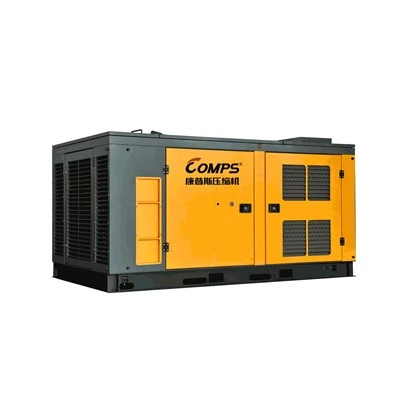
If you’re dealing with a compressor that’s underperforming at high altitude, or you’re planning a project at elevation and want to make sure your compressor is set up right, reach out. I’ve helped dozens of customers work through this exact issue, and I can walk you through what options make sense for your specific elevation, compressor model, and job needs. No pushy sales stuff, just straight talk about what will work for you.
Diesel Air Compressor References:
- Gas Engine and Turbine Power Handbook, 5th Edition, McGraw-Hill, 2019
- Compressed Air System Performance: A Sourcebook for Industry, U.S. Department of Energy, 2021
- Altitude Effects on Internal Combustion Engines, Society of Automotive Engineers (SAE) International, 2018
- Diesel Air Compressor Technical Manual, Global Power Equipment Group, 2020
Comps Compressor (Shijiazhuang) Co., Ltd.
As one of the most professional diesel air compressor manufacturers and suppliers in China, we’re featured by quality products and good price. Please rest assured to buy customized diesel air compressor made in China here from our factory. Also, pricelist is available.
Address: No.172, Nanche Road, Shijiazhuang Equipment Manufacturing Industrial Park, Luancheng District, Shijiazhuang City, Hebei Province
E-mail: kpswmb@kangpusi.com
WebSite: https://www.comps-compressor.com/
