Hey there! As a ductile iron casting supplier, I often get asked if ductile iron casting can be used in high – temperature environments. So, I thought I’d write this blog to share my insights on the topic. Ductile Iron Casting

First off, let’s talk a bit about what ductile iron casting is. Ductile iron, also known as nodular or spheroidal graphite iron, is a type of cast iron. It’s got graphite in the form of tiny nodules, which gives it some pretty cool properties. Compared to regular gray cast iron, ductile iron is more ductile and tough. It can bend a bit before it breaks, which is super useful in many applications.
Now, when it comes to high – temperature environments, things get a bit tricky. The basic answer is yes, ductile iron casting can be used in high – temperature settings, but there are some important factors to consider.
One of the main things is the temperature range. Ductile iron can generally handle temperatures up to around 300 – 400 degrees Celsius (about 572 – 752 degrees Fahrenheit) without any major issues. At these temperatures, its mechanical properties remain relatively stable. The structure of the graphite nodules allows the iron to withstand some heat stress without cracking easily.
But as the temperature goes higher, problems start to pop up. Above 400 degrees Celsius, the strength of ductile iron begins to drop. The heat can cause changes in the microstructure of the iron. The graphite nodules might start to transform, and the mechanical properties, like tensile strength and ductility, can degrade significantly. For example, the elongation of the material at high temperatures can decrease, making it more brittle.
Another aspect is oxidation. When ductile iron is exposed to high temperatures in the presence of oxygen, oxidation occurs. Oxidation is a chemical reaction where the iron reacts with oxygen to form iron oxide (rust). At high temperatures, this oxidation process can be quite rapid. The oxide layer that forms on the surface can flake off, which not only weakens the material but can also contaminate the surrounding environment.
However, there are ways to make ductile iron casting more suitable for high – temperature environments. One method is to add alloying elements. Elements like nickel, chromium, and molybdenum can be added to the ductile iron. These alloying elements can improve the high – temperature strength and oxidation resistance of the casting. For instance, nickel can help in maintaining the ductility of the iron at high temperatures, while chromium forms a protective oxide layer on the surface, reducing further oxidation.
Heat treatment is another option. By subjecting the ductile iron casting to specific heat treatment processes, we can modify its microstructure to enhance its high – temperature performance. For example, a process called annealing can relieve internal stresses in the casting and improve its overall stability at high temperatures.
In some industries, ductile iron casting has found its place in high – temperature applications. In the automotive industry, for example, some engine components are made from ductile iron. These components need to withstand the high temperatures generated during engine operation. The exhaust manifolds, which carry the hot exhaust gases out of the engine, are sometimes made from ductile iron. With the right alloying and heat treatment, these components can perform well under high – temperature conditions.
In the power generation industry, ductile iron castings are also used. Some parts of boilers and heat exchangers can be made from ductile iron. These parts need to handle the high temperatures and pressures associated with power generation. Again, proper alloying and design are crucial to ensure the long – term performance of these castings in high – temperature environments.
But it’s not all rosy. There are still limitations. When the temperature gets extremely high, say above 600 degrees Celsius (about 1112 degrees Fahrenheit), even with alloying and heat treatment, ductile iron might not be the best choice. In such cases, other materials like stainless steel or nickel – based alloys might be more suitable. These materials have better high – temperature strength and oxidation resistance compared to ductile iron.
So, if you’re thinking about using ductile iron casting in a high – temperature environment, here are some questions you should ask yourself. What’s the exact temperature range the casting will be exposed to? How long will it be at that high temperature? Is oxidation a major concern? And what kind of mechanical properties are required at high temperatures?
If you’ve got a project that involves high – temperature applications and you’re considering ductile iron casting, I’m here to help. We’ve got a team of experts who can work with you to determine if ductile iron is the right material for your needs. We can also help with the alloy selection, heat treatment, and overall design of the casting to ensure it performs well in high – temperature environments.
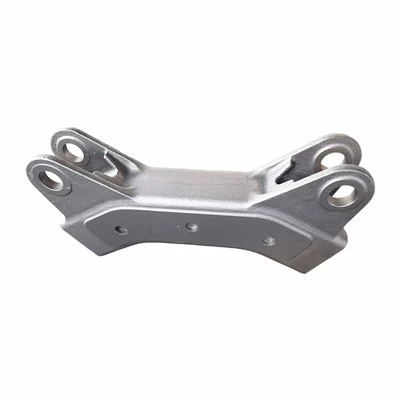
Whether you’re in the automotive, power generation, or any other industry, we’ve got the experience and knowledge to provide you with the best ductile iron casting solutions. So, don’t hesitate to reach out and start a conversation with us. We’re eager to discuss your project requirements and see how we can meet your needs.
Ductile Iron Casting References:
- ASM Handbook Volume 1: Properties and Selection: Irons, Steels, and High – Performance Alloys
- Foundry Handbook – Cast Iron Vol. 2
Sangroove (Jiangsu) Machinery Co., Ltd.
Sangroove (Jiangsu) Machinery Co., Ltd. is one of the most professional ductile iron casting manufacturers and suppliers in China, also supports customized service with low price. Please feel free to wholesale cheap ductile iron casting in stock here from our factory. Also, pricelist is available.
Address: No. 789, Hengyang South Road, Jinhu County, Huai’an City, Jiangsu Province
E-mail: quote@sangroove.com
WebSite: https://www.sangoh.com/
