Calibrating a guardrail roll forming machine is a crucial process that ensures the machine operates at its optimal performance, producing high – quality guardrails with precision. As a supplier of guardrail roll forming machines, I understand the significance of proper calibration and am here to share some in – depth knowledge on how to carry out this task effectively. Guardrail Roll Forming Machine

Understanding the Importance of Calibration
Before delving into the calibration process, it’s essential to understand why calibration is so important. A well – calibrated guardrail roll forming machine can produce guardrails that meet the required standards in terms of dimensions, shape, and quality. Incorrect calibration can lead to a variety of issues, such as uneven profiles, inaccurate lengths, and poor surface finishes. These problems not only affect the functionality of the guardrails but also increase production costs due to wasted materials and rework.
Pre – Calibration Checks
Before starting the calibration process, a series of pre – calibration checks should be carried out.
- Inspect the Machine Components
- Check all the mechanical parts of the machine, including the rollers, gears, and bearings. Look for any signs of wear, damage, or misalignment. Replace any worn – out or damaged parts before proceeding with calibration.
- Examine the electrical system. Ensure that all the wires are properly connected, and there are no loose connections or short circuits. Check the control panel to make sure all the buttons and indicators are functioning correctly.
- Clean the Machine
- Remove any debris, dust, or metal shavings from the machine. This is especially important for the rollers, as any foreign particles can affect the forming process and lead to inaccurate profiles. Use a clean cloth and a suitable cleaning agent to clean the surfaces of the machine.
- Prepare the Material
- Select a suitable test material that is similar to the actual material used for guardrail production. The material should have the correct thickness and width. Cut the test material to an appropriate length, usually a few meters, to ensure that the calibration process can be carried out effectively.
Step – by – Step Calibration Process
1. Roller Alignment
The alignment of the rollers is one of the most critical aspects of calibrating a guardrail roll forming machine.
- Visual Inspection
- Start by visually inspecting the rollers to ensure they are in a straight line. Check the alignment of the upper and lower rollers. Any misalignment can cause the guardrail to have an uneven profile.
- Use Alignment Tools
- Employ alignment tools such as laser alignment devices or straightedges. Place the alignment tool along the length of the rollers to check for any deviations. If misalignment is detected, adjust the roller positions using the adjustment bolts provided on the machine. Make small adjustments at a time and re – check the alignment until it is within the acceptable tolerance.
2. Gap Adjustment
The gap between the upper and lower rollers needs to be adjusted to ensure the correct thickness of the guardrail.
- Measure the Gap
- Use a feeler gauge to measure the gap between the rollers at different points along the length of the machine. The gap should be consistent throughout the entire length of the rollers.
- Adjust the Gap
- If the gap is too large or too small, use the gap adjustment mechanism on the machine. This may involve turning adjustment screws or using hydraulic systems to increase or decrease the gap. Make sure to adjust the gap evenly on both sides of the machine to avoid any unevenness in the guardrail.
3. Speed Calibration
The speed of the roll forming machine affects the quality and production rate of the guardrails.
- Set the Target Speed
- Determine the appropriate speed for the guardrail production based on the material type, thickness, and the complexity of the profile. Refer to the machine’s manual for the recommended speed range.
- Calibrate the Speed
- Use the speed control system on the machine to set the desired speed. Monitor the speed using a tachometer or the speed indicator on the control panel. Make adjustments as necessary to ensure that the machine is operating at the correct speed.
4. Profile Calibration
The profile of the guardrail is determined by the shape of the rollers.
- Check the Profile
- Feed the test material through the machine and observe the formed profile. Measure the dimensions of the guardrail using a caliper or a micrometer. Compare the measured dimensions with the required specifications.
- Adjust the Rollers
- If the profile is not within the acceptable tolerance, adjust the shape of the rollers. This may involve grinding or reshaping the rollers to achieve the correct profile. In some cases, it may be necessary to replace the rollers if they are severely worn or damaged.
5. Length Calibration
The length of the guardrail is another important parameter that needs to be calibrated.
- Set the Length
- Use the length control system on the machine to set the desired length of the guardrail. This may involve adjusting the cutting mechanism or the feeding system.
- Test the Length
- Produce a few guardrails and measure their lengths. If the lengths are not accurate, make adjustments to the length control system. Check for any issues with the cutting blade or the feeding mechanism that may be causing the length variations.
Post – Calibration Checks
After completing the calibration process, a series of post – calibration checks should be carried out to ensure that the machine is operating correctly.
- Produce Test Samples
- Produce a batch of test guardrails using the calibrated machine. Inspect the samples for any defects, such as uneven profiles, incorrect lengths, or poor surface finishes.
- Measure the Dimensions
- Measure the dimensions of the test guardrails using precision measuring tools. Ensure that the dimensions are within the required specifications.
- Check the Quality
- Examine the surface finish of the guardrails. Look for any scratches, dents, or other surface defects. Check the strength and durability of the guardrails by conducting simple tests, such as bending or impact tests.
Troubleshooting during Calibration
During the calibration process, you may encounter some issues. Here are some common problems and their solutions:
- Uneven Profile
- If the guardrail has an uneven profile, check the roller alignment and the gap between the rollers. Make sure the rollers are clean and free from any debris. Adjust the roller positions and the gap as necessary.
- Incorrect Length
- For incorrect lengths, check the length control system. Make sure the cutting blade is sharp and properly adjusted. Check the feeding mechanism to ensure that the material is being fed at a consistent rate.
- Poor Surface Finish
- A poor surface finish may be caused by dirty rollers or a dull cutting blade. Clean the rollers and replace the cutting blade if necessary.
Conclusion
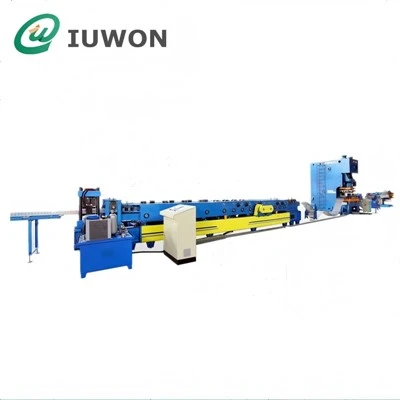
Calibrating a guardrail roll forming machine is a complex but essential process that requires careful attention to detail. By following the steps outlined above, you can ensure that your machine is operating at its best, producing high – quality guardrails that meet the required standards. As a supplier of guardrail roll forming machines, we are committed to providing our customers with the necessary support and guidance to ensure the proper calibration and operation of our machines.
Gutter Roll Forming Machine If you are in the market for a guardrail roll forming machine or need assistance with calibration, please feel free to contact us for a consultation. We have a team of experts who can help you select the right machine for your needs and provide you with comprehensive after – sales support.
References
- Manufacturer’s manuals for guardrail roll forming machines
- Industry standards for guardrail production
- Technical papers on roll forming technology
Hanghzou IUWON Technology Co., Ltd.
Hanghzou IUWON Technology Co., Ltd. is one of the most professional guardrail roll forming machine manufacturers and suppliers in China. Please feel free to buy high quality guardrail roll forming machine made in China here from our factory. For price consultation, contact us.
Address: No.755, Xintangtou Village, Xinjie Street, Xiaoshan District, Hangzhou, Zhejiang
E-mail: sales@iuwon.com
WebSite: https://www.iuwonforming.com/
