If you’re deep in the flexible packaging, label, or thin-film manufacturing game, you’ve definitely heard people throw around “slitter rewinder” and “turret slitter rewinder” like they’re the same thing. Spoiler: they’re not. I’m Jake, been selling turret slitters for 8 years, and I’ve lost count of how many new shop owners come to me saying, “I just need a slitter, so I’ll grab the cheapest basic one.” Big mistake—costs them in downtime, messy rolls, and missed deadlines. Let’s break this down like we’re hanging out in my shop, not at a stuffy trade show. Turret Slitter Rewinder

First, let’s start with the basic slitter rewinder, the kind you can find for a few grand on Amazon or a surplus lot. At its core, it’s straightforward: you feed a big parent roll of thin material (think plastic film, paper, foil, labels) through a set of sharp blades that slice it into smaller, narrower rolls, then winds those onto cores. No fancy tricks, just one rewind shaft at a time. That’s the key limitation. If you’re running a job, you have to wait until that single shaft is full, cut the material by hand, swap out the empty core, and re-thread everything before you start the next roll. If your shop makes 10 different label widths in a day? That’s 10 swaps, 10+ minutes each—quick math says that’s an hour and a half of wasted time, not including the risk of messing up the thread and ruining a full parent roll.
Now, what about when you scale? Say you land a big order for snack packaging foil—those rolls need to be super tight, no wrinkles, uniform diameter, or they’ll get rejected at the converter. Basic slitters often can’t handle tension consistency well, especially with stretchy stuff like LDPE. The single shaft means you can’t adjust tension mid-job, so if your material shifts, you’re fighting it the whole time. And let’s not talk about roll quality: basic models use simple tension control, so small parent roll variations (like a slightly lumpy core) lead to off-center cuts or wobbly finished rolls that fall apart when you ship them. New guys in the space deal with this all the time—they buy the cheap slitter, mess up a 5,000 ft roll, and have to re-run it, losing money on materials and time.
This is exactly where a turret slitter rewinder changes the game. The “turret” part is the star here—instead of one single rewind shaft, you’ve got two (sometimes three, depending on the model) mounted on a rotating turret arm. Think of it like a lazy Susan for your rolls. Here’s how that works: while one shaft is running, you can prep the second one off to the side. Thread it, load a new core, set the tension, test a small scrap strip. When the first shaft is full, you flip the turret with a single switch—no hand-cutting, no re-threading, just seamless swap. That cuts changeover time from 10+ minutes to 60 seconds, easy. I’ve had a customer go from 12 orders a day on a basic slitter to 22 a day on a turret model—huge jump in output, same number of employees.
Tension control is another big win. Turret slitters have way more advanced systems—some use pneumatic or hydraulic tension control, even servo-driven ones that adjust in real-time. This is non-negotiable for high-quality, stretchy materials like bubble wrap or medical film, where too much tension stretches the material and too little makes wrinkled rolls. Basic slitters often use manual tension, which is fine for thick paper but terrible for thin, sensitive films. I had a client a couple months back who was ruining 15% of their medical packaging rolls on a basic slitter; within a month of upgrading to our turret model, that waste was down to 1%—saved them $12k a month in materials.
Wait, but hold on—are turret slitters always better? No, actually. If you’re a small craft label maker running 100 ft rolls for hobby use, a basic slitter is overkill. It’s $3k vs. $20k for a entry-level turret, so that’s a big difference. But if you’re running commercial jobs, 8+ hours a day, dealing with consistent orders and tight deadlines, the turret pays for itself in 6-12 months, tops. I see a lot of guys make the mistake of buying cheap first and then upgrading 2 years later—wasting money on two machines instead of one that fits their needs from day one.
Let’s also talk about roll quality, because that’s what keeps your customers coming back. Turret slitters have precision blade alignment—some use shear blades that slice cleaner than the rotary blades on basic slitters, so no frayed edges on your rolls. And since the turret swaps automatically, you don’t have those sudden tension drops that cause rolls to be unevenly wound. One of my repeat customers, a flexible packaging company, told me their client rejection rate dropped 90% after switching to our turret slitter—they now get more big orders because their rolls are consistent every time.
Another thing to consider is downtime. If a basic slitter’s shaft breaks, you have to shut the whole machine down to replace it. On a turret slitter, if one shaft has a minor issue, you can still run on the other one while you fix it. That’s huge for shops that run 24/7 shifts during busy season. Last holiday rush, a customer of ours had a basic slitter shaft seize up the night before a big order; they borrowed our demo turret slitter and finished the order on time, no penalties.
Wait, let’s clear up a common misconception: turret slitters aren’t just for big factories. We have entry-level models for small to mid-sized shops that fit in a 10×12 foot space, which is perfect for guys operating out of a rented warehouse unit. They don’t have all the fancy bells and whistles of industrial models, but they still cut changeover time by 70% and tension waste by half.
So how do you pick the right one? Ask yourself: what’s your daily output? What materials do you run most often? Do you have tight deadlines that require fast changeovers? If you said yes to consistent commercial orders, stretchy or thin materials, and less downtime, a turret slitter is worth the investment. If you’re just starting out, running small batches, basic is fine for now, but keep the turret in mind for when you scale.
I get it, buying a slitter is a big decision. You don’t want to drop cash on a machine that doesn’t fit your needs, and you definitely don’t want to deal with the headache of constant downtime or bad rolls. I’ve worked with hundreds of shops—from startup label makers to large packaging plants—and I’ve helped them pick the right machine for their budget and workflow. If you’re tired of wasting time on changeovers, dealing with roll waste, or missing delivery deadlines, let’s chat. We can walk through your current process, show you how a turret slitter would fit, and even do a demo at your shop so you can see the difference for yourself. No pressure, just straight talk about what will actually make your shop run better.
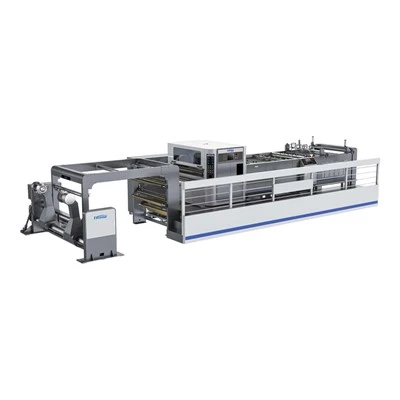
Oh, and one last tip: when you’re shopping, don’t just look at the price. Look at after-sales support, blade replacement costs, and how easy the machine is to operate. A cheap slitter from a no-name brand might break down in 2 years, but a quality turret slitter is built to last 10+ years with minimal maintenance. That’s the real ROI.
Turret Slitter Rewinder References:
- Flexible Packaging Association. (2022). Slitting and Rewinding Best Practices for Flexible Materials.
- Industrial Machinery Digest. (2023). Turret Slitter vs. Basic Slitter: Operational Efficiency and Cost Analysis.
- Label and Narrow Web Technologies Association. (2021). Roll Quality Standards for Commercial Label Production.
Honghui Machinery Equipment Co., Ltd.
As one of the most professional turret slitter rewinder manufacturers in China, we have world-leading production equipment and strong manufacturing capabilities. Please rest assured to buy advanced turret slitter rewinder made in China here from our factory. We also accept customized orders.
Address: No.28, Liuheng Road, Changping Town, Dongguan City, Guangdong Province, China
E-mail: info@cnhohui.com
WebSite: https://www.cnhohui.com/
