If you’re running a brush manufacturing operation, you know that speed on the tufting machine directly ties to your output, labor costs, and overall profitability. As a brush tufting machine supplier, I’ve worked with hundreds of production managers who’ve asked this exact question, and most of them make small, fixable mistakes that hold their machines back from peak speed. You don’t need to replace your entire line to get faster, more consistent tufting—most improvements are about adjusting settings, maintaining equipment, and aligning machine design with your product specs. Let’s break this down into actionable, science-backed steps that I’ve seen deliver real results in factories large and small. Brush Tufting Machine
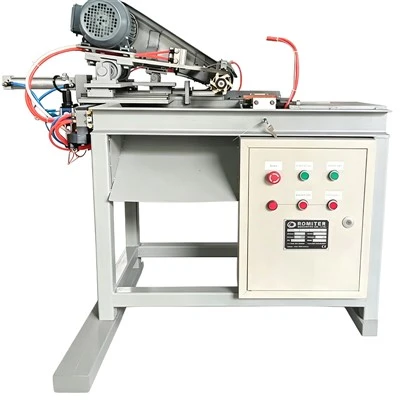
First, let’s start with the basics: your brush tufting machine’s maximum safe speed isn’t a random number—it’s determined by three core factors: the tufting needle’s material, the tufting thread’s properties, and the type of brush base you’re using. I once worked with a small factory that tried to run a standard industrial tufting machine 15% faster than its rated speed, just to hit a tight deadline. The result? Broken needles every 20 minutes, frayed threads, and 10% defective brushes per batch. That’s the danger of ignoring the relationship between machine components and speed: pushing beyond the machine’s safe operating range doesn’t speed up production—it slows it down with downtime and rework.
Let’s dive into the first adjustment: optimizing needle selection. The needle is the heart of the tufting process, and its design and material directly limit how fast you can run. Most tufting machines use needles with a specific shank size, eye type, and point style, but many operators use generic needles that aren’t matched to their thread or base. For example, if you’re tufting a dense nylon brush for a scrub brush, a sharp, carbide-tipped needle will cut through the base material and feed thread much smoother than a dull steel needle. Carbide needles are harder and more wear-resistant, so they don’t bend or flex at high speeds—flex is the enemy of fast tufting, because it causes misalignment, which leads to missed tufts or broken needles.
I recommend a simple test for your operation: take your current needle, measure its point radius, and compare it to the thread’s diameter. If the needle’s eye is smaller than 1.5 times the thread’s diameter, you’ll get thread friction, which slows down tufting and causes breakages. For example, a 0.2mm nylon thread needs a needle eye of at least 0.3mm to feed through without catching. Another needle detail: the point style. Round-point needles work for most general brush bases, but if you’re using a hard wooden or plastic base, a triangular-point needle will pierce the material faster, reducing the force needed to drive the needle through at high speeds. I’ve had clients swap from round to triangular points on their tufting machines and see a 10-12% speed increase immediately, with fewer needle replacements.
Next, don’t overlook thread preparation. Even the best needle can’t work with thread that’s not prepped correctly. Most tufting operations use raw spools of thread straight from the manufacturer, but this is a mistake. Unconditioned thread has static electricity, frayed ends, and inconsistent tension, which causes it to snag in the needle eye at high speeds. Static is a big culprit here—when thread runs through the needle at 1,000 stitches per minute (SPM), static can make the thread stick to itself or the needle wall, leading to tension spikes that force the machine to slow down to avoid breakages.
The fix is simple: add a thread conditioning unit to your machine. These units use anti-static bars and thread guides to smooth out the thread, eliminate static, and ensure it feeds evenly. I also recommend using waxed tufting thread for high-speed operations. Wax lubricates the thread, reducing friction between the thread and needle, which means the needle can move faster without dragging the thread. I worked with a factory that ran 800 SPM with unconditioned, unwaxed thread, with a 5% breakage rate. After adding a thread conditioner and switching to waxed thread, they hit 950 SPM with a 1% breakage rate. That’s a 18% speed increase without any new equipment. Another tip: use larger spools of thread. Small spools require more frequent thread changes, which stop the machine and kill productivity. I suggest spools that hold at least 500 meters of thread—enough for 2-3 hours of continuous run time for most standard brush sizes.
Third, adjust your machine’s tension system. Tension is the balance between how hard the thread is pulled to form the tuft and how it’s held in the base. If tension is too high, the thread will break at high speeds; if it’s too low, tufts will pull loose, and you’ll have to stop to re-adjust. Most operators set tension once when they first set up the machine and never touch it again, but tension needs to change with speed. At higher speeds, the thread is moving faster through the needle, so the tension needs to be slightly lower to avoid stretching or breaking.
How to find the right tension for your speed: start at your machine’s rated speed (for example, 800 SPM for a standard 5-head tufting machine), set the tension so that each tuft forms a consistent loop, and then test running at 850 SPM. If you see thread breakages, lower the tension by 5-10% and test again. Keep incrementally increasing speed until you hit a point where you have 1-2 thread breaks per 1,000 stitches—any higher and speed will cause downtime. Another adjustment: use a tension regulator with digital controls instead of mechanical ones. Digital regulators keep tension consistent even as the machine speeds up or slows down, which eliminates tension spikes that cause breakages. I’ve seen factories with analog tension systems struggle to run above 750 SPM, while the same machines with digital regulators hit 1,000 SPM easily.
Fourth, maintain your machine’s moving parts. A tufting machine’s speed relies on smooth, consistent movement of the needles, the drive shaft, and the base feed system. Even a small amount of wear on a gear or a bent shaft can cause vibration at high speeds, which leads to missed tufts, broken needles, and speed limits. I recommend a daily maintenance checklist for any operator looking to boost speed: first, clean the needle bar and drive shaft of thread lint and debris. Lint builds up over time, adding friction that makes the needle bar move slower. Second, lubricate all moving parts with the manufacturer’s recommended oil—not generic machine oil. Generic oil can break down at high speeds, leading to more friction and wear. Third, check for bent needles before running. A bent needle will wobble at high speeds, causing vibration and breakages—even a 1-degree bend can limit speed by 10% or more.
I also suggest a quarterly tune-up by a qualified tufting machine technician. They’ll check for wear on the cam followers, the needle drive system, and the base feed rollers, which are often overlooked. I worked with a factory that had been running their machine for two years without a tune-up, and their maximum speed was 700 SPM. After a technician replaced a worn cam follower and adjusted the needle bar alignment, they hit 900 SPM without any other changes. That’s a 28% speed increase just from basic maintenance—no new parts, no extra labor.
Fifth, align the machine with your brush base type. The base (also called the blank) you’re using has a big impact on tufting speed. Soft bases like foam or rubber are easier to pierce, so you can run faster than with hard bases like wood or plastic. If you’re switching between base types, you’ll need to adjust your speed and needle setup. For example, tufting a foam base at 1,000 SPM is safe, but tufting the same brush with a plastic base will require a 15-20% speed reduction because the harder material demands more force from the needle.
Another base adjustment: the feed rate. The base feed system moves the brush blank through the tufting machine, and if it’s not aligned, it can cause the needle to miss the base, leading to defects that force you to slow down. Make sure the feed rollers are tight enough to hold the base securely, but not so tight that they crush the base. I recommend testing the feed rate by running a sample blank at your desired speed—if the base slips or moves unevenly, adjust the roller tension. For long runs, a continuous feed system is better than manual feeding, as it keeps the base moving at a consistent speed, avoiding stops and starts that reduce overall productivity.
Now, let’s talk about common mistakes I see that actually slow speed down. First, over-tufting. Many operators think more tufts per inch equals a better brush, but running too many tufts at high speed adds unnecessary strain on the machine. If you’re producing a general-purpose brush, the industry standard is 15-20 tufts per square inch—any more than that and you’re risking breakages. Second, ignoring air pressure. Most tufting machines use air-powered systems for needle driving or thread cutting, and low air pressure can slow down the needle’s movement, limiting speed. Check your air compressor regularly—air pressure should be between 60-80 PSI for most standard tufting machines. If pressure drops during runs, clean your air filter or upgrade your compressor. Third, using generic spare parts. Non-OEM (original equipment manufacturer) parts are cheaper, but they don’t fit as well or have the same wear resistance, leading to more downtime. I’ve seen a factory use a non-OEM needle bar that bent after 8 hours of running, forcing a 2-hour downtime to replace it—costing more in lost production than the savings from cheap parts.
Finally, when you’ve optimized all these settings and maintenance steps, you’ll want to test incremental speed increases, not jumps. For example, if your current speed is 750 SPM, try 775 SPM for an hour, check for defects and breakages, then go to 800 SPM, and so on. This lets you adjust settings as you go, so you don’t push the machine beyond its safe limit. Over time, you’ll find a sweet spot where speed is as high as possible without sacrificing quality or increasing downtime.
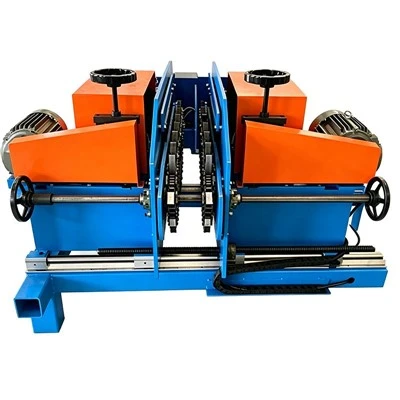
If you’re still not seeing the speed you need, or you’re looking to upgrade your tufting machine, we specialize in high-speed tufting machines designed for maximum efficiency, with built-in features like digital tension control, carbide needles, and automated maintenance alerts. Our team has helped hundreds of factories boost speed by 20-30% while reducing defects and labor costs. If you’re interested in discussing your specific production needs and how we can help, feel free to reach out for a consultation. We’d be happy to review your current setup and share tailored tips to get your brush tufting machine running faster and more reliably.
Wood Handle Making Machine References
Brush Manufacturing Technology. Industrial Press.
"Optimizing Tufting Machine Performance for High-Speed Production." Journal of Textile and Apparel, Technology and Management.
Maintenance Guidelines for Industrial Tufting Equipment. Association for Brush and Broom Manufacturers.
Tongcheng Shengfeng Machinery Factory
As one of the most professional brush tufting machine manufacturers and suppliers in China, we’re featured by quality products and good service. Please rest assured to buy durable brush tufting machine for sale here from our factory. Contact us for more details.
Address: Shapu Village, Qingcao Town, Tongcheng City, Anhui Province
E-mail: 15955686317@163.com
WebSite: https://www.shengfengmachine.com/
