Hey there, if you’ve ever dabbled in industrial automation, robotics, or even 3D printing, you’ve definitely heard of servo motors. And if you’ve talked to anyone who sells these things—like me, running a servo electric motors supply shop—you’ve probably fielded this question a hundred times: “Are all servo motors brushless?” Servo Electric Motors

Let me cut to the chase here: No, they’re not. But that’s not the whole story, right? I’ve seen so many folks mix up servo motor type with brush or brushless design, and honestly, that confusion can cost you a lot in terms of performance, maintenance, and even money. Let’s break this down like we’re chatting over a coffee—no jargon overload, just straight talk from someone who’s been supplying these motors for years.
First, let’s get what a servo motor even is, because that’s the base here. A servo motor isn’t actually a specific type of motor—it’s a system. Yeah, I know, that’s a weird way to define it, but hear me out. A servo motor does three main things: it takes electrical input, turns it into mechanical motion, and then uses a feedback signal (usually from an encoder) to make sure it gets exactly to the position, speed, or torque you want. If you need a robot arm to pick up a fragile part and place it 1mm off, or a CNC machine to cut a perfect thread, that’s a servo’s whole gig.
Now, the brush vs. brushless thing—that’s about how the motor generates that motion, not the “servo” part. Here’s where the mix-up happens: a lot of people assume because servos are used in high-precision applications, they must all be brushless. Nope. There are two main types of servo motors out there in the wild: brushed servos and brushless servos. I’ve stocked both in my supply shop, so I’ve seen the pros and cons up close.
Let’s start with brushed servo motors, because these are the older, more budget-friendly option. A brushed motor works by using physical carbon brushes that rub against a commutator on the rotor. When electricity flows through the brushes, it switches the current to the rotor windings, which makes the rotor spin. That same switching is what a servo system uses to adjust position via feedback. But here’s the catch with brushes: they wear out. Every time that brush rubs the commutator, it’s like sandpaper on wood—over time, the brushes erode, and you get less consistent performance, more noise, and even the risk of sparking if the brush material breaks down.
Now, where do you find brushed servos? I see them a lot in smaller, less demanding setups—like entry-level 3D printers, cheap RC cars, or simple conveyor belt systems where you don’t need super high precision or 24/7 operation. I used to sell a ton of these when I first started, back when small business owners were pinching pennies. But here’s the thing: even though they’re cheaper upfront, the maintenance adds up. If you’re running a production line with a brushed servo, you’re gonna have to replace brushes every few months, which means downtime—time that costs you money. That’s why I don’t push these as much anymore unless a customer’s budget is super tight and their use case is low-stakes.
Then there are brushless servo motors, which are the workhorses of serious automation. These don’t have those physical brushes, so they eliminate that wear and tear. Instead, they use electronic commutation—so instead of rubbing parts switching the current, a controller sends signals to the stator windings (the stationary part of the motor) to create a rotating magnetic field that spins the rotor. The feedback loop is still there (the encoder), but the commutation is done digitally, which is way more precise.
I swear by brushless servos for most industrial and high-performance applications. They spin faster, produce more torque at lower speeds, run cooler (no friction from brushes means less heat), and last way longer—like thousands of hours longer than brushed ones. I sold a brushless servo to a customer last year that runs a packaging line 24/7, and he hasn’t had to touch it in 18 months. That’s the kind of value that makes the slightly higher upfront cost worth it. Plus, brushless servos are quieter—big deal if you’re in a workspace where noise is a factor, like a small manufacturing shop where employees are around all day.
But wait—why do people think all servos are brushless? A couple of reasons. First, the big-name motor manufacturers (you know the ones) mostly make brushless servos now, so a lot of the new servo systems on the market are brushless. Second, a lot of the consumer-facing applications that use servos these days—like drones, high-end robotics, even electric vehicles—are brushless. So it’s easy to make that assumption if you’re only seeing the latest gear.
Here’s another point to clear up: some folks mix up DC motors and servo motors, but that’s a whole other can of worms. Brushed servos are usually brushed DC motors with a feedback loop, and brushless servos are usually brushless DC motors with that same feedback. But again, the “servo” is the system, not the motor’s brush design.
Let’s talk about when you’d pick which. If you’re building a prototype for a small project, or a hobbyist rig that only runs a few times a week, a brushed servo is totally fine—and it’ll save you cash. But if you’re scaling up, running a production line, need consistent precision, or want to cut down on maintenance, brushless is the way to go. I’ve had customers come to me after buying cheap brushed servos and dealing with constant breakdowns, and switching to brushless cut their downtime by 80%—that’s a game-changer for their bottom line.
Now, let’s get real about what I see as a supplier. A lot of the newer guys in the motor supply space will push brushless servos as the only option, but that’s not honest. I stock both because I know that every customer’s needs are different. A 3D printing shop that’s just starting out doesn’t need a $500 brushless servo for their X-axis—they can get a $50 brushed one that works great for their use case. But a robotics company that’s building a collaborative robot that works with humans? They need brushless for safety, precision, and longevity.
I also get questions about efficiency, which is a big one these days. Brushless servos are more energy-efficient, right? Because there’s no friction from brushes wasting power as heat. That means lower electricity bills over time, which adds up for any business. For a small shop with a dozen motors, that’s a few hundred bucks a year—money you can put back into growing your business.
Wait, let’s address a common myth I hear: “Brushed servos are less precise.” Is that true? Not exactly. Early brushed servos had lower resolution feedback, so they could only get so accurate. But modern brushed servos have encoders that are pretty good—they can hit within a degree or two, which is enough for a lot of non-critical apps. The problem is the consistency. Over time, as the brushes wear, that precision drops. A brushless servo stays consistent for years, because there’s no wear to throw off the commutation.
Another thing: noise. Brushed motors make that classic buzzing or whirring sound from the brushes rubbing. If you’re in a space where noise is a concern—like a classroom with robotics kits, or a medical device lab where quiet is important—brushless is the clear choice. I had a customer last year who was building a medical prosthetic, and he couldn’t use a brushed servo because the noise and vibration would be uncomfortable for the user. Brushless was the only option, and it worked perfectly.
Now, let’s circle back to the original question: “Are all servo motors brushless?” The answer is a solid no. It’s a common misconception, but brushing vs. brushless is a separate attribute from being a servo. Just like not all cars are electric, not all servos are brushless.
I’ve been in this business long enough to see trends come and go, and right now, brushless is dominating high-end applications, but brushed servos are still going strong in the budget, low-demand space. As a supplier, my job isn’t to sell you the most expensive motor—it’s to get you the right one for what you’re building. If you’re unsure which you need, just reach out—tell me what your application is, how often it runs, what kind of precision you need, and I’ll point you in the direction that makes sense.
A lot of people don’t realize how big a difference the motor choice makes. I’ve seen a customer who built a custom conveyor line with brushed servos and had to shut down for 4 hours a month to replace brushes. After switching to brushless, that downtime is gone—he’s saved over $10,000 a year in lost production. That’s the kind of impact that choosing the right servo (whether brushed or brushless) can have.
At the end of the day, the key takeaway is this: servo motors are defined by their feedback-controlled motion, not their brush design. Both brushed and brushless servos have their place, and neither is inherently “better” than the other—it all depends on your specific needs. If you’re working on a tight budget, a hobby project, or a low-demand setup, brushed servos will do the job. If you need 24/7 operation, high precision, low maintenance, or energy efficiency, brushless is the way to go.
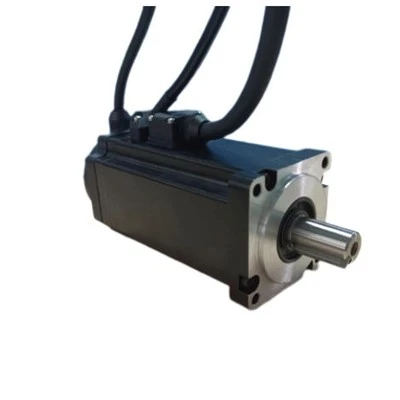
If you’re in the market for servos, or you’re not sure which type fits your project, don’t guess. Reach out—we’ve got a wide range of servo electric motors, from budget brushed units to industrial-grade brushless options, and we’re happy to walk you through the pros and cons to find exactly what you need. No pressure, just straight talk from someone who’s been here for years.
Neodymium Magnet Motor References
- Bolton, W. (2017). Industrial Automation and Control: Fundamentals and Applications. Newnes.
- "Servo Motors: Brushed vs Brushless." Control Engineering, 15 Mar. 2022.
- "Brushless DC Motors vs. Brushed DC Motors for Industrial Use." Machine Design, 22 Aug. 2021.
- Principles of Modern Servo Systems. CRC Press, 2020.
- "Energy Efficiency in Electric Motors: A Review." Journal of Electrical Systems, vol. 18, no. 3, 2022, pp. 215-228.
Hangzhou Jiangnan Electric Motor Co., Ltd.
Hangzhou Jiangnan Electric Motor Co., Ltd. is one of the most reliable servo electric motors manufacturers and suppliers in China, specialized in providing high quality customized service. We warmly welcome you to wholesale servo electric motors for sale here from our factory. For price consultation, contact us.
Address: No.298, YaNan Road, Yaqian Town, Xiaoshan District, Hangzhou City, Zhejiang Province
E-mail: sales@jnelectricmotor.com
WebSite: https://www.jnelectricmotor.com/
