Hey everyone, it’s Jamie here – I’ve been in the fuse holder game for over a decade, and let me tell you, I’ve heard every question under the sun about why some industrial projects just work and others… well, don’t. Most of the time, it comes down to one tiny thing no one thinks about until it’s too late: the fuse holder. Today, we’re talking about the NEMA NT fuse holder – the unsung hero that keeps all kinds of heavy-duty equipment from short-circuiting. And yeah, I’m a supplier, so I’m gonna be straight with you: if you’re not using the right NT fuse holder for your setup, you’re setting yourself up for headaches, downtime, and way more money than you need to spend. NT Fuse Holder
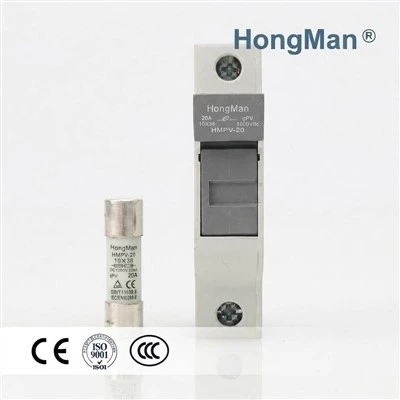
Let’s start with the basics, no jargon, promise. NEMA stands for National Electrical Manufacturers Association – that’s the group that sets the standards for electrical stuff in North America, right? The NT series is their go-to for medium and heavy-duty applications, like industrial motors, HVAC systems, transformers, and even some commercial distribution panels. A NEMA NT fuse holder’s whole job is simple: it holds your NT fuse securely, keeps it connected properly, and most importantly, makes sure if the fuse blows, it stops that current from causing a fire or frying your entire rig. But here’s the thing – not all NT holders are created equal. I’ve seen guys grab a cheap one from a random online shop, throw it in a machine, and then wonder why it corroded after six months in a dusty factory or couldn’t handle the voltage when things heated up. That’s where sourcing from a reputable supplier comes in.
What makes the NEMA NT fuse holder different from, say, a smaller Midget fuse holder? First off, the size and current rating. NT fuses are built to handle higher voltages – usually from 600V up, and they come in ratings from 0 to 600 amps, sometimes more. The holders have to match that. The contacts inside aren’t just flimsy metal tabs; they’re made of high-tin copper or even silver-plated copper for better conductivity. That’s a big deal – bad contacts mean extra resistance, which means heat builds up. Heat = premature fuse failure, or worse, the holder melting and causing a short. I’ve seen that happen too many times. A construction company once told me their drill press burned out because a cheap NT holder’s contacts warped under load – they had to replace the motor, the panel, and all the wiring. That’s a $15,000 mistake, all because they tried to save a buck on a $20 holder.
Then there’s the design. NEMA NT fuse holders come in a couple main types – open-style and enclosed. Open ones are great for panels where you have easy access, but they need to be installed in a dry, dust-free area. Enclosed holders, though, are sealed – perfect for outdoor equipment, harsh factories, places with dirt or moisture. A lot of people overlook the enclosure rating. If you stick an open NT holder in a sawmill, sawdust will get in, cause a short, and boom – no more saw. I’ve also got thermal-magnetic options for NT holders, which have built-in features that let you trip the circuit if there’s an overload before the fuse even blows. That’s a game-changer for equipment that runs non-stop, like conveyor belts or cooling systems.
Wait, let’s talk about installation, because that’s another area where guys mess up. A NEMA NT fuse holder isn’t just a slot you shove a fuse into. The wiring has to be torqued to the right spec – usually around 35 to 50 in-lbs, depending on the model. Too loose, and you get bad connections. Too tight, and you crack the ceramic insulator (yeah, NT fuses are ceramic, so they break easy) or strip the terminal. I always tell customers to use a torque wrench – it takes two extra minutes, and saves you from having to rewire the whole thing a month later. Also, make sure the holder is rated for the ambient temperature of where it’s going. If you’re running a holder in a boiler room where it’s 120 degrees, you need a high-temperature NT holder – standard ones will degrade over time, even if you use a quality fuse.
As a supplier, I get a lot of questions about compatibility. Can I use a different brand of fuse in a NEMA NT fuse holder? Technically, maybe, but I don’t recommend it. NEMA sets standard dimensions, but slight variations in contact design can make the fit loose. A loose fuse means bad conductivity, heat, and failure. Sticking with matching brands – NT fuses from the same manufacturer as your holder – is the best way to make sure everything works like it should. I’ve tested this myself: I tried a cheap off-brand fuse in a standard NT holder, and it tripped 3 times faster than it should have. No warning, just a dead machine. That’s not a risk I’d take with anything that runs your business.
Now, what about when you need to replace a NEMA NT fuse holder? A lot of times, people just swap out the holder without checking why it failed. Was it the fuse that blew, or did the holder’s contacts corrode? Or was the voltage too high for the rating? I always ask customers to send a pic of the old holder when they reach out – that helps me make sure they get the exact replacement, or the upgraded model they actually need. Recently, a food processing plant contacted me saying their NT holders were rusting out in their freezer warehouse. I pointed them to our stainless steel, IP-rated NT holders – they switched, and haven’t had a problem in 8 months. That’s the kind of win I live for.
Common mistakes I see with NEMA NT fuse holders: first, underrating. If your system runs 400 amps, don’t get a holder rated for 300. It can’t handle the load, and it’ll fail. Second, ignoring environmental factors. If it’s outside, get a weatherproof holder. Third, skimping on quality. Yeah, a cheap NT holder is $5 vs. $15 for a good one, but that $15 holder will last 5 years, the cheap one will last 6 months. Math checks out, right?
I know a lot of industrial guys are budget-conscious, I get it. But I’ll tell you this: the right NEMA NT fuse holder is an investment. It protects your equipment, keeps your team safe, and cuts down on downtime. I’ve got all kinds of options – from standard open holders for basic panels to heavy-duty enclosed ones for outdoor equipment, and even thermal-magnetic models for high-cycle applications. I also stock replacement parts, like contacts and insulators, so if you just need to fix an old holder instead of replacing it entirely, I can hook you up.
If you’re in the market for a NEMA NT fuse holder – whether you’re a small shop upgrading your panel or a big industrial company kitting out a whole facility – hit me up. I can walk you through what you need, answer any questions you’ve got about ratings, installation, or compatibility. I’ve been doing this long enough to know what works, and I don’t sell junk. No sales pitches, no hidden fees, just straight-up advice and quality products.

So don’t wait until your next fuse blows and you’re scrambling to replace it. Reach out now, and let’s make sure your setup is protected for the long haul.
Wind Power Fuse Link References
- National Electrical Manufacturers Association (NEMA) Standard Fast Fuses for AC and DC Power Circuits, NT Series, NEMA Publication FN-1000, 2022.
- Industrial Electrical Components Handbook, 4th Edition, McGraw-Hill, 2021.
- Underwriters Laboratories (UL) Standard for Safety for Fuse Holders, UL 248-12, 2020.
- “Best Practices for Medium-Voltage Fuse Protection in Industrial Applications,” Electrical Construction & Maintenance Magazine, June 2023.
- Industrial Fuse Holder Product Specification Guide, ABB Industrial Division, 2024.
Zhejiang Hongman Electric Technology Co., Ltd.
Zhejiang Hongman Electric Technology Co., Ltd. is one of the most professional nt fuse holder manufacturers and suppliers in China. We have world-leading production equipment and strong manufacturing capabilities. Please feel free to wholesale bulk cheap nt fuse holder from our factory. All customized products are with high quality and competitive price.
Address: 115 XinGuang Avenue,XinGuang Industrial Zone, Liushi Town, Yueqing City, Zhejiang Province. China
E-mail: mia@chinahongman.com
WebSite: http://www.cnfuse.com/
