Hey everyone, today I want to talk about something I get asked about all the time as a high voltage resistor supplier: what exactly is a high voltage series resistor? If you’re new to the world of high voltage components, this term might sound super technical, but I’m gonna break it down in plain English—no confusing jargon, I promise. Let’s start with the basics, then get into why these resistors matter so much for the stuff we build and work with every day. High Voltage Resistor

First, let’s remember what a regular resistor does, right? A standard resistor is a passive component that limits electric current in a circuit. It follows Ohm’s Law—V = I x R, where voltage equals current times resistance. But high voltage series resistors aren’t just bigger versions of those tiny resistors you see on circuit boards. They’re built specifically for when you’re dealing with way more voltage than your average home outlet (which is usually 120V or 240V). Think anything over 1,000 volts—like power grids, X-ray machines, EV charging stations, or even test equipment for aerospace parts. That’s where these resistors come in.
So what makes a series resistor different from other high voltage resistors? The name “series” is key here. When you place a resistor in series with a component, every electron that flows through that circuit has to go through the resistor. That’s not the same as a parallel resistor, which splits current between two paths. For high voltage apps, series resistors do two big jobs: first, they limit the current that reaches sensitive parts, and second, they dissipate the huge amount of heat that comes with high voltage. If you skip this, you could end up with components burning out, safety hazards, or even total system failure.
Let me give you a real example from our work. Last year, we supplied a bunch of high voltage series resistors to a team making custom industrial X-ray machines. Those machines run at 50,000 volts—way more than your TV. The X-ray tube inside is super sensitive; if too much current hits it, it’ll crack in seconds. Our series resistor was wired directly between the power supply and the tube, so it slowed the current just enough to keep the tube safe while still letting it do its job. Without that resistor, the machine would’ve been a dangerous paperweight. That’s the kind of use case we see all the time.
Now, how are these resistors built? You can’t just take a 10kΩ resistor and call it a day. High voltage components have to handle two main issues: electric breakdown and heat. Electric breakdown is when voltage gets so high that it jumps through air or even the resistor’s material, causing a short circuit. So our resistors use materials like ceramic, glass, or metal oxide—stuff that insulates really well, even at thousands of volts. The resistive element itself is usually a thick film or a wire wound around a ceramic core; thick film is great for consistency, while wire wound handles high power better. We also coat them in epoxy or silicone for extra insulation, especially if they’re going to be used outside or in humid environments.
Another thing that sets these apart is their power rating. Power is measured in watts, and for high voltage series resistors, that rating is way higher than regular resistors. A tiny surface-mount resistor might be 1/8 watt, but our high voltage ones? We make them from 10 watts up to 10,000 watts and beyond. The power rating tells you how much heat they can safely dissipate—run a resistor above that, and it’ll overheat and fail. That’s why we always work with clients to calculate exactly how much power their circuit needs; a one-size-fits-all resistor almost never works here.
Wait, let’s clear up a common mix-up: people sometimes confuse high voltage series resistors with current limiting resistors. Are they the same? Not exactly, though they overlap in use. Current limiting resistors are a type of series resistor, but high voltage series resistors do more. They’re also used for voltage division (splitting high voltage into smaller, measurable chunks) and for surge protection (absorbing temporary spikes of voltage that happen when a machine turns on or off). For example, when you start a big EV charger, there’s a big inrush of current—our series resistor softens that so it doesn’t damage the charger’s inverter.
What are the most common applications for these resistors, just so you get the full picture? Let’s list a few that we deal with regularly: power transmission and distribution systems (substations, transformers), medical devices (X-rays, MRI machines, laser equipment), aerospace and defense (satellite testing, radar systems), renewable energy (solar inverters, wind turbine converters), and industrial machinery (welders, plasma cutters). Every single one of these needs a high voltage series resistor to keep things safe and working right.
As a supplier, I tell all our clients that the biggest mistake people make is buying a low-cost resistor that “looks like it fits.” High voltage isn’t something to cut corners on. A resistor that can handle 1,000 volts might fail at 1,500 volts, and that failure can lead to expensive downtime, not to mention safety risks. We test every resistor we ship—putting it through a voltage breakdown test and a power cycling test to make sure it can handle what it’s gonna face in the field. No exceptions.
Let me also answer a question I get a lot: do series resistors change the resistance value over time? Good ones don’t, but cheap ones will. The resistive material can degrade with heat and voltage, which changes the resistance, and that messes up your circuit. That’s why we use high-grade materials and precision manufacturing—our resistors have a tolerance of ±1% or better, so you can count on their performance for years. We also do humidity testing and thermal shock testing, which is super important for outdoor installations where temperature swings are common.
Another thing to mention: size isn’t everything, but it matters. If you need a resistor to fit into a tight space like a satellite component, we make compact high voltage series resistors using thin film technology. If you need a resistor for a substation where space isn’t an issue but power is, we make bulkier wire wound resistors that can handle thousands of watts. We don’t just sell resistors out of a catalog—we work with you to customize the size, resistance, power rating, and insulation to fit your exact needs.
So why does this all matter? Without high voltage series resistors, modern high voltage tech would be impossible. Every time you get an X-ray, charge your EV, or see a power line light up a street, there’s a series resistor working behind the scenes to keep it safe. And as someone who’s been in this game for years, I love that we get to be part of that—helping clients build stuff that actually works, without the risk of failure.
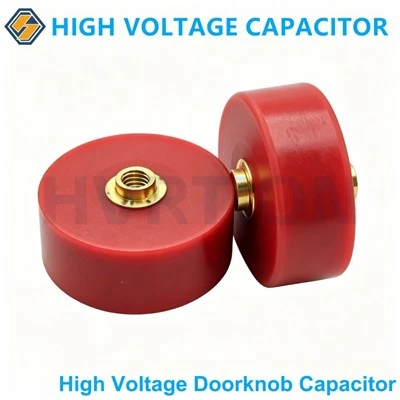
If you’re working on a project that needs a high voltage series resistor, whether it’s a small medical device or a big industrial system, I’d be stoked to chat. We can walk through your requirements, calculate the right specs, and make sure you get a component that’s reliable, safe, and built to last. Don’t risk cutting corners on something this critical—reach out to us to talk through your needs and get a quote.
Rectifier Diode References
- IEEE Standard for High Voltage Resistor Testing, IEEE Std 100-2000
- Electric Power Research Institute (EPRI) Guide to High Voltage Component Selection
- NASA Aerospace Component Reliability Handbook, Volume 5: Passive Components
- Industrial Resistor Association (IRA) High Voltage Resistor Application Guidelines
Anshan HVRTION Electronic Technology Co., Ltd.
As one of the most professional high voltage resistor manufacturers and suppliers in China, we’re featured by quality products and good price. Please rest assured to buy discount high voltage resistor for sale here and get quotation from our factory. We also accept customized orders.
Address: 17 East Jiefang RD., Tiedong District, Anshan, Liaoning, China.
E-mail: hvrtion@hotmail.com
WebSite: https://www.hvrtion.com/
