Hey guys, it’s Jax from the clutch facing team here, and today I’m diving into a question I get at least twice a week from both new garage techs and seasoned mechanics: Can clutch facing be too thick?
I know, I know—when something wears out, your first instinct is to grab the thickest replacement part you can find. After all, thicker usually means more material, right? More material should equal longer life, less stress on your drivetrain, fewer service calls. That logic makes total sense on the surface, but trust me, with clutch facings, it’s way more nuanced than that. I’ve been in this game for 8 years, I’ve shipped thousands of facings, and I’ve seen way too many headaches come from someone overshooting on thickness to “be safe.” Let’s break this down like we’re hanging out in my office with a cold soda, no stuffy engineering jargon that makes your eyes glaze over. Clutch Facing
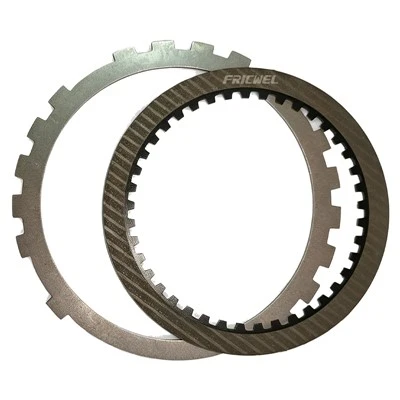
First, let’s get on the same page about what clutch facing thickness actually does. For anyone who’s not deep in the mechanical weeds, clutch facing is that textured disc that sits between your engine’s flywheel and the pressure plate. When you push the clutch pedal down, it disengages the facing from the flywheel so you can shift gears. When you let the pedal out, it presses back against the flywheel, transfers engine power to the transmission, and lets you move. The facing wears down every time you engage/disengage, so we measure thickness in millimeters or thousandths of an inch to know when it’s time to replace it. The spec sheet that comes with every single clutch we ship is locked in by OEMs (Original Equipment Manufacturers) based on exactly what your vehicle needs—no guesswork there.
Let’s start with the first big problem: fit issues. This is the most immediate one, and it’s the one that makes even experienced mechanics go “oops, I messed up” when they cut corners. Let’s say you’re working on a 2018 Ford F-150, which has a stock facing thickness spec of 3.8mm. You grab a replacement that’s 4.5mm because it’s the thickest one the auto parts store has, thinking “extra material will last longer.” Here’s what happens when you try to bolt it in. The pressure plate has a specific range of motion built in—engineers designed it to move just enough to clamp the facing tight without binding or slipping. If you add that extra 0.7mm, suddenly the pressure plate can’t seat properly. It might not clamp evenly, so you get a slipping clutch when you get on the gas. Worse, it might hang up when you try to shift, or even cause the pedal to stick to the floor. I once got a frantic call from a tech in Ohio who installed a thick facing on a 2019 Honda Civic, and when he hit the road, the clutch wouldn’t disengage at all—he had to coast back to his shop in second gear. Turned out the extra thickness made the throwout arm (that little part that pushes the pressure plate) run out of travel. That’s not the facing’s fault, that’s someone ignoring the spec to grab a “better” part.
Next up, heat dissipation. I know, I know—thicker material should hold heat better, right? Nope, when we’re talking about clutch facings, that’s backwards. Clutches generate a ton of heat when they slip (think stop-and-go traffic, hauling heavy loads, or revving too high while shifting fast). The facing’s job is to absorb that heat, but it also has to get rid of it so it doesn’t glaze over or burn out. When you have a facing that’s too thick, that extra material acts like an insulator instead of a heat sink. The heat gets trapped in the facing and the pressure plate, not dissipated into the flywheel or the air like it’s supposed to. I had a customer last summer who ran a 4mm thick facing on his 2020 Ram 2500 that he uses for hauling construction equipment. After three months, the facing started slipping hard, and when we pulled it apart, the friction surface was glazed over—hard, shiny, like a melted plastic pancake. He told me he thought thicker would hold up to the heavy loads, but really, the trapped heat burned right through the friction lining in half the time a spec-thickness facing would have. Even worse, that extra heat can warp the flywheel or pressure plate, which adds another $500 to $1000 in repair costs on top of the facing itself. I’ve also seen facings so thick that the edge of the disc started rubbing against the transmission’s input shaft, wearing a groove into it and causing weird vibrations at highway speeds. That’s a problem you can’t fix by just replacing the facing again.
Wait, but what if you’re using the clutch for heavy-duty use, like off-roading or racing? Isn’t a thicker facing better there? Good question—this is where a lot of people mix up “more” with “right.” If you’re in a race car, for example, a stage 3 clutch (which is designed for high performance) has a slightly thicker facing, but only within a specific tolerance. The key here is that performance facings are made of different materials—ceramic or kevlar, not the organic stuff you get for a daily driver. Those materials can handle higher temperatures, but their thickness is still calibrated for the vehicle’s pressure plate and flywheel. I work with a few local drift teams, and they swear by our stage 2 kevlar facings, but I make sure every single one is cut to exactly the spec they need—never thicker. If they went thicker, they’d get the same heat trapping and fit issues I mentioned earlier, even with the performance material. Thickness isn’t the only way to get durability; material choice is way more important for heavy use than adding extra mm to the facing.
Another thing I don’t think people talk about enough: clutch balance. A clutch disc that’s too thick throws off the balance of your entire drivetrain, especially at high speeds. When you’re cruising at 60, 70, 80 mph, every part of the engine, transmission, and drivetrain is spinning in sync. A slight imbalance from a too-thick facing creates tiny vibrations that you might not notice at first, but over time they add up. I had a customer who installed a 0.5mm over-thick facing on his Subaru WRX, and after a month, his car was shaking so bad at highway speeds that he thought his driveshaft was bad. We balanced the clutch disc properly, but the extra material made it unbalanced enough to cause the vibration. It took us three tries to figure out it was the thickness, not the balance of the facing itself. That’s the kind of wasted time and money you don’t need, especially if you’re trying to get to work or get somewhere on time.
Wait, let’s address the counterargument: “What if my old facing was really worn, and I need extra material to make up for that?” No, that’s not how it works. When you replace a clutch, you should always resurface or replace the flywheel too. The flywheel has a wear surface, and if your old facing was so worn that you think you need a thicker disc, the flywheel is probably damaged too. If you put a thicker disc on a worn flywheel, you’ll end up with uneven contact between the facing and the flywheel, which makes the facing wear out faster in spots and cause slipping. It’s a package deal: when you replace the clutch facing, get the flywheel checked, and stick to the spec. I always tell techs, “If your old facing was worn down to 1mm, that means the flywheel is probably scored, so replace the flywheel too, don’t try to make up for it with a thicker disc.” That solves the problem, not adds another one.
I get it, though—you want your clutch to last as long as possible, and it’s easy to think more material = more life. But here’s the truth: a spec-thickness clutch facing that’s made with high-quality friction material will last longer and work better than a too-thick facing made from the same material. The OEM engineers didn’t pull that thickness spec out of thin air—they tested it for thousands of hours, in every driving condition, to make sure it fits, dissipates heat, and works with the rest of the drivetrain. Messing with that spec is like trying to put a size 10 shoe on a size 8 foot—might feel like it has more room, but it’s going to give you blisters and make it hard to walk.
Now, I’m not saying every mechanic or driver should never go outside the spec. There are exceptions, like custom built vehicles or heavy-duty work trucks that use modified pressure plates. But even in those cases, we work with the team to get the exact thickness they need, test it, and make sure it’s compatible. We never just ship a thicker one because someone asks for “more durability.” That’s how you get a bad reputation, and I’ve spent 8 years building mine on delivering facings that work, not ones that create more problems.

If you’re working on a clutch right now, or you just replaced one and are having weird issues—slipping, sticking, vibrations, whatever—hit us up. We can help you confirm the right thickness for your vehicle, walk you through what to check on the flywheel and pressure plate, and make sure you get a facing that fits perfectly and lasts as long as it should. No guesswork, no overcomplicating it, just good clutch advice from a guy who’s seen it all.
Clutch Plate References:
- Society of Automotive Engineers (SAE) International. "Clutch Facing Thickness Effects on Drivetrain Performance and Heat Dissipation." SAE Technical Paper Series, 2019.
- Automotive Engineering International. "Common Failures in Clutch Systems: Root Causes and Prevention." AEI Publications, 2021.
- Performance Racing Industry (PRI). "High-Torque Clutch Design Considerations for Motorsports." PRI Technical Guide, 2022.
- National Automotive Service Task Force (NASTF). "Clutch Replacement Best Practices for Independent Repair Shops." NASTF Guidelines, 2020.
Fricwel Automotive Limited
Fricwel Automotive Limited is one of the most experienced clutch facing manufacturers and suppliers in China, also supports customized service with low price. We warmly welcome you to buy advanced clutch facing made in China here from our factory. Also, free sample is available.
Address: No. 819 Shixin Zhong Rd, Xiaoshan, Hangzhou 311203, China.
E-mail: sales@fricwelauto.com
WebSite: https://www.fricwelfriction.com/
