Hey everyone, it’s Jake from the mobile vaults team here – and let’s cut to the chase, because this is the question I get asked at least 5 times a week by prospects, current clients, and even random folks at trade shows who spot my company hoodie: Are mobile vaults actually compliant with all the security regulations businesses have to follow these days? Like, the kind that keep you up at night wondering if you’re gonna get fined or lose client trust? I get it. When you’re moving high-value stuff – think cash, sensitive business docs, client personal data, even pharma products – slapping a “vault” label on a wheeled case doesn’t automatically mean it’s checking every box for GDPR, HIPAA, PCI DSS, or whatever regulation your industry’s stuck with. Let’s break this down without the stuffy jargon, shall we? Mobile Vaults
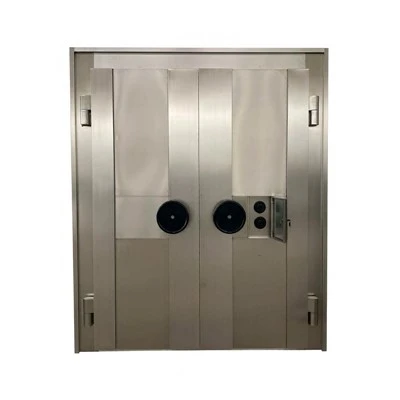
First, let’s get one thing straight: mobile vaults aren’t just glorified lockboxes on wheels. That’s a myth a lot of people still buy into, and honestly, it makes my eye twitch a little. A real, compliant mobile vault is built from the ground up to address the exact compliance requirements that apply to your use case. Let’s take a common example first – say you’re a retail chain moving daily deposits from stores to the bank. PCI DSS is the big one here, right? It’s all about protecting cardholder data, and if your mobile vault doesn’t meet PCI’s physical security standards, you could be looking at fines that start at $5,000 per month and go up to $100,000 a month if you’re super out of line. What does PCI require for physical devices? Things like tamper detection, access controls, and secure transit tracking. Let’s talk about tamper for a sec: if someone tries to pry open your vault, a compliant unit shouldn’t just have a lock that breaks. It should trigger an immediate alert – either a push notification to your team, a silent alarm to local law enforcement, or even a lockdown that freezes all access. A lot of cheap, no-name mobile vaults on Amazon or Alibaba skip this. They’ve got a key lock or a basic combination, but that’s it. No tamper sensors, no audit trail of who tried to get in. That’s a compliance red flag, full stop.
Now, if you’re in healthcare? HIPAA’s your go-to, and it applies when you’re moving patient data that’s protected under HIPAA’s Privacy Rule. Wait, people forget that HIPAA covers physical security of ePHI (electronic protected health information) too, not just digital. So if you’re moving laptops with patient records, or physical files with PHI, your mobile vault has to meet HIPAA’s physical access control standards. That means things like unique user IDs for access – not a master code that 10 people know – and a log that tracks every single time someone unlocks the vault, who did it, and when. No more “my intern needed the file so they borrowed the combination” – that’s a violation. A compliant mobile vault will have that access log stored securely, not just on a random app that crashes. And let’s not forget encryption, even for physical assets? Wait, no, but if you’re moving digital devices inside the vault, the vault should have a way to secure those devices (like padded, locked slots) that meets HIPAA’s requirements for media storage. I’ve had a clinic client tell me they used a cheap rolling safe for their patient records, and when the HIPAA auditor came, they got a finding because the vault’s access log only went back a week. We fixed that for them in 24 hours with an upgraded mobile vault that has 90 days of encrypted audit logs. That’s the difference between checking a box and failing an audit.
Next up, GDPR, which is big for any business moving data across EU borders. GDPR isn’t just about digital stuff – it has strict rules for physical data too, especially when it’s personal data of EU citizens. If you’re moving that data in a mobile vault, GDPR requires you to be able to prove you took “appropriate technical and organizational measures” to protect it. So that’s not just tamper detection – that’s end-to-end transit tracking, so you can show exactly where the vault was every second it was in your possession. A compliant mobile vault will integrate with GPS that updates every 30 seconds, even in areas with bad cell service, so you have a timestamped location log that’s admissible for audits. I once had a SaaS client that needed to move hard drives with EU user data between their office in Paris and their server farm in Amsterdam. They used a basic mobile vault with no GPS, and when their internal audit asked for transit logs, they had no way to prove the drives never left their driver’s sight. We hooked them up with our mobile vaults that have offline GPS, and now they pass every GDPR audit with zero findings.
Wait, but here’s the thing – it’s not just about having the features. It’s about third-party validation. That’s the part most people miss. A lot of vendors will say “our vaults are compliant!” but when you ask for proof, they just point to a generic website page. Real compliance means the vault has been tested and certified by independent, accredited bodies. For PCI, that means validation by the PCI Security Standards Council (PCI SSC) – not just the vendor saying they checked a box. For HIPAA, it means the vault meets NIST (National Institute of Standards and Technology) physical security standards, specifically NIST SP 800-171 for controlled unclassified information, which covers a lot of regulated industries. For GDPR, it means the features align with Article 32 of the GDPR, which requires appropriate security for processing personal data. I can’t tell you how many times a prospect has shown me a competitor’s spec sheet that says “GDPR compliant” and when I ask for the certification, they can’t produce anything. That’s a problem.
Now, let’s talk about the common gotchas that make mobile vaults not compliant, even if you think they are. First, size and weight. Wait, no – accessibility? No, actually, a big one is transit documentation. A lot of businesses use mobile vaults that aren’t designed to be used in transit – like, if you’re putting it in a van, does it have secure anchoring points? If it slides around and falls during a sudden stop, that’s not just a broken vault – that’s a violation of regulations that require secure transport of high-value assets. For example, if you’re moving controlled substances (wait, that’s another one – DEA regulations for pharma), the mobile vault has to be anchored to the vehicle so it can’t be stolen easily. A lot of cheap mobile vaults don’t have built-in anchor points, so you have to rig something with straps, which is not compliant. We design all our vaults with recessed steel anchor points that are hardwired into the frame, so you can bolt them to a van or truck floor without any jury-rigging. That’s the small stuff that trips up audits.
Another gotcha: scalability. A lot of businesses start small, get a basic mobile vault, then grow and start moving more valuable or regulated assets, and suddenly their old vault doesn’t meet the new rules. For example, a small accounting firm might use a mobile vault for tax docs, then they start handling IPO documents, which are under strict SEC regulations. Their old vault can’t generate a secure audit log for every access, so they’re out of compliance. We build our mobile vaults to be modular, so you can upgrade features as your needs change – add biometric access instead of a combination, increase the audit log storage, add cellular connectivity for real-time alerts. That way, you don’t have to buy a whole new vault every time a regulation changes or your business grows. I had a client that used our base model for two years, then had to upgrade to add DEA compliance when they got a pharma distribution contract. We just sent them a firmware update and swapped out the access control panel, no new unit needed. Saved them thousands, and kept them compliant.
Wait, but let’s be real – I’m not here to sell you a $5,000 mobile vault if you just need to move office keys between two floors. The question isn’t “are all mobile vaults compliant” – it’s “is the mobile vault I’m looking at compliant with my specific regulations?” That’s the key. A mobile vault for moving retail deposits doesn’t need to meet HIPAA, and a mobile vault for moving patient records doesn’t need to meet PCI. But when you’re in a regulated industry, you can’t cut corners here. The fines are too steep. I’ve seen a small business get a $75,000 HIPAA fine because their mobile vault didn’t have tamper alerts, and someone stole a laptop with 1,000 patient records. That’s a year of profit for a lot of small businesses, gone in a blink.
Now, let’s talk about what makes our mobile vaults different, because that’s what you’re actually here for, right? We don’t just slap on a lock and call it compliant. Every unit we build is tested against the exact regulations our clients need. All our vaults are PCI SSC validated, meet NIST SP 800-171, align with GDPR Article 32, and work with HIPAA’s physical security requirements. We also provide a full compliance package when you buy one – a detailed spec sheet, third-party test results, and even a quick guide on how to set up the access logs and GPS for your specific industry. No more guessing.
But here’s the thing – compliance isn’t a one-and-done. Regulations change all the time, and your business’s needs change too. That’s why we offer ongoing support for all our mobile vaults. If a new GDPR amendment comes out, or you switch from retail to healthcare, we can help you adapt your vault without making you start over. We also do free compliance check-ins for all our clients, just to make sure you’re not missing something. I once had a client in Texas that was moving firearms (ATF regulations, another one) and thought their vault was compliant, but we noticed they didn’t have a separate access code for each driver. We helped them adjust their access settings in 10 minutes, no extra cost, so they stayed compliant.
At the end of the day, the reason this question matters so much is that it’s not just about avoiding fines. It’s about protecting your clients, your reputation, and your business. If you can’t prove your assets and data are secure during transit, clients will take their business somewhere they can trust. I’ve had prospects tell me they lost a $2 million contract because their old mobile vault didn’t have the audit logs the client required for their own compliance. That’s a way bigger hit than any vault cost.
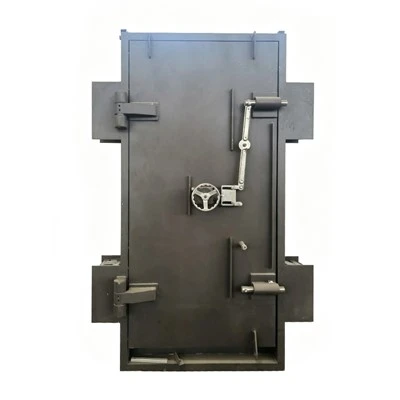
So, if you’re in the market for a mobile vault and you’re worried about compliance, don’t waste time on vendors that make vague claims. Bring up your specific industry, the regulations you have to follow, and ask for proof. If a vendor can’t show you third-party certifications, detailed specs aligned with your rules, and a support plan that keeps you compliant long after purchase, keep looking. And if you want to chat about your specific needs, or get a free compliance assessment for your current setup, feel free to reach out to our team. We don’t do pushy sales pitches – we just build vaults that actually work for regulated businesses, and help you stay on the right side of the rules.
Prison Series 参考文献:
- PCI Security Standards Council. (2022). PCI DSS v4.0: Physical Security Requirements.
- U.S. Department of Health and Human Services. (2023). HIPAA Privacy Rule: Physical Security Guidance.
- European Data Protection Board. (2024). GDPR Article 32: Security of Processing Guidance.
- National Institute of Standards and Technology. (2020). NIST SP 800-171 Rev. 2: Security Requirements for Controlled Unclassified Information.
- U.S. Drug Enforcement Administration. (2022). Controlled Substance Transportation Security Guidelines.
Hebei Xinrui Intelligent Technology Development Group Co., Ltd.
With abundant experience, we are one of the most professional mobile vaults manufacturers and suppliers in China. We warmly welcome you to buy high quality mobile vaults at competitive price from our factory. If you have any enquiry about customized service, please feel free to email us.
Address: No.1, Building B, Intelligent Security Industry Park, Economic Development Zone, Wuyi County, Hengshui City, Hebei Province
E-mail: shinraysafe@163.com
WebSite: https://www.shinraysafe.com/
