When customers reach out to me, I often get a very specific question that catches me off guard at first: “Do folding crates have a smooth surface?” It’s not the most common question when people are looking for storage solutions or shipping containers, but it’s one that’s rooted in real, practical needs—needs I’ve seen play out in warehouses, small business storerooms, and even home garages over the 12 years I’ve been a folding crate supplier. Let me break this down, not just as someone who sells these crates, but as someone who’s worked with the material science, production, and day-to-day use of folding crates for thousands of clients. Folding Crate
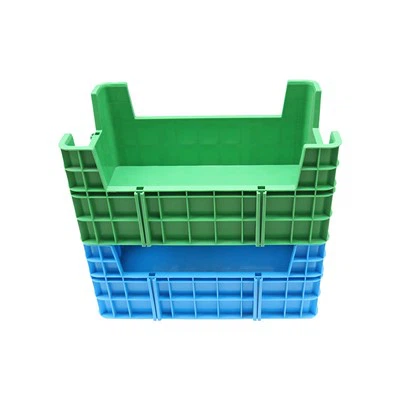
First, let’s start with what “smooth surface” even means when we’re talking about plastic crates, since 99% of folding crates on the market today are made from high-density polyethylene (HDPE) or polypropylene (PP) plastics. The word “smooth” is subjective here, but for most people, it means no sharp edges, no rough textures that catch on fabric, no burrs that can scratch goods, and a finish that’s easy to wipe clean. That’s the baseline we aim for in every crate we manufacture, but it’s not a one-size-fits-all answer. It depends on a few key factors: the grade of plastic we use, the injection molding process, the intended use of the crate, and even the minor design features that make folding crates different from traditional fixed crates.
Let’s talk about the material first. We don’t cut corners here—all our folding crates are made from food-grade HDPE for the majority of our line, and food-grade polypropylene for our heavier-duty models. These are not cheap, recycled plastics; we source virgin or food-grade reprocessed plastic that meets FDA and EU food safety standards, because most of our clients use these crates to move produce, baked goods, or retail products. Virgin HDPE has a naturally smooth, matte finish, but it’s not slippery—something I’ve seen clients worry about when they’re stacking crates full of cans or fragile items. A smooth surface, in this case, means a uniform texture that doesn’t have the grainy feel of low-grade recycled plastic, which often has tiny imperfections left over from reprocessing that can catch on gloves, tear soft packaging, or hold onto dirt and bacteria.
Wait, I should mention: some people confuse “smooth” with “slick.” Our crates are not like a plastic water bottle, which has a super slippery finish. That’s a common misconception. The interior surface of our crates has a slight, almost imperceptible micro-texture that helps products stay in place during transport—you don’t want a crate full of berries sliding around when you’re moving it from a delivery truck to a store shelf. But that micro-texture is uniform, not rough, so it still counts as a smooth surface for practical purposes. The exterior of the crate, where it folds, has a different finish, but we’ll get to that.
Next, the molding process is everything for surface quality. Folding crates are made with high-pressure injection molding machines, which heat the plastic and inject it into a mold that’s been polished to a high finish. The mold is the template for the crate, so if the mold has scratches or imperfections, the crate will too. We invest in maintaining our molds—we do a deep clean of every mold every 500 production runs, and we inspect each mold’s surface monthly. That’s a detail a lot of smaller suppliers skip, and it shows in their products. I once had a client come to us after a bad experience with a cheap folding crate from a overseas supplier—their crates had burrs along the folded edges that were tearing the fabric of their reusable tote bags, and the interior had rough spots that left scratches on their custom apparel. That’s exactly what happens when you cut corners on mold polishing. Our crates have no burrs, no sharp edges, and a consistent finish across every surface, inside and out.
Now, what about the folded parts? That’s where folding crates are different from regular stackable crates, so their surface has to work a little harder. The hinges and the folded side panels have to move smoothly, right? We design the hinge areas with slight radii, not sharp angles, so when the crate folds, there’s no gap that can catch on something, and the surface around the hinge is smooth, not raised or indented. A common mistake in bad folding crate design is making the fold area too thick, which creates a rough, uneven edge when the crate is collapsed. Ours are engineered so that when folded, the surface is almost as smooth as when it’s open—you don’t have a big, bumpy edge that takes up extra space in storage, and you don’t have a rough spot that can scratch other items in a stacked pile of folded crates.
Let’s get into real-world use cases, because that’s where the “smooth surface” question matters most. A bakery client of ours, for example, uses our crates to transport loaves of bread to local cafes. They told me early on that they’d had issues with crates that had rough interiors, leaving small marks on the bread crusts—enough to make the loaves look less fresh, which hurt their sales. When they switched to our crates, the uniform, smooth interior eliminated that problem entirely. They can wipe the crates down after each use in 30 seconds, no dirt getting trapped in crevices, which is a huge win for food safety. Another client is a small e-commerce seller who ships clothing and accessories. They were using regular corrugated boxes before, but they switched to folding crates because they’re reusable, and they noticed that the rough texture of some plastic crates was catching on the fabric of their products, leading to snags and returns. Our crates’ smooth exterior solved that—now their products arrive without snags, and they save money on packaging supplies every month.
Wait, but what about heavy-duty folding crates? We make a line of crates that hold up to 500 pounds, used by construction companies or hardware stores to move lumber, tools, and bulk materials. Do those have a smooth surface? Absolutely, but we’ve adjusted the texture slightly for durability. The interior of our heavy-duty crates has a slightly more matte finish that’s not slippery, so when you stack heavy items like bricks, they don’t shift. The exterior is still smooth, so you can label it clearly with a permanent marker or a sticker, and it wipes clean easily when mud or dust gets on it. We’ve tested these crates after 10,000 folds—they still have the same smooth surface as the day they came off the line, no cracks, no rough spots, no degradation.
I should also address a common myth: some people think that because folding crates collapse, they have to have a rough surface to be strong. That’s not true. The strength comes from the structural design—reinforced ribs along the sides, heavy-duty hinges, and the grade of plastic, not a rough surface. In fact, a rough surface can actually weaken the crate over time, because the small imperfections in the texture can become stress points when you fold and unfold it thousands of times. We’ve run fatigue tests on our crates—folding and unfolding them 15,000 times, which is more than most crates will ever get in 10 years of use—and the surface remains smooth, no cracking, no wear. That’s a big part of why our clients tell us our crates last twice as long as others they’ve tried.
Let’s talk about the small details that make a surface smooth, even if most people don’t notice them. For example, our crates have rounded corners, not sharp 90-degree angles. Sharp corners might be easier to manufacture, but they’re rough, and they can scratch walls, other crates, or even the hands of people handling them. Rounded corners mean the surface is smooth, and they add strength to the crate too—another win-win. The edge where the top closes is also rounded, so when you stack crates, there’s no sharp edge that can catch on the bottom of another crate, making it easy to stack and unstack quickly, which saves time in busy warehouses.
I’ve had customers ask us if we can make a crate with a glossier surface, for things like display in retail stores. We can do that, actually—we offer a custom finish option for clients who want a more polished, glossy look for their products. But most of our clients prefer the matte, smooth finish we use for standard crates, because it’s more durable, doesn’t show fingerprints, and is easier to clean. The glossy finish is a specialty order, and even then, we make sure there are no imperfections—no streaks, no burrs, so it’s still smooth to the touch, not just shiny.
Another thing: surface smoothness is a big part of sustainability, which is something we care a lot about as a folding crate supplier. A crate that has a smooth surface is less likely to harbor bacteria or dirt, so it’s reusable for longer, which means fewer crates end up in landfills. A rough, pitted surface can trap food particles, mold, or grime even after cleaning, so those crates have to be replaced sooner. That’s a point I make to every client who’s worried about surface quality—choosing a crate with a smooth surface isn’t just about convenience, it’s about making a more sustainable choice for your business and the planet.
I think the most important thing to understand, though, is that when someone asks “Do folding crates have a smooth surface?” the answer is: yes, if they’re well-made, designed with end use in mind, and manufactured with high-quality materials and processes. A cheap, off-brand folding crate might have a rough, uneven surface because they cut corners on plastic grade or mold quality. But a reputable supplier like us builds our crates to meet real needs—whether that’s moving food, shipping clothing, storing tools, or collapsing to save space in a garage. The smooth surface isn’t just a nice feature; it’s part of the functionality. It keeps products safe, makes the crate easier to clean, reduces snags and scratches, and makes folding and stacking simpler.

If you’ve ever struggled with crates that catch on your products, get scratched up, or are hard to clean, I get it. That’s why we’ve spent years refining our folding crates to have that perfect, practical smooth surface—one that’s not too slippery, not too rough, just right for whatever you need to move or store. I’ve seen clients come to us frustrated with other products, and leave knowing they’ve found a crate that works for their business for years. If you’re in the market for folding crates, whether it’s a small order for a home business or a bulk order for a warehouse, I’d love to help you find the right fit. We can answer any questions you have about surface texture, durability, or custom options, and help you make a choice that saves you time, money, and hassle in the long run. Reach out to our team to discuss your needs and get a quote tailored to your use case.
Plastic Crate References
- American Chemistry Council. (2022). Properties and Applications of High-Density Polyethylene (HDPE) for Packaging and Storage.
- European Food Safety Authority. (2021). Guidance on Plastic Materials in Contact with Food, Including Surface Finish Requirements for Food-Grade Containers.
- Journal of Manufacturing Processes. (2020). The Impact of Injection Mold Maintenance on Surface Quality and Product Durability of Plastic Crates.
- Sustainability and Production Consumption. (2019). Reusable Packaging Surface Characteristics: Effects on Reusability and Waste Reduction.
Shanghai Qusheng Plastics Co., Ltd.
As one of the leading folding crate manufacturers and suppliers in China, we have world-leading production equipment and strong manufacturing capabilities. Please rest assured to wholesale customized folding crate from our factory. For quotation, contact us now.
Address: No.85 Hengtang Road, Huaqiao Town, Kunshan City, Jiangsu Province
E-mail: Totepallet-inquiry@plastic-crate.com
WebSite: https://www.totepallet.com/
