As a home storage battery supplier, I get this question almost every single day from homeowners looking to cut EV charging costs and take more control over their energy: Can a home storage battery actually be used to charge an electric vehicle? The short answer is yes—but it’s not a simple plug-and-play scenario, and there are a few details that make the difference between a frustrating experience and a reliable, cost-saving setup. I’ve worked with hundreds of customers over the past five years to install these systems, so I want to break this down like I would when sitting across a kitchen table from someone who drives an EV and is tired of their utility’s rate hikes. Home Storage Battery

Let’s start with the basics: What is a home storage battery, and how does it connect to an EV charger? A home storage battery stores excess energy, usually from rooftop solar panels or off-peak grid electricity, to use when you need it most—like at night when the sun isn’t shining, or during peak demand hours when utilities charge twice as much for power. An EV charger pulls electricity from the grid (or your battery) to fill your car’s battery, and while most people think of EV chargers as needing a direct grid connection, that’s not the only way. The key here is whether your home storage battery system is compatible with your home’s electrical setup and your EV charger.
First, not all EV chargers work with home storage batteries. There are three main types of EV chargers: Level 1, which uses a standard 120V outlet and adds about 4 miles of range per hour; Level 2, which is 240V and adds 25-30 miles per hour; and DC fast charging, which is the high-speed option you’d find at a public station. Home storage batteries can handle Level 1 and Level 2 chargers easily, but DC fast chargers are a different story—they draw way too much power for most home storage systems, and even if you could get them to work, you’d drain your battery in a single charging session. Most residential EV owners use Level 2 chargers at home anyway, so that’s the sweet spot for combining with a home storage battery.
I remember one customer in Phoenix, a guy named Tom who installed 16 solar panels and a 10kWh home storage battery two years ago, called me panicking because his Level 2 charger kept throwing a fault code. Turns out he’d tried to plug the charger directly into an outlet that was on a circuit tied to his air conditioner, which was using power at the same time. When his AC kicked on, the voltage dropped too low for both devices to run. That’s a common mistake. To fix it, we installed a separate dedicated circuit for his Level 2 charger that connects to his home storage battery’s inverter, instead of the main grid panel. The inverter acts as the middleman, converting the DC power stored in the battery to the AC power the charger needs, and it can manage the flow so even if other appliances are running, the charger gets consistent power.
Another big point is battery size and EV battery size. If you have a small 5kWh home storage battery and a large Tesla Model Y with a 75kWh battery, you’re only going to get about 100 miles of range from a full charge on your battery—maybe less if you’re in cold weather, which drains EV batteries faster. But that’s not a bad tradeoff: Off-peak grid electricity costs about $0.10 per kWh in most places, so charging that 100 miles would cost $5, versus $15 if you charged from the grid at peak hours. If you have a larger home storage battery, say 15kWh or 20kWh, you can get 300+ miles of range, which is enough for most people’s weekly driving needs.
Solar is a game-changer here, too. If you have rooftop solar panels, your home storage battery can fill up during the day with free solar energy, and then you use that energy to charge your EV at night. I had a customer in Oregon who does this exclusively—her commute is 15 miles each way, so she uses about 30 miles of range a day. Her 10kWh battery, paired with 10 solar panels, generates enough extra energy during the day to cover her charging for the entire week, no grid power needed. She even sells excess energy back to the utility sometimes, which offsets the cost of the battery installation.
But there are limitations. One I see all the time is people assuming their home storage battery can power their EV and their whole house during an outage. That’s possible with a system sized correctly, but you need a backup power-ready inverter. Most standard inverters for home storage systems can’t do both at the same time—they either power the charger or power the house, not both. If you want to use your battery for blackouts and EV charging, you’ll need a hybrid inverter that can switch between grid, solar, and backup power modes. Another limitation is charge speed: A Level 2 charger pulls about 7kW of power, so a 10kWh battery will take roughly 1.5 hours to charge an EV, versus 8 hours if you’re plugging in directly to the grid off-peak. That’s still faster than a Level 1 charger, which would take 30+ hours for a full charge, so it’s not a dealbreaker for most people.
I also want to talk about cost, because that’s the biggest reason people ask this question. A home storage battery costs between $5,000 and $15,000, depending on capacity, and an installed Level 2 charger is another $1,000 to $2,000. But over time, the savings add up. Let’s say you drive 1,000 miles a month, and electricity costs $0.15 per kWh. Charging from the grid would cost about $150 a month, but charging from your battery (using solar or off-peak grid) would cost $30 to $50 a month. That’s a savings of $1,200 a year, so even if you spend $10,000 on the battery and charger, you’d pay that back in 8-10 years, and after that, it’s pure savings. For most people, that’s worth it, especially if you plan to keep your EV for 10+ years.
But what if you don’t have rooftop solar? Can you still use a home storage battery for EV charging? Absolutely. You just charge the battery during off-peak hours, when utilities charge $0.05 to $0.08 per kWh, and then use that energy to charge your EV during peak hours, when rates are higher. That still saves you money, even without solar. I have a customer in Chicago who does this—he doesn’t have solar, but he has a 12kWh battery and a Level 2 charger. He charges the battery at 2 a.m. when rates are low, and then charges his Chevy Bolt at 6 p.m. when he gets home, saving about $100 a month on energy costs. It’s not as much as someone with solar, but it’s still a huge difference from charging directly from the grid at peak rates.
There’s also the question of compatibility with different EV models. Most modern EVs are compatible with home storage systems, as long as they have a Level 2 charger port. The only exceptions are some of the older EVs from the early 2010s, which have less advanced charging systems that can’t handle the power flow from a home battery. But if you’re driving an EV made after 2018, you’re almost certainly fine. We’ve installed systems for Teslas, Nissans, Fords, Chevys, and even some European models like Volkswagen and BMW, and none of them have had compatibility issues when set up correctly.
One thing I always emphasize to customers is that working with a reputable installer is key. A lot of people try to save money by doing this themselves, but that’s a risk. EV chargers and home storage batteries work with high-voltage power, and if the wiring isn’t done right, you can cause damage to your car, your battery, or even start a fire. I’ve seen two cases this year alone where customers tried to DIY the setup and ended up with a fried charger, and one even had a small electrical fire that damaged their garage. It’s not worth cutting corners here. A professional installer will make sure your circuit is sized correctly, the inverter is compatible, and the system meets all local electrical codes.
Let’s get back to the original question: Can a home storage battery be used for electric vehicle charging? The answer is a resounding yes—for most residential EV owners, it’s not only possible, it’s a smart way to save money, reduce your carbon footprint, and gain more control over your energy use. But it’s not for everyone. If you only drive your EV 10 miles a week and can charge it at a public station for $2, you don’t need a home storage battery. But if you drive 50+ miles a day, want to cut your energy bills, and already have solar panels or are planning to get them, it’s a no-brainer.
I’ve been in this industry long enough to know that energy and EVs are changing fast. Five years ago, most people thought home storage was just for backup power, not for charging. Now, it’s one of the most popular upgrades we offer, because customers see the value in not relying on the grid for their car’s power. We’ve helped over 200 households set up these systems, and every single one has told us they’d do it again.
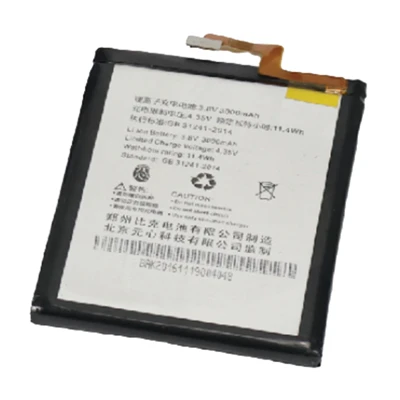
If you’re considering pairing a home storage battery with your EV charger, or if you have questions about sizing, compatibility, or cost, I’m here to help. Don’t let misinformation or fear of complexity stop you from making the switch. We can walk through your energy use, your driving habits, and what kind of system would work best for your home. You don’t have to go it alone on this.
Electric Tricycle Battery References
International Energy Agency (2023). Global EV Outlook 2023: Electrifying Transport.
U.S. Department of Energy (2024). Home Energy Storage and Electric Vehicle Charging Guide.
National Electrical Code (2023). Article 625: Electric Vehicle Charging Systems.
Solar Energy Industries Association (2023). Residential Solar and Energy Storage Best Practices.
Journal of Power Sources (2022). "Grid-Tied Home Energy Storage for Residential EV Charging: Techno-Economic Analysis".
Zhuhai Greaton Electronic Technology Co., Ltd.
As one of the most professional home storage battery manufacturers and suppliers in China, we have world-leading production equipment and strong manufacturing capabilities. Please rest assured to wholesale advanced home storage battery in stock here from our factory. Customized orders are welcome.
Address: 2nd Floor, Building A3, No. 6, Liulu, Xinqing Science and Technology Industrial Park, Jing’an Town, Doumen District, Zhuhai City
E-mail: wangchen1@psbattery.cn
WebSite: https://www.cngreaton.com/
