Hey there! I’m a supplier of non – wood fiber paper, and I’m super excited to take you on a journey through the history of non – wood fiber paper production. Non-wood Fiber Paper
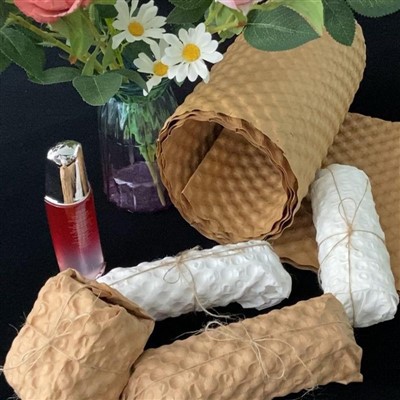
Let’s start way back in time. The origin of paper – making is often associated with Cai Lun in ancient China around 105 AD. Initially, the main raw materials were tree bark, rags, and hemp. But it wasn’t long before people started to explore other options. Non – wood fibers have a long – standing history in paper – making, and they were used out of necessity in many regions where trees were scarce.
In some parts of Asia, bamboo was one of the first non – wood fibers to be used for paper production. Bamboo is fast – growing, and it’s incredibly strong. Ancient Asian cultures, like those in China, Japan, and Korea, found that bamboo could be processed into high – quality paper. They developed techniques to break down the bamboo fibers, cook them, and then form them into sheets. This early paper was used for writing, printing, and even art.
In India, another non – wood fiber that has been used for centuries is cotton. Cotton fibers are soft and have good absorbency. The Indians were making cotton – based paper as early as the 12th century. They would collect old cotton rags, clean them, and then turn them into pulp. This pulp was then used to create paper that was suitable for religious texts, official documents, and more.
Moving on to the Middle East, papyrus was a well – known non – wood material used for writing long before the invention of modern paper. Papyrus plants grew along the Nile River. The Egyptians would cut the papyrus stalks, slice them into thin strips, and then layer and press them together to form a writing surface. Although it’s not exactly paper in the modern sense, it was a precursor to the paper – making techniques we use today.
As time went on, the industrial revolution came along, and with it, changes in paper – making technology. People started to look for more efficient ways to produce paper on a large scale. Non – wood fibers became even more important because they could be sourced more quickly and sustainably compared to wood.
In the 19th century, straw began to be used for paper production. Straw is a by – product of cereal crops like wheat, rice, and barley. It was abundant and relatively easy to process. Many European countries started using straw to make paper, especially for packaging and lower – grade printing. The process involved treating the straw with chemicals to break down the lignin and separate the fibers.
During the 20th century, there was a growing concern about deforestation and the environmental impact of wood – based paper production. This led to a renewed interest in non – wood fiber paper. New technologies were developed to make the production process more efficient and environmentally friendly. For example, new enzymes were used to break down the fibers instead of harsh chemicals, reducing pollution.
Today, non – wood fiber paper has a wide range of applications. It’s used for everything from high – end art paper to everyday packaging. Some of the most commonly used non – wood fibers now include bagasse (the residue from sugarcane after juice extraction), kenaf (a fast – growing plant), and recycled fibers from non – wood sources.
One of the great things about non – wood fiber paper is its sustainability. Non – wood plants grow much faster than trees. For example, bamboo can reach maturity in just a few years, while it takes decades for a tree to be ready for harvesting. This means that non – wood fiber paper can be produced in a more sustainable way, with less impact on the environment.
Another advantage is the quality. Non – wood fiber paper can have unique properties. For instance, paper made from cotton has a soft and smooth texture, which is great for high – quality printing and writing. Paper made from bamboo is strong and durable, making it suitable for packaging and industrial applications.
As a non – wood fiber paper supplier, I’ve seen firsthand the growing demand for this type of paper. More and more businesses are looking for sustainable alternatives to traditional wood – based paper. They’re not only concerned about the environmental impact but also about the quality and cost – effectiveness of the paper.
We offer a wide range of non – wood fiber papers, from thin and delicate papers for art and stationery to thick and sturdy papers for packaging. Our production process is designed to be as environmentally friendly as possible. We use state – of – the – art technology to ensure that the paper we produce meets the highest standards of quality.
If you’re in the market for non – wood fiber paper, whether you’re a printer, a packaging company, or an artist, we’d love to talk to you. We can provide samples of our papers so you can see and feel the quality for yourself. We can also work with you to customize the paper to meet your specific needs.
Contact us today to start a conversation about your non – wood fiber paper requirements. Let’s work together to make the world a greener place with sustainable paper solutions.
Non-wood Fiber Paper References:
- "A History of Paper" by Dard Hunter
- "The Paper Book" by Nicholas Basbanes
- Various academic articles on non – wood fiber paper production in environmental and paper – making journals.
Senzo New Material Group Co., Ltd.
As one of the most professional non-wood fiber paper manufacturers and suppliers in China, we also support customized service. Please rest assured to buy high quality non-wood fiber paper made in China here from our factory. For price consultation, contact us.
Address: Dongying Bonded Area, Shandong, P. R. China
E-mail: info@aonuochina.cn
WebSite: https://www.senzopaper.com/
