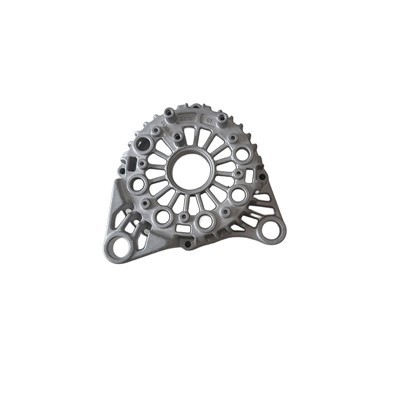
As a supplier of die casting parts, I’ve encountered numerous challenges in the production process. One of the most persistent issues is ensuring smooth mold release for die casting parts. In this blog, I’ll share some practical strategies to improve the mold release of die casting parts based on my years of experience in the industry. Die Casting Parts

Understanding the Importance of Mold Release
Before delving into the solutions, it’s crucial to understand why mold release is so important. A smooth mold release ensures that the die casting parts are ejected from the mold without damage, maintaining the integrity of the part’s surface finish and dimensional accuracy. It also reduces the cycle time, increases production efficiency, and extends the lifespan of the mold. On the other hand, poor mold release can lead to a variety of problems, such as part sticking, surface defects, and increased scrap rates, which can significantly impact the overall cost and quality of production.
Factors Affecting Mold Release
Several factors can affect the mold release of die casting parts. These include the design of the part and the mold, the properties of the casting alloy, the use of lubricants, and the processing parameters.
Part and Mold Design
The design of the part and the mold plays a crucial role in mold release. Parts with complex geometries, sharp corners, or undercuts can make it difficult to eject the part from the mold. Therefore, it’s important to design the part and the mold with mold release in mind. This may involve adding draft angles to the part walls, using ejector pins or sleeves in the mold, and avoiding sharp corners and undercuts whenever possible.
Casting Alloy Properties
The properties of the casting alloy, such as its shrinkage rate, thermal conductivity, and surface tension, can also affect mold release. Alloys with high shrinkage rates tend to shrink away from the mold during cooling, making it easier to eject the part. However, alloys with low thermal conductivity may take longer to cool, increasing the risk of part sticking. Surface tension can also affect the adhesion between the part and the mold, with higher surface tension leading to better mold release.
Lubricants
Lubricants are commonly used in die casting to reduce friction between the part and the mold, making it easier to eject the part. There are several types of lubricants available, including water-based, oil-based, and synthetic lubricants. The choice of lubricant depends on the type of casting alloy, the mold material, and the processing conditions. It’s important to use the right lubricant in the right amount to ensure optimal mold release without leaving any residue on the part surface.
Processing Parameters
The processing parameters, such as the injection pressure, injection speed, and cooling time, can also affect mold release. High injection pressure and speed can increase the force exerted on the part during filling, making it more difficult to eject the part from the mold. On the other hand, insufficient cooling time can result in the part being too hot when it’s ejected, increasing the risk of part sticking. Therefore, it’s important to optimize the processing parameters to ensure smooth mold release.
Strategies to Improve Mold Release
Based on the factors mentioned above, here are some strategies to improve the mold release of die casting parts:
Optimize Part and Mold Design
As mentioned earlier, the design of the part and the mold is crucial for mold release. When designing the part, ensure that it has sufficient draft angles on all vertical walls. A draft angle of at least 1-2 degrees is recommended for most die casting applications. This will allow the part to shrink away from the mold during cooling and make it easier to eject.
In addition, avoid sharp corners and undercuts in the part design. Sharp corners can cause stress concentration in the mold, leading to premature wear and tear. Undercuts can make it difficult to eject the part from the mold, requiring the use of complex ejection mechanisms. If undercuts are unavoidable, consider using side cores or slides in the mold to facilitate part ejection.
When designing the mold, ensure that it has a proper ejection system. This may include ejector pins, sleeves, or stripper plates. The ejection system should be designed to distribute the ejection force evenly across the part, preventing damage to the part during ejection.
Select the Right Casting Alloy
The choice of casting alloy can have a significant impact on mold release. When selecting an alloy, consider its shrinkage rate, thermal conductivity, and surface tension. Alloys with high shrinkage rates, such as aluminum and zinc, tend to shrink away from the mold during cooling, making it easier to eject the part. Alloys with high thermal conductivity, such as copper, can also help to reduce the cooling time, improving mold release.
In addition, consider the surface finish requirements of the part. Some alloys may require a specific surface treatment or coating to improve mold release. For example, aluminum alloys may benefit from a hard anodizing treatment to reduce friction between the part and the mold.
Use the Right Lubricant
Lubricants are essential for improving mold release in die casting. When selecting a lubricant, consider the type of casting alloy, the mold material, and the processing conditions. Water-based lubricants are commonly used in die casting because they are environmentally friendly and easy to clean. However, they may not be suitable for high-temperature applications. Oil-based lubricants offer better lubrication and release properties, but they can be more difficult to clean and may leave a residue on the part surface. Synthetic lubricants are a good compromise between water-based and oil-based lubricants, offering good lubrication and release properties without leaving a residue.
It’s important to use the right amount of lubricant. Too much lubricant can cause excessive smoke and fumes during the casting process, while too little lubricant can result in poor mold release. Follow the manufacturer’s recommendations for the application rate and frequency of the lubricant.
Optimize Processing Parameters
The processing parameters, such as the injection pressure, injection speed, and cooling time, can have a significant impact on mold release. When setting the injection pressure and speed, ensure that they are sufficient to fill the mold cavity completely without overpacking the part. Overpacking can increase the force exerted on the part during filling, making it more difficult to eject the part from the mold.
The cooling time is also important for mold release. Insufficient cooling time can result in the part being too hot when it’s ejected, increasing the risk of part sticking. On the other hand, excessive cooling time can increase the cycle time and reduce production efficiency. Therefore, it’s important to optimize the cooling time based on the size and complexity of the part, the type of casting alloy, and the mold design.
Conclusion
Improving the mold release of die casting parts is essential for ensuring high-quality production and reducing costs. By understanding the factors that affect mold release and implementing the strategies mentioned above, you can significantly improve the mold release performance of your die casting parts.
Die Casting Parts As a die casting parts supplier, I’m committed to providing high-quality products and services to my customers. If you’re looking for a reliable die casting parts supplier, I’d be happy to discuss your requirements and provide you with a customized solution. Please feel free to contact me to start a procurement discussion.
References
- Campbell, J. (2003). Casting. Butterworth-Heinemann.
- Groover, M. P. (2017). Fundamentals of Modern Manufacturing: Materials, Processes, and Systems. Wiley.
- Kalpakjian, S., & Schmid, S. R. (2013). Manufacturing Engineering and Technology. Pearson.
Suzhou Ruide Die-Casting Mold Co., Ltd.
As one of the leading die casting parts manufacturers and suppliers in China, we warmly welcome you to buy durable die casting parts made in China here from our factory. All customized products are with high quality and competitive price. Contact us for pricelist.
Address: No.2, Wanchen Road, Huayang Village, Wangting Town, Xiangcheng District, Suzhou City, Jiangsu Province
E-mail: jada@cnrdmj.com.cn
WebSite: https://www.cnrdmold.com/
