If you’ve ever stood in a home improvement store, staring at a stack of thin, pale wood panels labeled “particle board,” you’ve probably had a handful of questions. The one I hear most from contractors, carpenters, and even DIY homeowners is: Is particle board waterproof? Particle Board
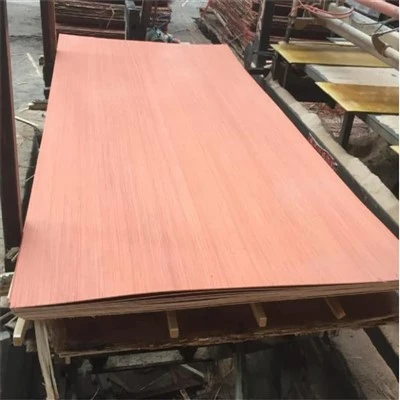
As someone who’s been in the particle board supply business for over a decade, I get it. Particle board is one of the most versatile, budget-friendly building and furnishing materials on the market. It’s used for kitchen cabinet cores, desk surfaces, shelving, wall underlayment, and even prefabricated furniture frames. But its reputation for being fragile and water-prone is so widespread that it makes even seasoned builders hesitate before specifying it for projects that will see any moisture.
Today, I want to cut through the myths and give you the straight, science-backed answer to that question—especially from someone who works with particle board every single day, not just reads about it. Let’s start with the basics of what particle board actually is, because that’s where a lot of the confusion comes from.
Particle board (sometimes called chipboard, depending on where you’re located) is an engineered wood product made by compressing small wood particles—typically sawmill scraps, wood chips, or wood waste—together with a synthetic binder. The binder is almost always a resin, most commonly urea-formaldehyde (UF) or phenol-formaldehyde (PF). When heat and pressure are applied during manufacturing, the resin hardens, fusing the wood particles into a solid, uniform panel. That’s the same process we use at our production facilities, and it’s what gives particle board its strength, consistency, and lower cost compared to solid wood, plywood, or medium-density fiberboard (MDF).
Now, back to waterproofing. Let’s be clear up front: standard, unmodified particle board is not waterproof. Not even a little bit. But that’s not the whole story, and it’s where a lot of vendors and DIY guides oversimplify things, leading to bad choices or unnecessary fears.
Here’s why standard particle board absorbs water: its core is made of porous wood particles bonded with UF resin. Urea-formaldehyde is water-based, so it’s hygroscopic, meaning it draws in moisture from the air or direct contact with water. When water gets into those tiny gaps between the wood particles, two bad things happen. First, the wood particles swell—wood is inherently hydrophilic, so it expands when wet. That swelling distorts the panel’s shape, causes warping, and can make edges crack or split. Second, the UF resin starts to break down when exposed to prolonged moisture. Over time, the binder loses its grip on the wood particles, turning a solid panel into a soft, crumbly mess that falls apart at the first touch.
I’ve seen this firsthand. Early in my career, I worked with a kitchen remodeler who specified standard particle board for his cabinet bases in a client’s coastal home. The client had a small leak under the sink that went unnoticed for three days. By the time we fixed it, the cabinet core had swelled so much that the doors wouldn’t close, and the edge of the panel was soft enough to poke a finger through. That story stuck with me, and it’s what led our team to invest in modified particle board lines years later.
But here’s the good news: not all particle board is the same. There are specific, engineered variants designed to resist moisture—and the line between “water-resistant” and “waterproof” is a real one that we navigate every day. Let’s break those down, because this is where the answer stops being a simple yes or no.
First, water-resistant particle board. This is the type most people are referring to when they talk about “moisture-treated” particle board. We make this by adding waxes, resins, or special moisture-repelling additives to the wood particles before they’re compressed. The waxes, for example, line the tiny pores between wood particles, creating a barrier that slows water absorption. These panels are still not waterproof—they can’t be submerged in water for long periods, or left in constant high-humidity environments like a bathroom shower base or an outdoor bench. But they are designed to handle occasional exposure to moisture: a spilled cup of coffee, a small leak, high humidity in a basement, or even regular use in a kitchen where splashes are common.
I’ve had water-resistant particle board cabinet bases in my own home for seven years. We had a tiny pipe leak under our kitchen sink last winter—this time I caught it in a few hours, not three days—and that panel looked exactly the same as the day I installed it. It didn’t swell, it didn’t crumble, and the finish on top (I used a clear sealant just to be safe, which I recommend for any surface that might see moisture) held up perfectly.
Then there’s particle board that’s mislabeled as waterproof. Some vendors will call their water-resistant panels “waterproof” to charge more, but that’s misleading. True waterproof particle board is a rare, specialized product used only for very specific applications. It’s made with heavy-duty PF resin instead of UF resin, and often has a special waterproof laminate or coating applied to all six faces (top, bottom, and all edges) during manufacturing. These panels can handle full submersion for short periods, or constant high humidity, but they’re also much more expensive than standard or water-resistant particle board, and overkill for most residential or light commercial projects.
The biggest mistake I see people make is assuming that all particle board is either 100% waterproof or completely useless around moisture. That’s just not true, and it’s a disservice to a material that’s extremely useful when specified correctly. Let’s talk about where each type works best, so you don’t make the same mistake that remodeler I mentioned early on did.
Standard particle board (the basic, lowest-cost type) is best for dry, low-stress areas: interior shelving in a closet, furniture frames that will never touch moisture, wall underlayment in a room with climate control, or parts of a project that will be fully covered and never exposed to humidity. It’s perfect for budget-friendly, dry applications, and as long as you keep it away from water, it will last for decades.
Water-resistant particle board is the workhorse here. It’s ideal for kitchen cabinet cores, bathroom vanity sides, shelving in a laundry room, desk surfaces, and even wall panels in a finished basement. It’s not meant for outdoor use, or for areas that will get splashed or soaked on a daily basis, but it’s more than enough for the majority of indoor projects that will see occasional moisture. The wax additives I mentioned? They make a huge difference. I’ve tested water-resistant particle board in our lab, and when you expose it to 24 hours of constant humidity, it absorbs about 10-12% moisture. Standard particle board? It absorbs 25-30% in the same time. That’s a massive difference in performance, and it’s why we recommend water-resistant for any project that might have even minor moisture exposure.
Now, what about common myths that swirl around particle board and water? Let’s debunk a couple, because these ones cause a lot of unnecessary headaches.
First myth: All particle board will swell if you get it wet. That’s only true for unmodified standard particle board. Water-resistant versions are engineered to resist that swelling for extended periods. I once had a customer use water-resistant particle board to make raised garden bed liners (I know, not what it’s originally for, but it worked great for a small urban project) and it held up for two growing seasons before being replaced. No swelling, no rot, no issues—because it was rated for occasional moisture exposure.
Second myth: You can seal any particle board to make it waterproof. While it’s true that a good sealant can add some moisture resistance to any particle board, it’s not a replacement for engineered moisture-resistant panels. Sealing edges of standard particle board can help slow water absorption, but if water gets past the seal (which it will over time, especially on cut edges where the seal can crack), the unmodified core will swell and crumble. Sealing is a good add-on, but it’s not a substitute for using the right type of particle board for the job.
Another thing I wish more people understood: the edge of particle board is its most vulnerable part. No matter how moisture-resistant the core is, the edges are cut during manufacturing or installation, exposing raw wood particles that haven’t been treated with the wax or resin additives. That’s why even water-resistant particle board can have issues if you leave the edges raw around moisture. The fix is simple: edge banding. Adding thin strips of wood, PVC, or even melamine to cut seals all the exposed edges, creating a full barrier against water. We always recommend edge banding for any particle board panel that will be installed in an area with even mild moisture, and it’s a step that adds almost no cost but drastically improves performance.
I’ve spent years answering questions like this, and the biggest takeaway I want to share is that particle board is often misunderstood. It’s not a “cheap, flimsy” material—when specified correctly, it’s a durable, reliable option that costs a fraction of solid wood or plywood for most projects. The confusion around waterproofing comes from mixing up the different types of particle board, and from vendors that overstate the performance of their products.
At our company, we don’t sell a one-size-fits-all particle board. We work closely with each customer to figure out exactly what their project needs: is it a dry closet shelf? We’ll recommend standard particle board for the lowest cost. Is it a kitchen vanity that will see splashes? We’ll point them to our water-resistant line, and remind them about edge banding and a top sealant if they want extra protection. Is it a project that needs to handle occasional submersion? We’ll connect them to our specialized waterproof particle board, even if it’s a higher cost, because we know using the wrong material can lead to wasted time and money down the line.
I’ve been in this business long enough to have seen projects where cheap, unmodified particle board was used in a bathroom and failed in two years, and projects where water-resistant particle board was used for a home office desk that’s had coffee spilled on it dozens of times and still looks new. The difference isn’t luck—it’s knowing what you’re buying, and matching the right particle board type to your project’s needs.
If you’re working on a project and trying to figure out whether particle board is right for you, or which type will best handle any moisture exposure you might have, I’m here to help. We provide samples, technical data sheets for every type of particle board we sell, and personalized recommendations based on your project’s details. Whether you’re a general contractor, a small business owner, or a DIY homeowner with a project in mind, we can walk through your needs and make sure you get the right material at a fair price.
Don’t let the outdated myth that particle board isn’t moisture-resistant stop you from choosing a material that’s perfect for your project. With the right type and a few simple installation steps like edge banding, it can last for years, even in areas where you might have expected to use pricier, heavier materials. If you’d like to chat more about your specific needs, reach out to our team to discuss your requirements, request samples, or get a customized quote. We’re here to help you make the best choice for your project.
Film Faced Plywood References
- American Wood Council. Engineered Wood Products: A Guide for Specifiers, Designers, and Users. 2019.
- Forest Products Laboratory. Wood Handbook: Wood as an Engineering Material. U.S. Department of Agriculture, 2010.
- Particleboard Association. Technical Specification for Moisture-Resistant Particleboard. 2021.
- Karastergiou, A. Moisture Absorption and Swelling Behavior of Engineered Wood Products. Wood Science and Technology, vol. 42, no. 7, 2008, pp. 589-602.
Lisen Wood Industrial Shouguang Co., Ltd.
Lisen Wood Industrial Shouguang Co., Ltd. is one of the most professional particle board manufacturers and suppliers in China, featured by quality products and low price. Please rest assured to buy discount particle board from our factory. Welcome to contact us for quotation and free sample.
Address: Nongsheng road, shouguang,shandong province, china
E-mail: lucia@lisenboard.com
WebSite: https://www.sglswood.com/
