Hey there, if you’ve ever worked in wastewater treatment, you know activated sludge is a double-edged sword. On one hand, it’s the workhorse that breaks down all the gunk in sewage, turning it into something that’s way less nasty before it gets released back into rivers or lakes. On the other hand, it spits out this wet, slimy mess at the end of the process—sludge— that’s heavy, stinky, and a total pain to dispose of. Sludge Centrifuge

I get it, because I’ve been in the sludge centrifuge game for years, talking to treatment plant operators every single day. One question I hear more than any other is: Can a sludge centrifuge actually treat activated sludge? Like, really treat it, not just move it around a little? Not gonna lie, I used to roll my eyes a bit at that one at first, because the answer is so obvious to me now—but then I realized most folks outside our bubble don’t know the nitty-gritty. Let’s break this down like we’re chatting over a coffee at a plant control room, no stuffy textbooks required.
First, let’s recap what activated sludge even is, because if you mix up terms, you’ll get the wrong idea. Activated sludge is the mix of wastewater, bacteria, fungi, protozoa, and all that good stuff that does the heavy lifting of eating organic matter. Once the treatment process is done, you have to separate those microbes (the “activated” part) from the cleaned water. That separation gives you two things: the effluent, which is the treated water that goes out, and the waste activated sludge (WAS), which is the excess of those microbes that can’t stay in the system forever—they multiply too fast. That’s the sludge everyone’s stressing over.
Now, what does “treat” even mean here? For operators, it’s not just spinning sludge in a centrifuge and calling it a day. Real treatment means making it easier and cheaper to dispose of, or even reuse it somehow. It means reducing that wet weight, cutting down on odor, getting rid of as much water as possible so you’re not hauling around tons of muck that costs a fortune to dump. That’s where centrifuges come in, and let’s be clear—they are some of the most effective tools we have for activated sludge treatment.
Let’s talk how a centrifuge actually works, but keep it simple. Think of it like a spin cycle in your washing machine, but 1000 times faster and way bigger. Your washer uses centrifugal force to get water out of clothes, right? A sludge centrifuge does the exact same thing, just with way heavier and stickier material. The activated sludge gets pumped into a rotating bowl, spinning at like 3000 to 5000 rotations per minute. All the solids—those tiny microbes that make up the sludge—get pushed to the outer edge of the bowl because they’re heavier than water, and the clean water (called centrate) gets pulled out the middle. That’s the basic process.
But does that count as treating it? Let’s run through the real benefits operators care about. First, dewatering—this is the big one. Raw activated sludge is like 95% water, right? So 1000 gallons of that is only 50 gallons of solids. Run it through a good centrifuge, and you can get that down to 70-85% water. Suddenly, that 1000 gallons becomes just 167 to 333 gallons. That means way less to haul, way lower disposal costs. A lot of plants I work with save tens of thousands of dollars a year just from that. Last year, I talked to a mid-sized plant in Ohio that was paying $80 a ton to dump wet activated sludge. After adding our centrifuges, their dry solids went from 5% to 75%, so they only had to haul 1/15th as much. Their disposal costs dropped by almost 80%—that’s not nothing.
Next, handling and odor control. Wet, high-water sludge is super sloppy, stinky, and hard to move. When you dewater it with a centrifuge, you get a solid cake that’s more like wet soil than slop. That’s way easier to load into trucks, doesn’t leak all over the road during transport, and the odor is way less intense. Operators hate getting complaints from local residents about sludge smells—this fixes that a ton. I’ve had one plant manager tell me their neighbors used to call every time it was sludge day, and now they barely get a whiff. That’s a huge win for everyone.
Then there’s the centrate part—what comes out of the middle. A good centrifuge doesn’t just separate water from solids, it produces centrate that’s almost clean enough to send back into the treatment process. The centrate has leftover organic matter and nutrients like nitrogen and phosphorus, but not enough to mess things up, so you can just pump it back to the front of the plant instead of wasting it. That saves water, and even some of those nutrients can feed the activated sludge microbes, so you don’t have to add as much new stuff. It’s a closed loop that makes the whole process more efficient.
Wait, but I know what some of you are thinking—“What if my activated sludge is super thin, or has a lot of extra stuff in it? Will a centrifuge even work?” Fair question. You have to do a little prep work, right? Activated sludge needs to be conditioned before it goes into the centrifuge. Conditioning just means adding a tiny bit of polymer—like a liquid chemical that makes the tiny sludge particles stick together, so they’re easier to spin apart from water. It’s like adding fabric softener to your wash to make clothes fluffier, just for sludge. The polymer dose is super small, like less than 1% of the sludge weight, so it doesn’t add much to the overall volume. Most plants already do this, and it makes the centrifuge work way better. I’ve seen plants skip the conditioning once and wonder why their centrate was all cloudy—turns out the sludge particles were too small to separate without that polymer, that’s all.
Is there a limit to what a centrifuge can do? Sure, nothing’s perfect. If your activated sludge has a lot of heavy, inorganic stuff—like sand or grit from old pipes—you might have to add a grit removal step first, because that stuff can wear out the centrifuge bowl faster. But for pure waste activated sludge, which is most of what plants deal with, centrifuges handle it like a champ. I’ve worked with plants from tiny 1 MGD (million gallons per day) systems up to huge 50 MGD facilities, and every single one has seen better results with centrifuges than old methods like drying beds or filter presses.
Wait, let’s address the elephant in the room—why do some people still use other methods? Old habits, mostly. Drying beds are cheap upfront, but they take up tons of space, which a lot of new plants don’t have. Filter presses work, but they’re a lot slower, require more manual labor, and break down more often. Centrifuges have a higher initial cost, but the long-term savings on disposal, labor, and space add up fast. A lot of operators I talk to say they thought centrifuges were overkill until they crunched the numbers. One plant in Pennsylvania told me they paid off their centrifuge in just 18 months from lower disposal costs. That’s a no-brainer, if you ask me.
Also, modern centrifuges are way better than the clunky old ones from 20 years ago. Now we have variable speed drives, automatic polymer dosing, and remote monitoring, so you don’t need a full-time guy standing there tweaking settings all day. They run 24/7 with barely any maintenance, and you can check how they’re working from your phone. That’s a big plus for plants that are short on staff, which a lot of small to mid-sized plants are these days.
Let’s talk real-world results, not just theory. Last quarter, I helped a plant in Illinois that was struggling with their activated sludge treatment. Their old system left them with sludge that was 88% water, and they were paying $120 a ton to haul it. We installed two of our medium-sized centrifuges, ran a quick test to figure out the right polymer dose, and now they’re getting 78% dry solids. That means they’re only hauling 1/10th as much sludge, so their disposal cost dropped by $96,000 a year. Plus, their centrate has been so clean that they’ve reduced the fresh water they use by 15%, because they don’t have to add as much new water to the process. That’s two big wins in one.
Another thing I love about centrifuges—they’re versatile. If a plant later decides they want to do something with the treated sludge, like compost it or turn it into fertilizer for local farms, the centrifuge’s cake is perfect for that. Composters hate wet sludge because it takes forever to break down and gets moldy, but dry, solid cake works great. One of our customers in Iowa partnered with a local farm, and they sell their treated activated sludge cake as a soil amendment. It’s extra income for the plant, and the farm saves money on fertilizer—total win-win.
Now, I know there are still skeptics out there. They’ll say “centrifuges are too loud” or “they use too much energy.” Yeah, they make a little noise, but modern ones are insulated, so it’s not that bad. And energy use? It’s way less than you’d think. The energy to run a centrifuge for a day is about the same as running a few household AC units. Compare that to the savings on disposal, and it’s nothing. I’ve never had a customer tell me their centrifuge’s energy bill was a problem, but I’ve had dozens tell me their disposal costs were a massive headache before they got one.
So circling back to the original question: Can a sludge centrifuge treat activated sludge? The short answer is a resounding hell yes. It’s not just treating it in the sense of spinning it, it’s treating it to make it manageable, cost-effective, and even useful. It cuts down hauling costs, reduces odor, makes the whole wastewater process more efficient, and gives you a product that’s way easier to handle for whatever’s next.
If you’re a plant operator still dealing with slimy, expensive-to-haul activated sludge, I get it. You’re probably juggling budgets, staff, and local complaints, and adding new equipment feels like a big risk. But centrifuges aren’t a risk—they’re a proven solution that thousands of plants around the world use every single day. I’ve been in this game long enough to know that when something works this well, it’s not hype. It’s just good, solid equipment that solves real problems.
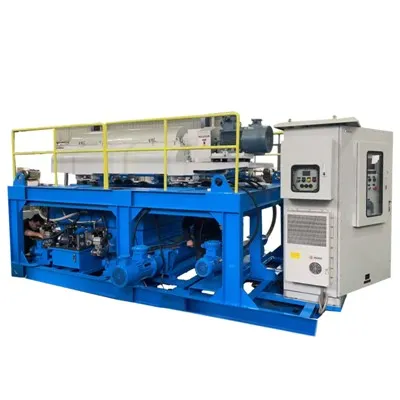
If you’re tired of throwing money away on hauling wet sludge, tired of neighbors complaining about smells, or just want to make your wastewater process run smoother, reach out. We can send you a free performance test for your activated sludge, show you exactly what kind of results you can expect, and walk you through all the numbers so you know exactly what the savings will be. No sales pitch, no pressure—just straight talk about what works for your plant.
Municipal Sludge Centrifuge References
Metcalf & Eddy. (2014). Wastewater Engineering: Treatment and Resource Recovery. McGraw-Hill.
Qasim, S. R. (1999). Wastewater Treatment Plants: Planning, Design, and Operation. CRC Press.
American Water Works Association. (2008). Water Treatment and Sludge Handling: Best Practices. AWWA.
Lishui Yuanrong Environmental Protection Equipment Co., Ltd.
As one of the most professional sludge centrifuge manufacturers and suppliers in China, we have world-leading production equipment and strong manufacturing capabilities. Please feel free to buy customized sludge centrifuge from our factory. Also, quotation is available.
Address: Lot 6-1, Block 15, Wanyang Zongchuang City, Lishui, Zhejiang, China
E-mail: 361184920@qq.com
WebSite: https://www.yrhdc.com/
