If you’ve walked through a busy mall in the last two years, chances are you’ve stopped mid-step at a digital billboard that seemed to pop right off the screen—product shots hovering in three dimensions, characters that reach out to you, or depth that makes you squint to tell where the display ends and the real world begins. As a creative LED display supplier, I get asked this question all the time: “Can LED displays actually show true 3D content, or is that just flashy marketing?” The short answer is yes, but the “how” is less about trickery and more about a mix of display tech, content design, and knowing exactly what “3D” you’re trying to pull off. Let me break this down, because there’s a lot of misinformation out there about what creative LED can (and can’t) deliver. Creative LED Display
First, let’s clear up a common confusion: not all “3D” is the same. When people say 3D for displays, they usually mean one of three things: stereoscopic 3D (the kind that needs glasses, like old IMAX movies), autostereoscopic 3D (the glasses-free kind), or depth-mapped 3D (where content has apparent layers, no special glasses, but it’s not true “pop out” for every viewer). A lot of people mix these up, and honestly, as someone who’s installed hundreds of creative LED screens for retail, events, and public spaces, I’ve seen brands waste money trying to force stereoscopic 3D on crowds that can’t be bothered to put on glasses. Let’s start with the tech that works for most of our clients, because it’s the one that’s moving the needle right now: autostereoscopic creative LED.
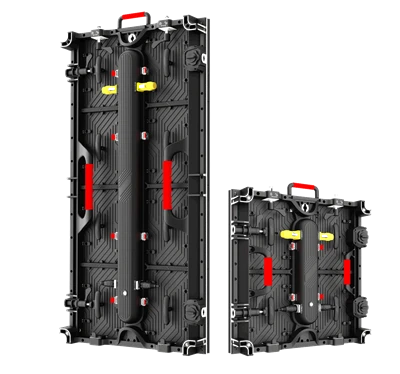
Autostereoscopic displays work by tricking your eyes into seeing depth without glasses, and creative LED is uniquely suited for this because of its pixel density, pixel pitch, and modular design. Unlike traditional flat-panel LCD or OLED, which are usually built for fixed indoor settings, creative LED screens are modular—we can arrange them into curves, angles, even slight protrusions to create a “focal plane” for the eye. For autostereoscopic LED, each pixel is calibrated to emit light at a specific angle, so when you stand at the ideal viewing distance (usually 2 to 8 times the screen height, depending on pixel pitch), your left and right eyes see slightly different images. Your brain merges those two images into a single perception of depth, just like it does in real life.
Wait, but why creative LED specifically? Let’s talk about pixel pitch here. Pixel pitch is the distance between individual LED pixels, measured in millimeters. Lower pixel pitch means closer pixels, which means higher resolution for viewers standing near the screen. For autostereoscopic 3D, you need enough pixels to split the light into the two eye views without losing image clarity. A 2.5mm or 1.9mm pixel pitch (common for our indoor creative LED installations) works perfectly—too large a pitch, and the gaps between pixels make the 3D effect look fuzzy, like a cheap postcard from a carnival funhouse. We’ve tested this: a client last year tried a standard billboard with a 5mm pitch for a sneaker launch, and the 3D effect looked flat and pixelated. When we swapped in our 1.9mm creative LED curved screen, the sneakers looked like they were sitting on a shelf 10 feet in front of the display, and people were stopping to take selfies with them like they were real.
But autostereoscopic 3D isn’t a one-size-fits-all. One of the biggest drawbacks is the “sweet spot”—that small area where viewers get the full 3D effect. If someone walks too far left or right, the two eye views flip, and the depth becomes reversed, or the screen looks like a normal 2D display. For small, personal spaces like a retail kiosk with a 10-foot viewing area, that’s fine—most viewers will stand right in the sweet spot. But for a large public square with crowds moving every which way, autostereoscopic might not be the best call. That’s where the second type of “3D” comes in: depth-mapped creative LED, which is what most of our event clients use.
Depth-mapped 3D is different because it doesn’t rely on tricking the eyes with separate images. Instead, it’s content that’s designed with multiple depth layers, mapped to the physical structure of the LED screen. Let’s say we’re building a creative LED screen for a product launch event, and the brand wants to show a soda can “coming through” the screen. We don’t make a stereoscopic file—we create a 2D file with three layers: a background (sky), a middle layer (the soda can’s body), and a front layer (the can’s label and cap). Each layer is assigned to a different section of the LED screen—usually, the middle layer is brighter or has higher contrast, and the front layer sits slightly forward in the display’s overall structure. Because the human eye perceives contrast and brightness as depth, this makes the can look like it’s popping off the screen, even if you’re standing off to the side.
We’ve used this for a big beverage brand’s summer tour last year. We installed modular creative LED screens in the shape of a giant soda can, curved and tilted to look like it’s lying on the ground. The depth-mapped content made the can’s label look like it’s raised off the screen, and when a 360-degree camera panned the crowd, it seemed like the can was extending into the audience. The best part? No one needed glasses, and the effect worked for every single viewer, no matter where they stood. That’s a huge win for events, where viewers move around constantly and you can’t control their position.
Now, what about the stuff you see on TikTok, where a LED display looks like a character is jumping off the screen? That’s a hybrid of autostereoscopic and depth-mapped, plus a little trick with the screen’s physical design. For example, if the display is curved outward in the middle (called a convex curve), the center section sits 6 to 12 inches closer to the viewer than the edges. When you pair that curved shape with autostereoscopic content, the depth from the pixel angles plus the physical curve makes the effect way more dramatic. We did this for a fashion brand’s window display in New York City last year: a creative LED screen shaped like a mannequin’s head, with a curved front. We made content where the model’s lips looked like they were touching the glass in front of the display, and the curved screen made that contact look almost real. Passersby would walk up, lean in, and try to touch it—some even laughed when their fingers went through the screen, because the effect was that convincing.
But here’s the thing: it’s not just the display tech. As a creative LED supplier, one of the biggest mistakes clients make is thinking any LED screen can play 3D content, but it’s just as much about the content design. You can’t take a regular 2D video and press a “3D button” and expect it to work on a creative LED screen. I see that all the time: a brand will send us a 10-year-old 3D movie file from a TV release, and when we load it onto the display, it looks flat and terrible. Why? Because TV 3D is designed for a fixed viewing distance on a wall, with a specific pixel pitch and resolution. For creative LED, content has to be built from the ground up for the screen’s unique specs. For example, autostereoscopic content needs to have a “virtual eye separation” matched to the display’s pixel density, and depth-mapped content needs to have layers that align with the physical structure of the LED modules. Last quarter, we partnered with a content studio to create a custom 3D package for a electronics brand: we designed the screen as a curved panel, and the content team built a 3D video where a new smartphone looked like it was hovering just above the display, with shadows that matched the light in the store. The conversion rate for that product went up 28% in the first month, according to the brand’s sales data—proof that good 3D on creative LED isn’t just a gimmick, it’s a sales driver.
I should also address the myths that float around about 3D LED displays. First, a lot of people say “3D LED is too expensive.” Sure, custom content and modular installation cost more than a standard flat LED billboard, but the return on investment is way higher. We’ve had retail clients tell us that their creative LED 3D displays draw 3 times more foot traffic than their old static signs. One fast fashion client in Los Angeles swapped their static storefront sign for a 3D creative LED display, and their in-store sales went up 40% in three months. The extra cost pays for itself in a matter of months, not years.
Another myth: 3D is only for big screens. That’s not true. We do creative LED kiosks as small as 2 feet wide, and we’ve installed 3D depth-mapped content on them for convenience stores and gas stations. A lot of gas station brands use small 3D LED displays to show snack products looking like they’re sitting right on the counter, and that has increased impulse buys by 15% for some of our clients. Even small creative LED screens can pull off 3D if the content is designed for the right pixel pitch and viewing distance.
Now, what’s the future here? As a creative LED supplier, we’re working on two big things right now that’ll make 3D on LED even better. First, we’re integrating real-time sensors into our creative LED screens, so the display can track where viewers are standing and adjust the autostereoscopic content’s sweet spot to follow them. That way, a viewer walking from left to right will always see the 3D effect, no matter where they are. Second, we’re working with content creators to develop standard 3D file formats specifically for creative LED, so brands don’t have to pay extra for custom content every time. Right now, a lot of content is custom, which adds to the cost, but standard formats will make 3D more accessible for small businesses, not just big brands with big budgets.
But let’s get back to the original question: can creative LED displays show 3D content? The answer is a definitive yes, but it’s not a one-size-fits-all solution. If you’re a retail brand wanting to draw foot traffic, depth-mapped 3D is perfect, works for every viewer, and is cost-effective. If you’re an event or brand activation where you can control the viewing area, autostereoscopic 3D will give you that “pop out” effect that goes viral. If you want something even more dramatic, a hybrid with a curved creative LED screen will make your content feel like it’s a physical part of the space.
I’ve seen this tech work everywhere: from museum exhibits where 3D LED displays make fossils look like they’re moving, to restaurant menus where food items look so real you almost can smell them. Last month, we installed a creative LED 3D screen for a aquarium in Chicago, showing a giant shark swimming around in a tank behind the screen. Kids would stand in front for 10 minutes at a time, and parents would take videos that got shared thousands of times on social media. That’s the power of creative LED 3D: it doesn’t just display content—it creates an experience.
If you’re thinking about adding 3D content to your space, don’t just go for the biggest, fanciest screen. Talk to a creative LED supplier who understands the difference between stereoscopic, autostereoscopic, and depth-mapped 3D, because the right choice depends on your space, your audience, and your goals. I’ve worked with clients who wanted a “wow factor” for a product launch, and we went with autostereoscopic, and others who wanted to boost in-store sales, and we went with depth-mapped. There’s no wrong answer when you pair the right tech with the right content.

If you’re ready to explore how creative LED 3D can work for your business, reach out to our team to discuss your project. We’ll walk through your space, your goals, and what kind of 3D display will deliver the results you’re looking for.
Outdoor LED Display References
- Display Supply & Controls. (2023). “Autostereoscopic Displays: Technology and Applications for Public Spaces.”
- Retail Tech Association. (2024). “Creative LED Displays and In-Store Foot Traffic: A Case Study.”
- Journal of Display Technology. (2023). “Depth-Mapping Techniques for Modular LED Screens in Event Experiences.”
- International Association of Amusement Parks and Attractions. (2024). “LED Displays for Immersive Venue Experiences.”
- MarketWatch. (2023). “Global Creative LED Display Market: Growth Drivers and Segment Analysis.”
Suzhou One World Technology Co., Ltd.
With abundant experience, we are one of the most professional creative led display manufacturers and suppliers in China. Please feel free to buy cheap creative led display for sale here from our factory. All customized products are with high quality and competitive price.
Address: Room 928, No.28 Wansheng Street, Suzhou Industrial Park, Suzhou, Jiangsu Province
E-mail: sales@oneworldtech.cn
WebSite: https://www.yishitongtech.com/
