If you’ve ever stood in a utility closet, basement breaker room, or even glanced at the panel tucked near your apartment building’s entry, you’ve stared at what keeps the lights on—and keeps you safe: a distribution box breaker. As a supplier of distribution boxes and their core components, I get asked this question at least three times a day by electricians, property managers, and even occasional homeowners trying to fix a circuit tripping mid-superbowl. Let me break this down not as a textbook definition, but as the part I’ve spent years making sure works when you need it most. Distribution Box
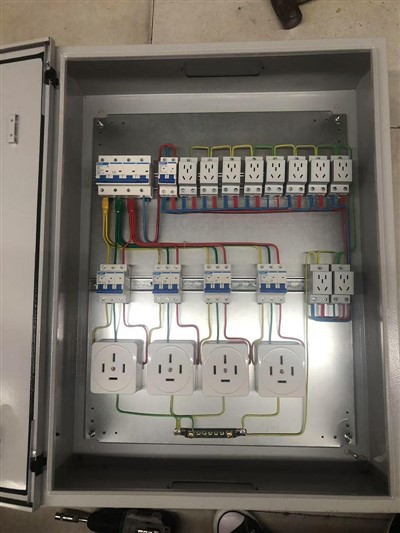
First, let’s strip back the “distribution box” part to set the scene. A distribution box (also called a breaker box, electrical panel, or load center) is the central hub of any building’s electrical system. It takes the high-voltage power that comes from the utility pole or street main, steps it down to 120/240-volt power we use for lights, appliances, and outlets, and splits that power into separate, manageable circuits. Without it, electricity would blast through your walls in one unprotected, dangerous line. And every one of those circuits relies on exactly the part people point to first when something goes wrong: the distribution box breaker, or circuit breaker.
So what is a distribution box breaker, exactly? Unlike old fuse boxes that needed to be replaced when they burned out, a breaker is a reusable, electromechanical switch built to do one core job: protect your circuits and your property from electrical overloads and short circuits. Think of it like a super-sensitive guard dog for each circuit in your building. That guard has two main triggers to sound the alarm: an overload and a short circuit.
Let’s start with overloads. Every circuit is designed to carry a specific amount of power, measured in amps. A 15-amp circuit, for example, is meant for small stuff: table lamps, kitchen outlets for countertop appliances, a couple of overhead lights. If you plug too many devices into that circuit—say, four space heaters, a microwave, and a toaster all running at the same time—you exceed that 15-amp limit. Wires inside the walls start heating up. A little heat is normal, but too much for too long can melt the wire insulation, spark a fire, or damage your devices. The breaker senses this excess current, trips (flips to the “off” position) in a fraction of a second, and cuts power to that circuit before any damage happens.
Then there’s the short circuit, which is the more urgent, immediate threat. That’s when a “hot” wire (the one carrying power) accidentally touches a neutral wire or a ground wire (the one that sends stray current safely into the earth) instead of traveling through its intended path. This creates a runaway flow of electricity—way more than a simple overload, sometimes hundreds of amps in milliseconds. A breaker has a magnetic component built specifically to react to this kind of sudden, massive current. Instead of waiting for heat to build up, it trips almost instantly, often in less than a tenth of a second, to stop that dangerous surge dead in its tracks. That’s why you’ll see breakers labeled as “15A,” “20A,” “30A”—each is calibrated to trip at a specific current level for a specific circuit.
Now, you might be wondering: why are breakers in the distribution box, not somewhere else? Let’s circle back to the system design. The main distribution box sits right after your utility’s service entrance, so it’s the first point where power is split into smaller, safer circuits. Instead of having one unprotected line running to every light and outlet in a 2,000-square-foot house, the distribution box breaks that single line into 10, 12, or more separate circuits, each with its own breaker. That’s a huge safety win. If a breaker trips in the kitchen, the living room lights and bedroom outlets still work—you just don’t have to root through a dark house to find the problem. For commercial or industrial buildings, that design is even more critical: a single breaker tripping on a break room circuit doesn’t shut down an entire manufacturing line or office floor.
As a supplier, I’ve seen firsthand how breakers are not one-size-fits-all. There are different types built for different jobs, and picking the wrong one is as dangerous as no breaker at all. The standard thermal-magnetic breaker I mentioned earlier is the most common for residential and light commercial use—it handles both overloads and short circuits, is reliable, and easy to replace when needed. But for larger, more demanding spaces, you have other options: GFCI breakers, for example, are the ones you see in bathrooms, kitchens, and outdoor outlets. These don’t just sense overcurrent or short circuits—they sense small “leaks” of current that might be escaping to water or even a person standing on a damp floor, tripping in milliseconds to prevent shock. AFCIs (Arc Fault Circuit Interrupters) are another newer type, designed to catch the tiny, dangerous arcs that can happen in old or worn wiring, a leading cause of home fires.
I’ve had customers ask me all the time: how do I know if my breaker is bad? The truth is, most breakers work flawlessly for decades, but they do have a lifespan, usually 20 to 30 years. Signs that yours might be going bad include breakers that trip randomly for no obvious reason, breakers that won’t stay on (they flip back to off as soon as you reset them), or breakers that feel hot to the touch even when everything on the circuit is off. If you see any of that, don’t try to fix it yourself—electrical work is dangerous, and always work with a licensed electrician to replace breakers or distribution box components.
Wait, but let’s get back to the core question, and how my work as a supplier ties into this. A distribution box breaker is more than a part—it’s the backbone of electrical safety for any space, small or large. When I source and supply these components, I don’t just look for the cheapest part on the market. I make sure every breaker meets national electrical codes, is calibrated correctly, and is built to last. A bad breaker can fail to trip when it’s supposed to, turning a small overload into a fire hazard, or trip for no reason, leaving you in the dark when you need power most. That’s why I partner with manufacturers who test every breaker multiple times before it leaves the floor—because when you rely on a breaker to keep your family or employees safe, cutting corners isn’t an option.
Another common question I get: is a fuse the same as a breaker? No, and that’s an important distinction. Fuses are also protective devices, but they’re one-time use—they have a thin metal strip that melts when current is too high, breaking the circuit, and you have to replace the entire fuse. Breakers, on the other hand, reset and reuse the same electromechanical switch, so you just flip it back to on instead of buying a new part every time it trips. They’re more convenient for modern systems, which is why breakers have all but replaced fuses in new construction.
I’ve seen how misinformation about breakers causes unnecessary problems. For example, a lot of homeowners think they can replace a 15-amp breaker with a 20-amp one if their 15 keeps tripping. That’s a huge mistake. The 15-amp breaker is calibrated to match the 15-amp wiring in that circuit. If you put a 20-amp breaker on 15-amp wire, the breaker won’t trip when the wire is overloading, because the wire’s insulation will melt and cause a fire before the 20-amp breaker trips. It’s a dangerous shortcut I see all the time, and it’s one of the reasons I make it a point to educate everyone I work with on proper breaker and distribution box setup.
At the end of the day, the distribution box breaker is a simple, unassuming part—small enough to fit in a slot the width of a credit card, quiet until it trips, easy to ignore when everything works. But when it fails to do its job, it causes problems that are anything but small: power outages, fires, even shock hazards. That’s why as a supplier, I prioritize quality, reliability, and compliance in every distribution box and breaker I provide. Whether you’re a contractor outfitting a new apartment complex, a property manager updating an old commercial building, or a homeowner who wants to make sure your system is safe, getting the right breakers for your distribution box isn’t just a purchase—it’s an investment in safety.
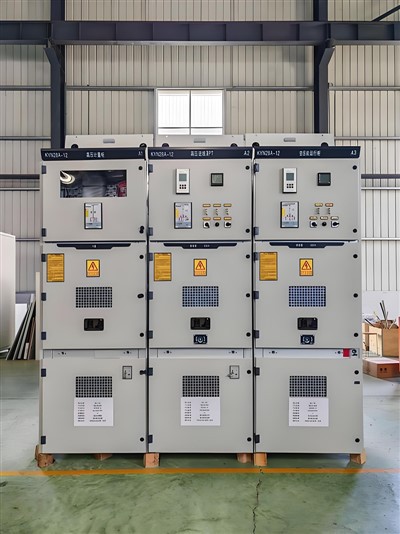
If you need reliable, code-compliant distribution boxes and breakers tailored to your project’s needs, reach out to discuss your requirements and get a personalized quote.
Distribution Chamber References
National Electrical Code (NEC) Handbook, 2023 Edition
Underwriters Laboratories (UL) 489 Standard for Molded-Case Circuit Breakers, Molded-Case Switches, and Circuit-Breaker Enclosures
International Code Council (ICC) Electrical Code, 2021 Edition
Anhui Nanxian Electric Co., Ltd.
With abundant experience, we are one of the most professional distribution box manufacturers and suppliers in China. We warmly welcome you to buy advanced distribution box for sale here and get quotation from our factory. All customized products are with high quality and low price.
Address: Factory Unit 03-2, Building 21, Feidong Yinfeng Industrial Park Co., Ltd., Northeast Corner of Manquan Road and Changle Road, Hefei Circular Economy Demonstration Park, Feidong County, Hefei City, Anhui Province.
E-mail: 541580567@qq.com
WebSite: https://www.nxelepower.com/
