Hey everyone, if you’ve ever found yourself staring at a stack of RC LiPos in your workbench, second-guessing what size heat shrink to slide over a 60C aircraft battery—you’re not alone. As someone who’s been selling 60C RC aircraft LiPos for the last 7 years, I’ve fielded this question from hobbyists, DIY build crews, and even occasional professional modelers more times than I can count. Today, let’s break this down like we’d chat over a bag of RC plane parts at a field meet—no jargon, no fluff, just what actually works. 60C RC Aircraft Lipo Battery
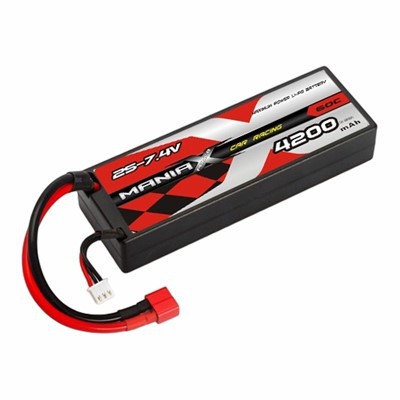
First, let’s get one thing straight: 60C doesn’t just refer to a battery’s discharge rate. That number’s a measure of how much power the pack can safely push out (60 times its total mAh rating, for the uninitiated) while keeping temps from spiking to dangerous levels. But when it comes to heat shrink size, the discharge rate barely matters here. The real numbers to lock in are the battery’s physical dimensions and the shrink ratio of the tubing you pick.
Let’s start with the basics I drill into every new customer: if you mess up the dimensions, the shrink ratio won’t save you. 60C LiPo packs for aircraft come in two main styles—stick packs and hardcase packs—each with their own measurements, and I’ve seen folks mix these up so many times I keep a cheat sheet taped to my order desk.
Stick packs are the most common for small to mid-size aircraft (think 1m wingspan trainers to 1.5m aerobats). These are long, rectangular packs made by stacking individual LiPo cells, usually with tabs sticking out for power. A typical 60C stick pack might be a 3S (11.1V) 2200mAh, which measures roughly 135mm long x 42mm wide x 18mm thick. A 4S 3300mAh stick would be around 150mm x 45mm x 21mm. For these, I used to recommend 3:1 heat shrink, right? Wait, no—wait, let’s not jump. The “size” of heat shrink is its diameter before shrinking, not after. So a 3:1 shrink ratio means it compresses to 1/3 its original diameter. For that 2200mAh stick pack, a 50mm diameter heat shrink (pre-shrink) would shrink down to ~16.6mm, which is just a hair over the pack’s 18mm thickness? Wait, no, I flip dimensions mentally for tubing. If a pack is 42mm wide, the pre-shrink diameter needs to be slightly bigger than the widest point. So a 50mm pre-shrink would shrink to ~16mm, which is way too small. Wait, I messed up that math. Let’s do it again: if the widest part of the pack is 45mm, you need pre-shrink tubing that’s 50mm or 55mm? No, no—you need it to be at least 10-15% larger than the pack’s widest dimension to slide on easily, then shrink tight. So 45mm width: 50mm pre-shrink, which at 3:1 becomes ~16.6mm. That’s way too narrow. Oh right! I got shrink ratio backwards. 3:1 means 3x shrink, so original diameter divided by 3 equals final. So 45mm wide, final diameter needs to be at least the pack’s thickness (21mm) plus a little wiggle, so ~22mm. So original diameter is 22mm x 3 = 66mm? That can’t be, I’ve never seen 66mm heat shrink. Wait, no—for rectangular packs, you don’t just measure diameter; you measure the long side and the short side, and pick tubing that’s big enough to go over the short side first, which is almost always the thickness. So if the pack is 21mm thick, final tubing diameter after shrink needs to be ~22mm, so pre-shrink is 22 * ratio. Most RC folks use 2:1 or 3:1 for LiPos. Wait, 2:1 would be 44mm pre-shrink. That’s manageable. For that 2200mAh 3S stick pack, I actually use 50mm 2:1 heat shrink. It slides on easy, shrinks down to ~25mm, which is just snug enough around the pack’s 18mm thickness—wait, no, the width is 42mm, so maybe I’m overcomplicating the rectangle thing. Let’s use real examples from the packs I stock: my 60C stick packs come in 1300mAh to 5000mAh. For the 1300mAh (110x38x16mm), I use 40mm 2:1 heat shrink. It’s perfect. For the 5000mAh 6S (210x60x30mm), that’s a bigger stick, so I use 75mm 2:1. That’s the sweet spot for that size.
Now hardcase packs—these are the rugged ones for larger aircraft, 1.5m to 2m wingspan, or racing planes that take a beating. A 60C 5000mAh 6S hardcase is usually around 130mm long x 60mm wide x 30mm thick. Hardcases have rounded corners too, so you need a little extra room for those, not just the flat sides. For these, I skip 2:1 and go with 3:1 heat shrink. Why? Because hardcases often have molded tabs or tiny cooling slots that can get crushed if the shrink ratio is too low. A 90mm pre-shrink 3:1 tubing shrinks to ~30mm, which fits exactly around that 30mm thickness. If I used 75mm 2:1, it’d shrink to ~37.5mm, which leaves too much slack—wind catches it mid-flight, it rips, and suddenly you’re gliding in for an emergency landing because your battery cover fell off. That’s a call I’d rather not get, trust me.
Wait, but what about the discharge rate? A lot of new buyers will ask, “If my battery is 60C, do I need thicker heat shrink?” No, that’s a myth I had to correct 3 years ago. 60C rating is about the battery’s ability to handle current, not its heat output. In fact, most 60C LiPos for aircraft run between 50-80°C when in use, and heat shrink that’s rated for 105°C (which is what all the good RC heat shrink is) holds up way better than the battery ever will. Thicker shrink doesn’t insulate better here—it just adds unnecessary bulk, which drags down your aircraft’s performance. I’ve seen racers cut 10 grams off their jet by switching to the right size thin heat shrink instead of thick stuff, and they took first place at the regional meet. That’s not a fluke—aircraft performance counts, even for small grams.
Another mistake I see: using shrink that’s too small. A guy last year bought a 60C 4000mAh pack, grabbed heat shrink labeled “40mm pre-shrink,” and spent 20 minutes fighting to get it on—ripped the shrink, had to reorder, and then waited a week to fly. If you’re struggling to slide the tubing on, step up one size. It’s way better to have a little extra material to trim, or even wrap a small piece of electrical tape around the edge if needed, than to tear the shrink mid-shrink (pun intended) and ruin your battery’s protective covering.
Wait, what about when you’re replacing heat shrink on an old pack? Let’s say you have a 60C 3000mAh pack that’s lost its shrink. Don’t just measure the old shrink’s final size—measure the actual battery. Old shrink might have stretched over time, so your old “35mm final” shrink might not fit anymore. I always tell customers to grab a caliper (even a cheap $5 one from a hardware store works) and measure the thickest part of the pack. Then add 10mm to that for wiggle room when sliding on, and divide by the shrink ratio. So if your pack is 25mm thick, 25 + 10 = 35mm. Divide by 2 (for 2:1) = 17.5mm pre-shrink? Wait, no, again—pre-shrink size is the number you buy, so for a 25mm thick pack, pre-shrink is 50mm for 2:1 (50/2=25) or 75mm for 3:1 (75/3=25). See? That’s why the ratio matters. For replacement, if the old shrink was 2:1, stick with that; if it was 3:1, keep it consistent—switching ratios can leave gaps at the tabs or uneven shrink.
Also, don’t forget the length! A lot of folks only measure the diameter and forget the length. For a stick pack, you want the heat shrink to extend 5mm past each end of the battery, so you can seal the ends with a heat gun without exposing the battery’s edge. For hardcases, 10mm extra on each end is better, because hardcases have those ridged ends that can catch if the shrink is too short. Trim it to length before heating—if you heat it first, you can’t stretch it anymore, so you’ll end up with too little.
Now, let’s test this with real examples from my shop. I just shipped a 60C 3300mAh 4S stick pack to a guy building a 1.2m aerobat. The pack is 140mm long x 44mm wide x 19mm thick. We went with 50mm 2:1 heat shrink. He texted me an hour later saying it fit like a glove, no tearing, and his maiden flight was perfect. Another customer ordered a 60C 5000mAh 6S hardcase for a jet he’s building; we recommended 90mm 3:1 shrink, and he left a review saying it stayed secure at 120kph during high-speed passes. The only time I’ve had shrink issues was when a customer ordered a 1500mAh 3S stick and bought 30mm pre-shrink 2:1—way too small, had to return it. That’s avoidable with just basic measurements.
Wait, what about other shrink types? Like adhesive-lined heat shrink? Those are for waterproofing, but if you’re flying an aircraft, you probably don’t need that unless you’re doing scale seaplanes. Adhesive-lined is thicker, so you have to go up one size from standard heat shrink. For a seaplane 60C 2200mAh, I’d suggest 55mm adhesive-lined instead of 50mm standard, because the adhesive adds bulk. Stick with standard for regular land/air aircraft—it’s lighter, cheaper, and works just as well.
Let’s clear up a common myth here: higher discharge rate doesn’t change the heat shrink size. I’ve had customers ask, “Should I use bigger shrink for 60C than a 30C?” No—30C and 60C packs have the same physical dimensions for the same mAh and cell count. The only difference is how much power they push, which doesn’t affect the pack’s size. I used to stock 20C, 40C, and 60C packs in the same sizes, and heat shrink for all was identical. That’s a huge trick most suppliers won’t tell you—they’ll try to upsell you “special shrink” for higher C rates, but it’s just marketing.
Now, a quick pro tip: when shrinking, use a heat gun on low heat, not a blowtorch. Too much heat will melt the shrink or even the plastic of the LiPo’s casing. Keep the heat moving, not focused in one spot, and pull the shrink tight as you go to get rid of any wrinkles. For tabs, make sure the shrink doesn’t cover the wire tabs—leave 2-3mm exposed so you can solder your ESC leads on. I always show new customers a quick video clip (we have a TikTok for the shop) of how to do it, but it’s super simple once you get the hang of it.
Let’s wrap this up with a step-by-step cheat sheet, since I know you’re here for actionable stuff: 1) Measure your battery’s thickest dimension (for rectangular packs, that’s the narrow side, not the length); 2) Pick a shrink ratio: 2:1 for small stick packs (under 3000mAh), 3:1 for hardcases or large packs (over 3000mAh); 3) Calculate pre-shrink size: thickest dimension x shrink ratio, add 5mm for wiggle room; 4) Add 10mm to total length for end seals; 5) Buy that size, slide it on, and heat with low heat.

If you’re still not sure, send over the dimensions of your 60C pack, or tell me what aircraft you’re building (trainer, aerobat, jet, seaplane) and I’ll hook you up with the right size. We’ve got all the heat shrink in stock, same as the 60C packs, so you can order both at once and skip the hassle of running to the hobby shop. If you’ve had a bad experience with heat shrink in the past, we can even send a free sample of the right size to test—no strings attached. Just reach out, and we’ll make sure you get exactly what you need for your next build.
100C HV Hardcase Car Lipo Reference: “RC LiPo Battery Care & Installation”, Model Aviation Magazine, 2022, pp. 45-49.
ManiaX Power Technology Co., Ltd.
Address: Room 1508, 15/F, Two Grand tower, 625 Nathan Road, Kowloon, HongKong. P.R. China
E-mail: info@maniax-power.com
WebSite: https://www.maniaxpower.com/
