As a Gongbi decorative painting supplier who has spent over a decade working directly with artisans, galleries, and interior designers to bring these intricate artworks into homes and commercial spaces, I’ve watched a common question pop up at trade shows, in client emails, and even in casual conversations at art exhibitions: “Gongbi is all about precise lines and exact color layers—where does imagination even fit in?” For years, I used to parrot the standard industry line about Gongbi being a rigid, academic style rooted in Tang dynasty court painting rules, assuming creativity was limited to copying classical motifs or matching traditional palettes. But last year, a client who runs a high-end boutique hotel in Kyoto changed how I see it entirely. They asked us to create a custom 12-foot Gongbi piece for their tea lounge, not of peonies or cranes—subjects locked in Gongbi’s traditional canon—but of a shadow of a maple leaf falling across a hand-thrown ceramic tea bowl. That project pushed our artisans to lean into imagination in ways they’d never explored, and it taught me that imagination isn’t a secondary add-on to Gongbi creation; it’s the thread that connects the style’s ancient rules to today’s spaces. Gongbi Decorative Painting
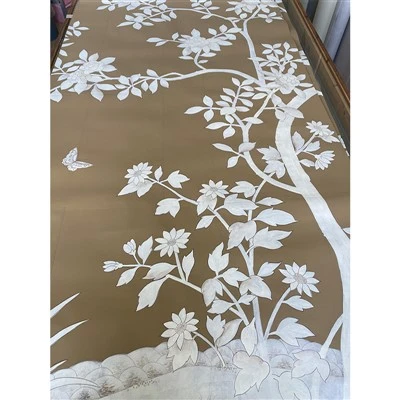
To understand how imagination works in Gongbi, we first have to demystify the style’s core for anyone who might not be familiar with it. Gongbi, which translates to “meticulous painting,” is one of the two main traditional Chinese painting genres (the other being Xieyi, or “freehand painting”). Its defining traits are fine, inked outlines (gou), layered mineral and plant pigments applied with controlled, equal brushstrokes, and a focus on realism within a strictly regulated subject matter: flowers, birds, insects, and small landscape elements that were considered “decorative” in ancient China’s imperial workshops. But here’s the part that’s easy to overlook: the rigid structure of Gongbi is a container, not a cage. Artisans spend years mastering the mechanics—mixing cinnabar red or malachite green pigments to a exact consistency, holding a thin brush steady for 10 minutes to trace a lotus petal’s vein, waiting three days for a layer of shell gold to dry before adding another. Those skills are non-negotiable, and without them, imagination in Gongbi would just be messy doodling. But the choice of what to paint, and how to render it in a way that feels both true to Gongbi and relevant to a modern viewer, is pure imagination.
Take the Kyoto tea lounge project as an example. Our lead artisan, Master Li, had never painted a shadow before—shadows are ephemeral, a quality that Xieyi excels at, but Gongbi is supposed to be timeless, solid. When he first sketched the maple leaf, the outline was too soft, too vague, and when he tried to apply pigment, it bled like watercolor. He told me later he’d spent three days staring at reference photos of maple leaves, but none felt right—they looked “too posed, too much like a textbook Gongbi leaf.” That’s when imagination kicked in: instead of copying a real leaf, he imagined the leaf the way a tea master would see it, blurry at the edges, with a faint smudge where it had brushed against the bowl’s glaze. He adjusted his brushstrokes, using a finer brush for the dark veins and a diluted mix of iron oxide for the soft edges, and instead of layering solid pigment, he built up the shadow in 17 thin, translucent layers, each one a little lighter than the last. The final piece wasn’t just a depiction of a moment—it was a reimagining of a Gongbi subject in a way that felt intimate, not formal, perfect for a space where guests come to slow down. That project sold not just because it was a custom piece, but because it used Gongbi’s traditional precision to bring an imagined, personal moment to life.
Imagination also plays a critical role in adapting Gongbi to contemporary spaces, which is why my company works with designers on custom pieces for everything from penthouse living rooms to corporate lobbies. A lot of people assume that because Gongbi is a classical style, it can only be used in traditional interiors—but that’s not true. Last year, we worked with a design firm in New York to create a pair of 8-foot Gongbi paintings for a modern office lobby, where the walls are concrete and the furniture is sleek metal. The design team didn’t want the traditional peony or bird subjects; they wanted something that would complement the space’s minimalist aesthetic. Our artisans’ imagination led them to reimagine a class Gongbi subject—cranes—but instead of painting them in the traditional groupings of three or five, they painted two cranes with their necks curved, facing each other across a blank white space, their feathers rendered with the same meticulous detail, but in a muted palette of soft gray and pearl white instead of bright reds and greens. The result was a piece that felt both rooted in Gongbi’s heritage and right at home in a modern workspace. Without the imagination to recontextualize a traditional subject, that commission would have been impossible—we would have just shipped a generic bird painting that would have clashed with the space.
It’s also important to acknowledge that the role of imagination in Gongbi has shifted over time, even in its ancient origins. During the Tang dynasty, when Gongbi was at its peak, court artisans were given strict instructions to paint subjects that symbolized loyalty, prosperity, or longevity—crane for longevity, peony for wealth, lotus for purity. But even then, imagination was at work: artisans would tweak small details to reflect the emperor’s personal tastes, painting a lotus with 12 petals instead of the traditional 10, or a bird with a feather pattern that mirrored the imperial seal. During the Song dynasty, when Gongbi moved from imperial workshops to private scholar-artists, imagination became even more central: scholars would paint everyday subjects like fireflies or morning glories, reimagining them as subjects worthy of the highest artistic skill, not just decorative filler. Today, that same tradition continues: modern Gongbi artists are using imagination to explore subjects from urban street art to global iconography, while still honoring the style’s core techniques.
Of course, there’s a balance here. Imagination in Gongbi can’t exist without respect for the style’s foundations. I’ve worked with a few designers who’ve asked us to “mix Gongbi with pop art”—to add neon colors or cartoonish figures to a piece, and while that might work for some styles, it doesn’t feel like genuine Gongbi. The most successful custom pieces I’ve been part of are the ones where imagination starts within Gongbi’s rules, not outside of them. For example, a client in Dubai asked us to create a piece for a high-rise apartment that overlooked the Dubai Fountain. Instead of painting the fountain itself, our artisans imagined the reflection of the fountain on a pool of water, rendered in Gongbi’s layered pigments, with water lilies around the edges, a traditional subject that tied the space to nature and luxury. The imagination here was in choosing to focus on the reflection, not the fountain itself, and in using Gongbi’s precision to capture the glint of the water, which is fleeting and ephemeral—something that felt magical to the client, who wanted a piece that would feel like a connection to their view without being a literal copy of it.
As a supplier, I see first-hand how imagination turns a generic Gongbi painting into a piece that feels personal and meaningful for a client. A few months ago, a customer reached out to us looking for a small Gongbi painting for their daughter’s bedroom. They didn’t want the usual subjects; their daughter loved sea turtles, and they wanted something that felt warm and personal. Our artisans worked with them to imagine a sea turtle resting on a bed of coral, rendered in Gongbi’s meticulous style, with soft pink and blue pigments that felt gentle enough for a teenager’s space. The customer told us it was the first art piece their daughter had ever asked to hang in her room, and that it felt like a reflection of her love for the ocean. That’s the power of imagination in Gongbi: it takes a style that’s centuries old, and makes it feel like it was created just for you.
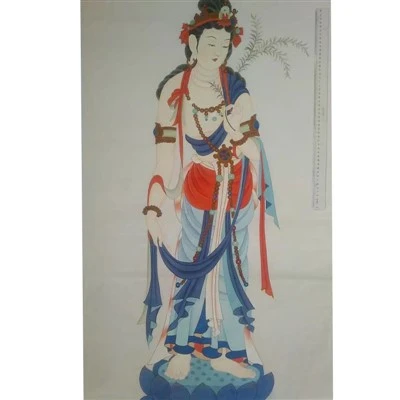
If you’re reading this, chances are you’re either a designer looking to add a unique, timeless art piece to a space, or a homeowner looking for something that stands out from generic wall art. Gongbi decorative painting isn’t just a style for traditional spaces—it’s a versatile medium that can be shaped by imagination to fit any aesthetic, any story, any space. Whether you want a custom piece that reflects a personal memory, a subject that feels modern, or a design that complements a sleek, minimalist interior, our team has the experience to work with you to turn your idea into a finished Gongbi painting, rooted in centuries of tradition and brought to life by creative imagination.
Hand-drawn Figure Drawings I’ve seen too many clients settle for mass-produced art that doesn’t feel like them, and that’s why I’m passionate about Gongbi: it’s a style that can tell a story, and imagination is how we turn your story into a painting. If you’re ready to explore a custom Gongbi piece, or to learn more about how imagination can make these artworks work for your space, get in touch to start a conversation about your vision.
References
- Cheng, Francesca. The Art of Gongbi: Meticulous Painting of China. Thames & Hudson, 2018.
- Li, Wei. "Imagination and Tradition in Contemporary Gongbi Art." Journal of Chinese Traditional Art, vol. 46, no. 2, 2021, pp. 112–129.
- Sullivan, Michael. The Arts of China. University of California Press, 2019.
- Wang, Ling. "Custom Gongbi for Modern Interiors: Balancing Tradition and Creativity." Interior Design Review, vol. 12, no. 4, 2022, pp. 78–85.
Rudong Zhimu Hand Painting Studio
As one of the most professional gongbi decorative painting manufacturers and suppliers in China, we also support customized service. Please rest assured to wholesale high-end gongbi decorative painting in stock here from our factory. If you have any enquiry about quotation, please feel free to email us.
Address: No.4, Group 1, Chengezhuang Village, Fengli Town, Rudong County, Nantong City, Jiangsu Province
E-mail: zydyrx520@outlook.com
WebSite: https://www.zhimupainting.com/
