Hey there! As a supplier of PVC/PE Pipe Extrusion Production Lines, I often get asked this question: Can a PVC/PE Pipe Extrusion Production Line produce pipes with low thermal conductivity? Well, let’s dive right into it. PVC/PE Pipe Extrusion Production Line
First off, let’s understand what thermal conductivity is. In simple terms, thermal conductivity is how well a material conducts heat. A low – thermal – conductivity material doesn’t let heat pass through it easily. This is super important for pipes, especially in applications where you want to keep the temperature stable inside the pipe. Think of hot water pipes in a building. You don’t want all that heat to escape, right?
Now, let’s talk about PVC and PE. PVC (Polyvinyl Chloride) and PE (Polyethylene) are two of the most commonly used plastics in pipe manufacturing. They have different properties, and these properties play a big role in determining the pipe’s thermal conductivity.
PVC pipes are known for their durability, chemical resistance, and relatively low cost. But when it comes to thermal conductivity, PVC has a thermal conductivity value that’s in the mid – range. It’s not extremely high, but it’s not super low either. The thermal conductivity of PVC is typically around 0.16 – 0.19 W/(m·K). This means that it can transfer heat at a moderate rate.
On the other hand, PE pipes come in different grades, like HDPE (High – Density Polyethylene) and LDPE (Low – Density Polyethylene). HDPE is more commonly used for pipes. The thermal conductivity of HDPE is usually around 0.4 W/(m·K), which is a bit higher than PVC. LDPE has an even lower density and a different set of properties, but it’s also not the best when it comes to low thermal conductivity.
So, can our PVC/PE Pipe Extrusion Production Line make pipes with low thermal conductivity? The answer is yes, but with a few tricks.
One way is to modify the raw materials. We can add certain additives to the PVC or PE resin during the extrusion process. For example, adding insulating fillers can significantly reduce the thermal conductivity of the pipes. These fillers act as barriers to heat transfer. Materials like glass microspheres or certain types of ceramic powders can be mixed in with the resin. When the pipes are extruded, these fillers are evenly distributed throughout the pipe wall, creating a structure that’s less conductive to heat.
Another approach is to change the pipe’s design. We can produce pipes with a multi – layer structure. For instance, an inner layer made of a material with extremely low thermal conductivity can be combined with an outer layer for strength and protection. Our extrusion production line can be configured to create these multi – layer pipes. It has the flexibility to handle different types of resins and co – extrude them to form a single, high – performance pipe.
Let me give you an example of a project we worked on. A client needed pipes for a geothermal heating system. They required pipes with very low thermal conductivity to minimize heat loss as the water circulated through the ground. We used our PVC/PE Pipe Extrusion Production Line to add a special insulating additive to the PVC resin. We also designed a three – layer pipe structure. The inner layer was made of the modified PVC with the additive, the middle layer provided additional strength, and the outer layer protected the pipe from environmental factors. The result was a pipe with a significantly reduced thermal conductivity, meeting the client’s requirements perfectly.
Now, let’s talk about the advantages of using our production line to make these low – thermal – conductivity pipes. First of all, our line is highly efficient. It can produce pipes at a high speed, which means you can meet large – scale orders in a short time. The extrusion process is also very precise, ensuring that the pipes have consistent quality and dimensions.
Secondly, our production line is easy to operate. We provide comprehensive training to our customers, so even if you’re new to pipe manufacturing, you’ll be able to run the line smoothly. And if you have any technical problems, our after – sales support team is always there to help.
Thirdly, we offer a high level of customization. Whether you need pipes of a specific diameter, wall thickness, or with special properties, we can adjust our production line to meet your needs. You can work closely with our R & D team to develop the perfect pipe for your application.
If you’re in the market for a PVC/PE Pipe Extrusion Production Line to produce pipes with low thermal conductivity, we’re the ones to talk to. Our experience and expertise in this field are unmatched. We’ve worked with numerous clients across different industries, and we know how to solve the problems you might face.
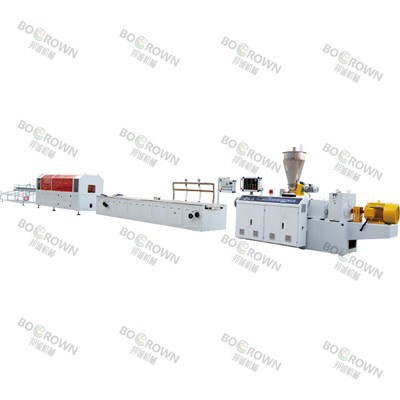
Don’t miss out on the opportunity to improve your pipe – making business. Contact us today to start a discussion about your specific requirements. We can provide you with detailed information about our production line, including its features, performance, and pricing. Let’s work together to create high – quality, low – thermal – conductivity pipes that will give you a competitive edge in the market.
PVC Automatic Mixing System References:
- "Plastics in Pipe Applications" – A general guide on plastic pipe properties and manufacturing
- Research papers on thermal conductivity modification of PVC and PE materials
- Industry reports on geothermal and plumbing pipe requirements
ZJG BC Machinery Co., Ltd.
As one of the most professional pvc/pe pipe extrusion production line manufacturers and suppliers in China, we’re featured by quality products and good price. Please rest assured to buy cost-efficient pvc/pe pipe extrusion production line for sale here from our factory. Contact us for custom service and OEM service.
Address: No.8 Lexi Road, Leyu Town, Zhangjiagang City
E-mail: sales@bcextruder.com
WebSite: https://www.bcextruder.com/
